Guide
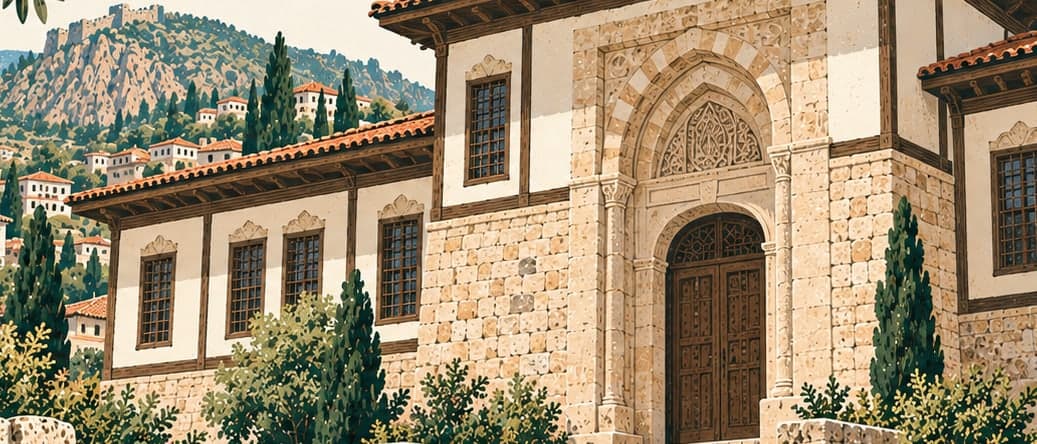
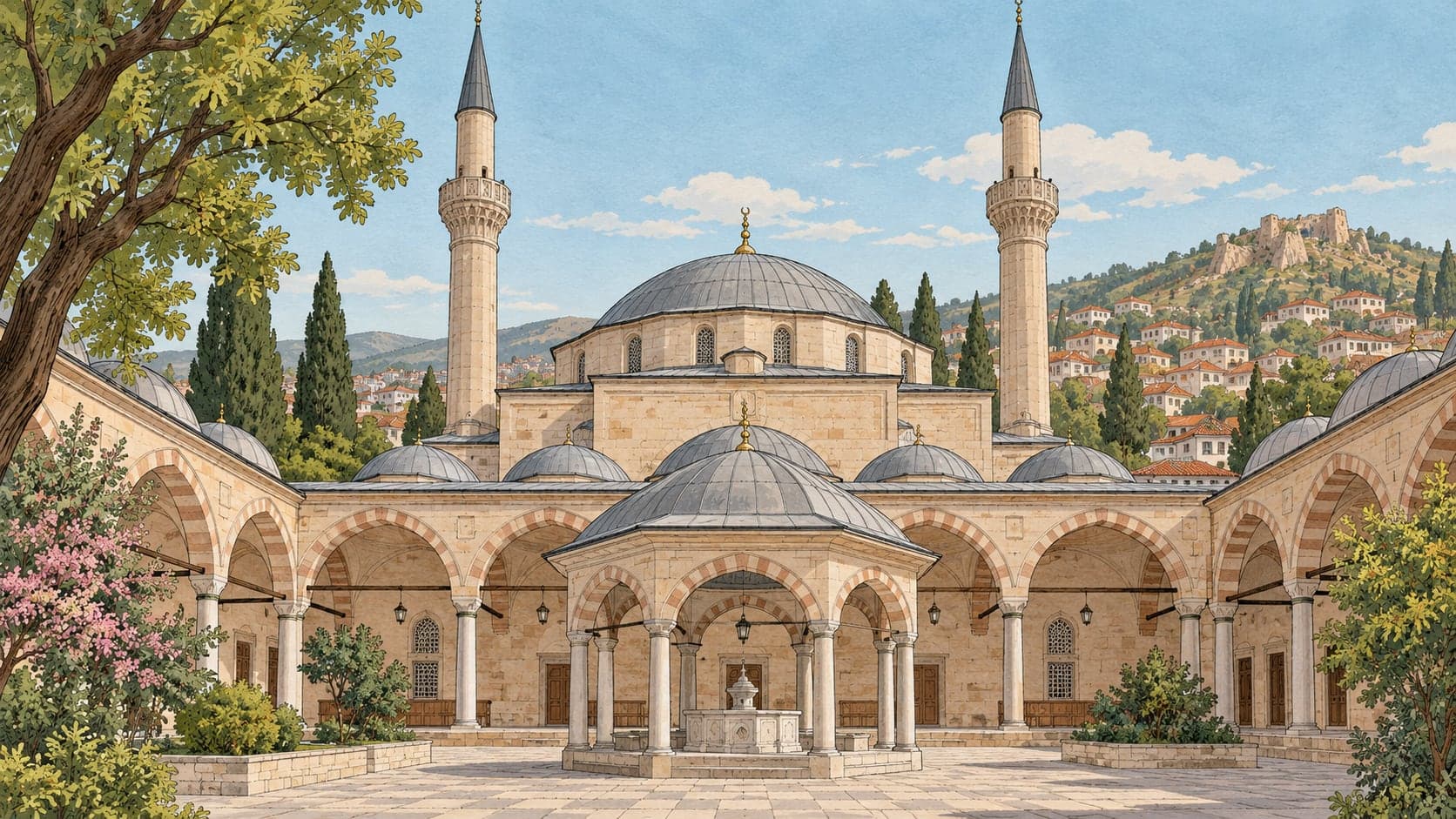
Kütahya's Ulu Mosque, also called the Yıldırım Beyazıt Mosque, is the largest in the city. Building began under Bayezid I in the early 1380s and was finished in 1401. It was repaired by Mimar Sinan while Suleiman the Magnificent was on campaign against Rhodes, and it took its present domed form in a major restoration under Abdülhamid II in 1893. The plan is rectangular and there is no courtyard; the footprint is about 45 by 25 metres, with a single minaret at the northeast corner and doors on three sides.
Opposite the main door is the sakahane, the water house. Inside there is a small ablution fountain with a four-columned platform for the muezzin built above it. The main space is covered by two domes set side by side on six columns, with half domes at the sides, and the large columns carrying them were brought here from the ancient city of Aizanoi. The mihrab projects from the wall under its own half dome, and the tile panel to its right, showing the Kaaba, is the detail most worth looking for. The mosque is in the Börekçiler quarter, about 900 metres from the city centre.