Guide
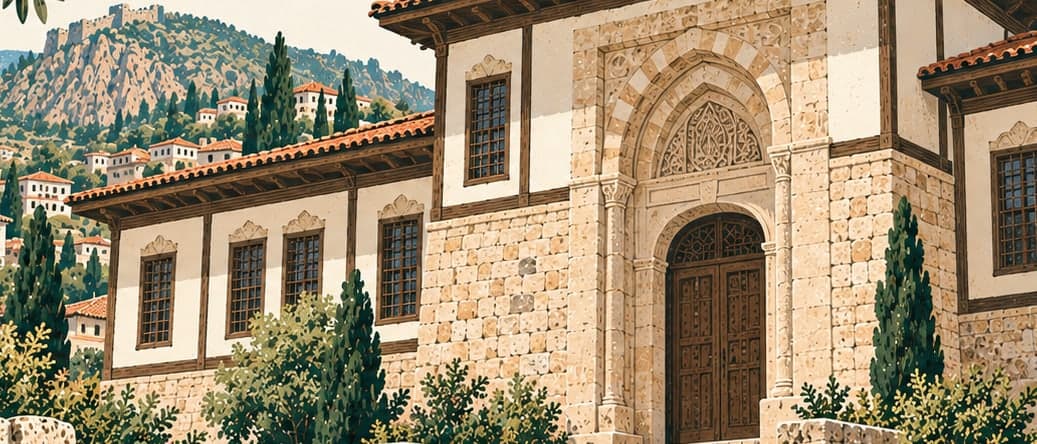
The Kossuth House Museum in Kütahya, also known as the Hungarian House, is an eighteenth-century Turkish house that has been open to visitors since 1982. The house belonged to Şeyh Bedreddin Efendi and stands on Macar Sokak in the Börekçiler quarter.
Lajos Kossuth, the lawyer who led the Hungarian revolution, lived here with his family for a year in 1850 and 1851, having taken refuge in the Ottoman empire. It was in this house that he drew up the draft constitution he prepared for Hungary, and he also wrote a Turkish grammar while he was here.
On display are his personal belongings and objects to do with Hungarian culture: photocopies of the grammar he wrote, musical instruments, a tobacco cutter, a cigarette case, an eighteenth-century piano, porcelain dinner services and old photographs of Budapest, alongside ethnographic material belonging to the classical Turkish house.
The house museum has two floors and seven rooms, stands within a garden and has no window onto the street. On the first floor, where the men's quarters were, are the dining room, a bedroom, a room for the children and a study. The rooms hold built-in cupboards, bedding recesses, a fireplace, a carved niche for sherbet, shelves and divans.
Kossuth declared his country's independence in 1849 and became, if only in a provisional capacity, the first president of Hungary. He lost the war against Austria when Russia entered it on the Austrian side, and he was exiled to Kütahya. He lived in this house until he left the country aboard an American warship in 1851. The anniversary of the Hungarian revolution and war of independence of 1848 and 1849 is marked with a ceremony at the museum.