Guide
The tomb known as Ya Vedûd stands on Yâ-Vedûd Street in Ayvansaray. It has not always stood there: until the Golden Horn bridge was built it faced the Yâ-Vedûd Mosque, and it was moved to its present spot while the ring road was going through. The graveyard that lay behind and beside it was moved at the same time, to Kirimi Çeşme Sokak.
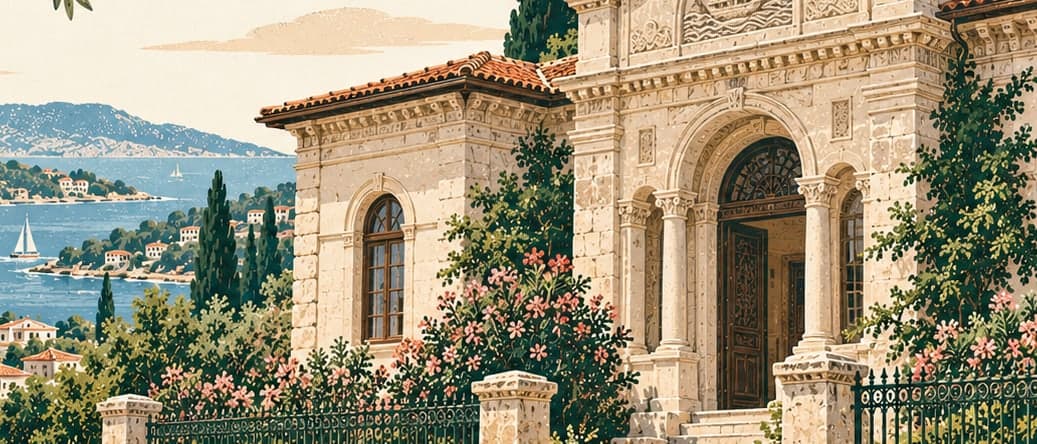
Before the move the tomb sat on a cut-stone terrace reached by three steps, with a railing of stone posts and iron bars around the platform. The building itself is square, built of cut stone, lit by nine windows, and roofed in timber and tile.
An inscription over the iron door records that Pertevniyal Valide Sultan had the work completed for the soul of Sultan Abdülaziz in 1293 (1876) — she had it rebuilt in its present form shortly after her son's death. A second inscription, set between two windows, names Sheikh Abdülvedûd Dede, and a third above the front window reads simply that this is his resting place.
Four graves are inside. The large wooden sarcophagus is Abdülvedûd's; the marble one behind it has lost its headstones. Of the two headstoned graves on the left, one is dated 960 (1553) and belongs to Çavuş Mustafa bin Ali. The fourth is topped by a carved turban; the source's compiler could read the name only as Abdürrahim, and suggests from the turban that the man was a naval officer.
For the man himself the page quotes the Hadîkatü'l-Cevâmi: Abdülvedûd came with the dervishes of Bukhara during the siege of Constantinople, lived at Hagia Sophia after the conquest, then built a small mosque and a lodge outside Ayvansaray and was buried beside his lodge by order of Mehmed II in 860 (1456). His successor Tokmak Dede endowed the lodge and lies nearby, and the burial ground is still called Tokmak Tepe.