Guide
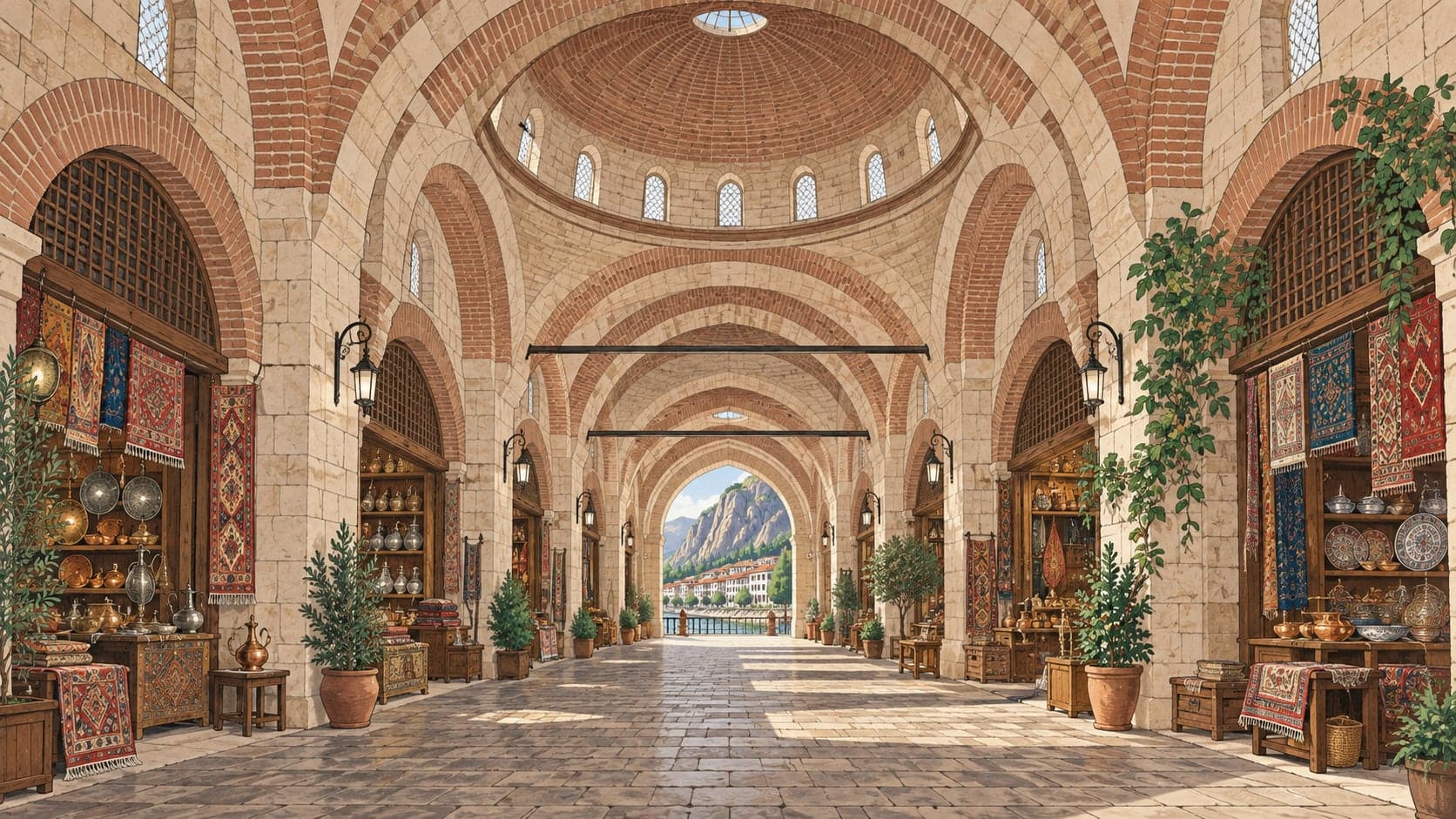
The Amasya bedesten, the covered market of the town, was built in 1483 by Hüseyin Ağa, one of the guards of Bayezid II. It has come down to us much changed from what it was.
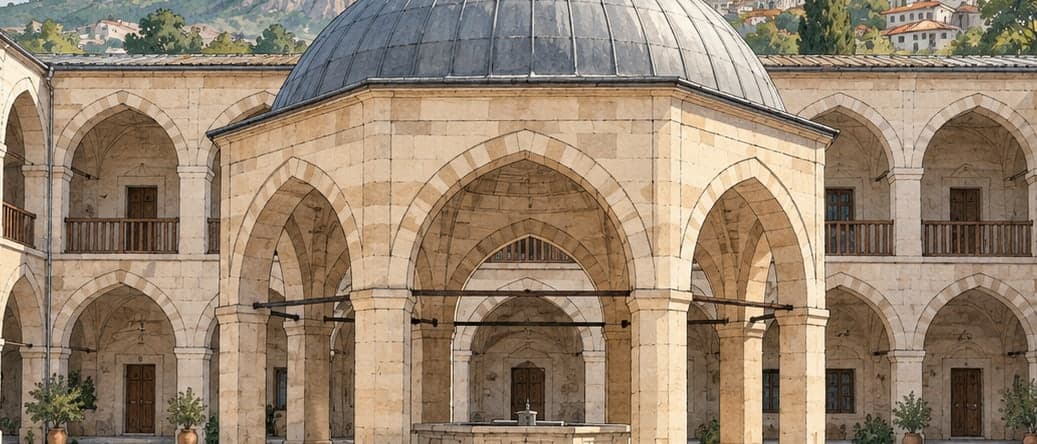
Hüseyin Ağa carried out a good many charitable works in Amasya and the country around it and increased the income of his endowment. His bedesten followed the pattern the Ottomans repeated at certain centres, with covered markets of middling size built to their standard dimensions; because the original here was larger than its counterparts, it is treated as a variation on the same type. It was rectangular in plan, covered by six domes, with four separate doors on its northern face.
The building was badly damaged in the earthquake of 1668 and went a long time without repair. It was taken up in the building works begun in 1865 by Ziya Bey, then governor of Amasya, better known as the poet Ziya Pasha. But the bedesten was not restored in that work: the lead covering was stripped off, the dome was brought down, and a roof was put over the building in its place. That did not last long, the roof fell in, and the bedesten stood open to the sky for many years.
The building stands near the Yeşilırmak. Part of it had collapsed over the years, leaving only the main wall standing, and that part was pulled down in the 1950s and a commercial building put up in its place.
In 1971 the Directorate General of Foundations restored the bedesten in keeping with its original form, and with that work it regained its domes.
In the plan as it stands, the building is carried on two large central piers, with vaulted shops supporting it on the face opposite the side that leads east to the arasta, and it has arched doorways on four sides. During the building of the government office in the 1970s the northern face was pulled down, and the four domes standing today were kept through the repairs that followed. Two shops flank the projecting doorway. A thick pier stands at the centre inside, the walls are tied together by arches, and each of the four sections thus formed is covered by a dome of its own. Of the original building, only the body walls and the inscription of 1483 survive.