Guide
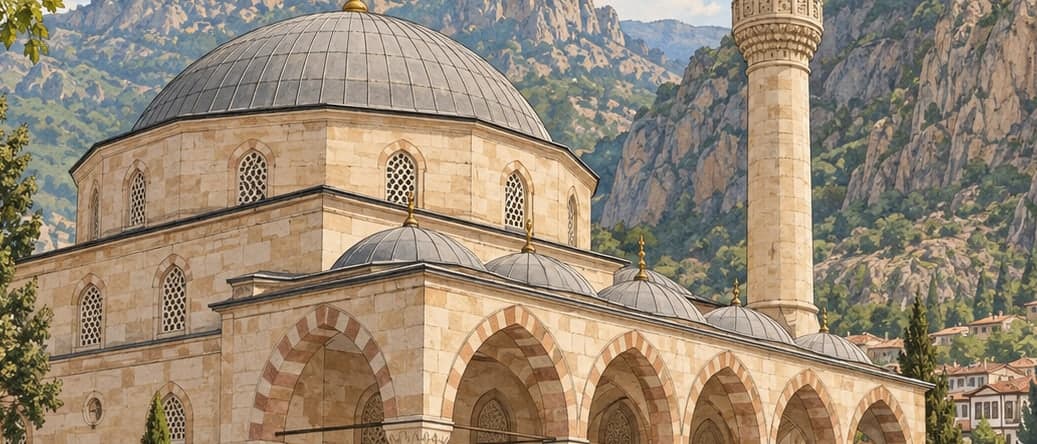
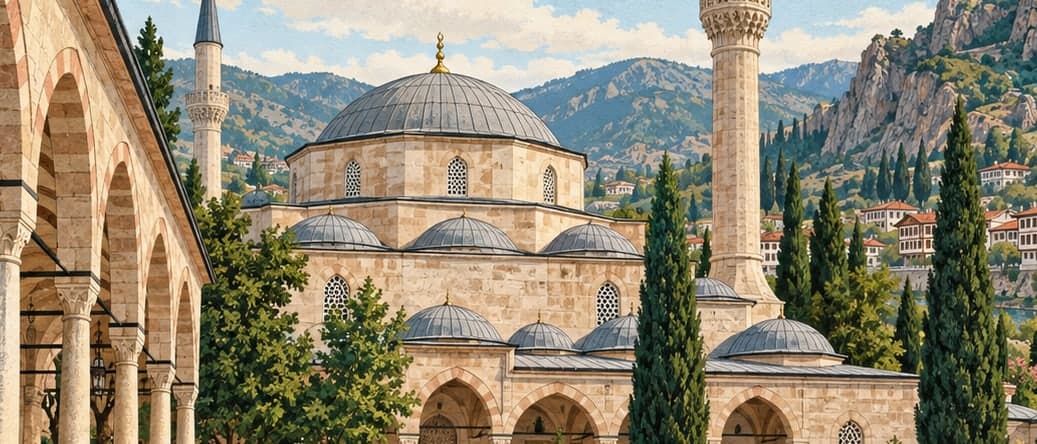
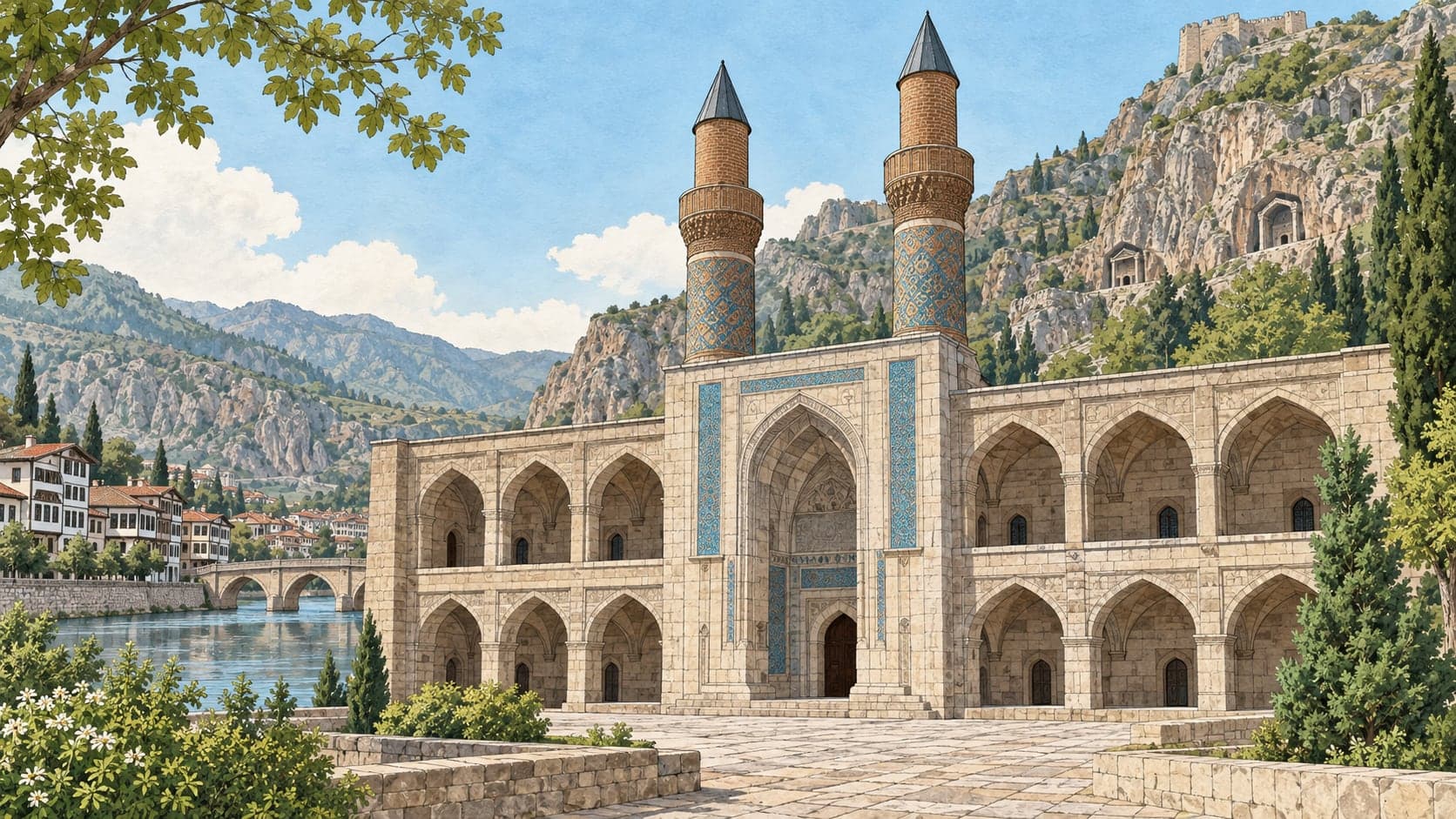
The Gök Medrese is a closed complex made up of a mosque, a medrese and a tomb, built in 1267 by Seyfeddin Torumtay, governor of Amasya. The name — the blue medrese — is taken to come from the blue glazed bricks on the drum of the octagonal tomb.
The building is rectangular and served both as mosque and as medrese, its thick walls laid in cut stone. The mosque has a large entrance in the form of a barrel-vaulted eyvan. The windows on either side of the main door, which is framed in geometric ornament, are among the finest examples of Seljuk stonework: they narrow upward through rich muqarnas and are bounded by rectangular borders. The door itself, a fine piece of woodwork, is displayed today in the Amasya Museum.
Inside, eight thick columns in two rows of four divide the space into three sections perpendicular to the mihrab, making fifteen bays in all, covered by domes and vaults on pointed arches. The half-cylindrical mihrab is plain in appearance.
The tomb is one of the finer examples of Seljuk art in its architecture and its ornament: octagonal on a square plan, covered by a brick cap in the form of a star pyramid on a high drum.