Guide
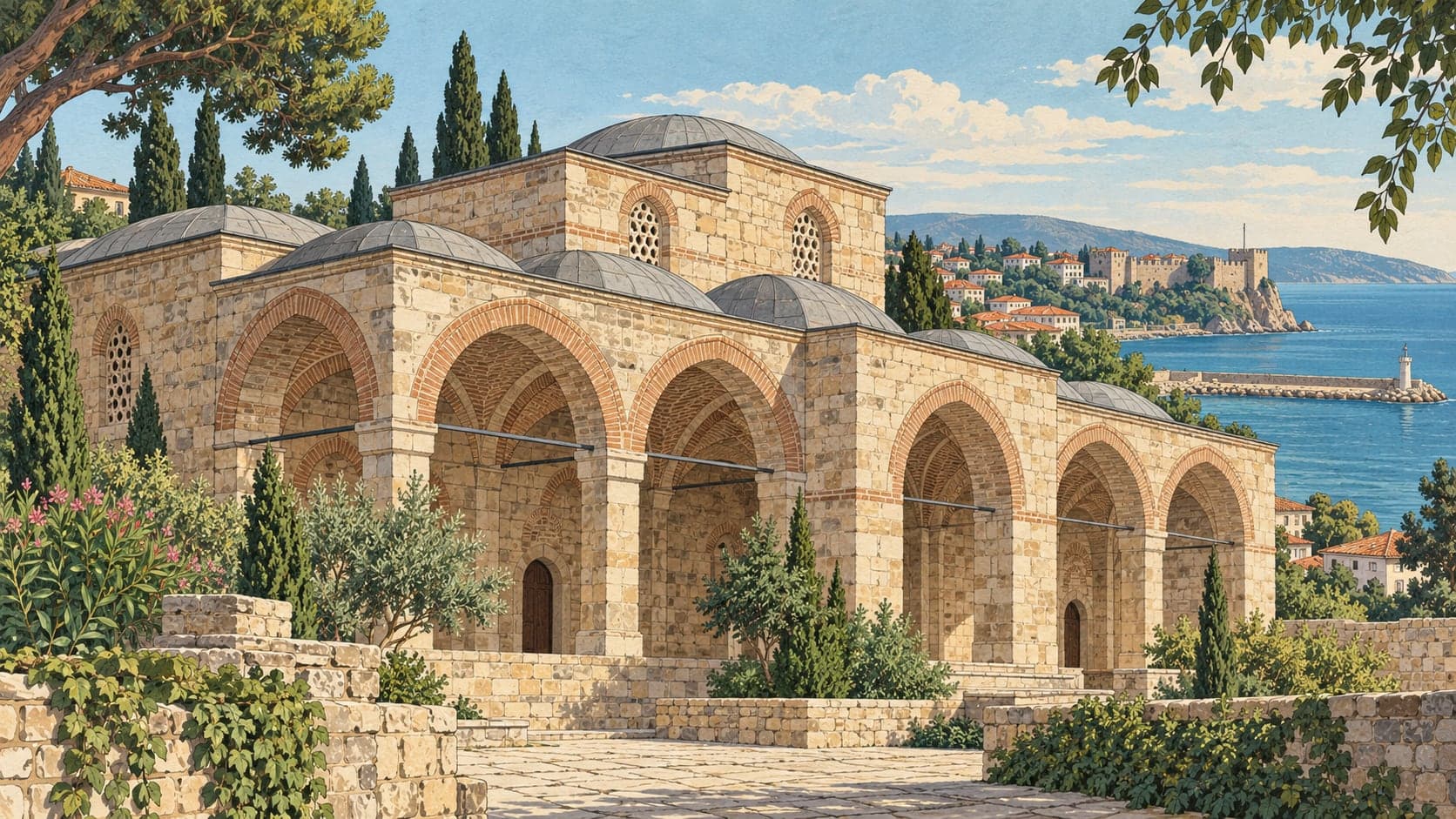
After the walls, this is the only building in Sinop from the late Roman imperial period whose real function can be determined. Historical sources describe it as a bath, gymnasium and palaestra combined. Only three halls of that large group survive; surface survey around them shows the complex covered a wide area.
Which hall was what is still open. One may have been the caldarium, the hot room of the bath, and another the frigidarium or the palaestra. Geophysical work has located traces of the hypocaust, the bath's heating system.
The ruin went on being used for other purposes. Under the Ottomans, in the fifteenth and sixteenth centuries, parts of the Roman building were turned into an Orthodox monastery dedicated to the Dormition of the Virgin and to the Archangel Michael. The north-east room of the cross-plan building served as the monastery church, and its vault and walls, along with the niches of the rooms added to its west, were painted in the late Byzantine manner with subjects from the Old and New Testaments. There is a sacred spring near the church and, to its south, a room used as an ossuary.
The ground of the cross-plan ruin east of the church and of the hall to its north became a burial ground where clergy and lay people alike were interred, in use into the beginning of the twentieth century. Archaeological excavation is being carried out by a team under Gülgün Köroğlu of Mimar Sinan Fine Arts University, by decision of the Council of Ministers and with the ministry's permission.