Guide
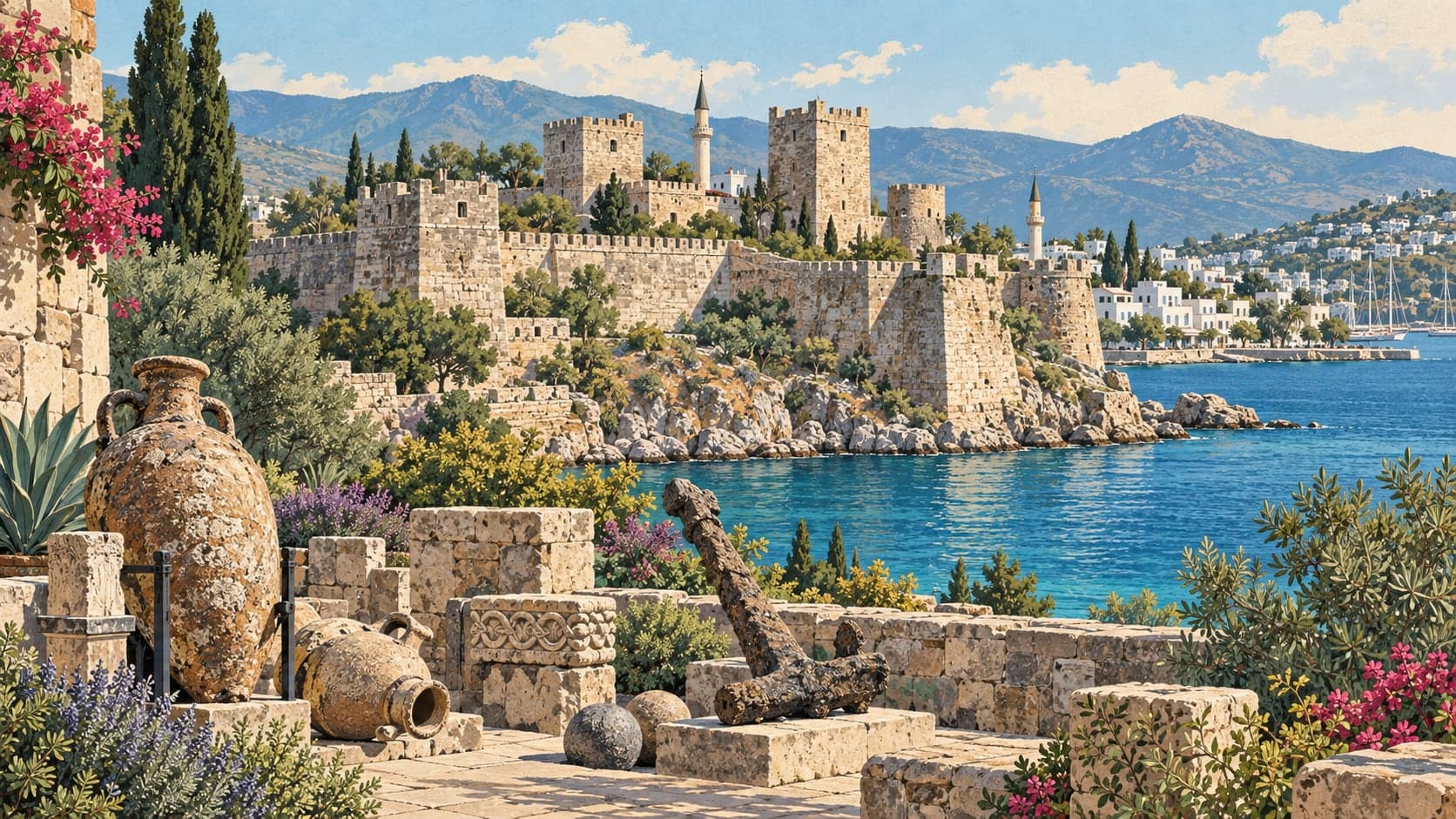
Bodrum Castle stands in the Bodrum district of Muğla, one of the busiest holiday places in Türkiye. It was built around 1402 by the Knights of St John under the name of the Castle of St Peter, and since 1960 it has also housed the Museum of Underwater Archaeology. The castle has become the emblem of the town.
The knights built it because they needed secure ground on the mainland against the growing threat of the Ottoman state. Bodrum was chosen for its closeness to Kos, where a castle already stood. On the site there were defensive foundations left from the time of the Dorians and a small Seljuk fort of the eleventh century.
The knights held the castle between 1402 and 1522, and it is the joint work of Italians, French, Germans and English rather than of any one nation. Its different parts went up at different times: the chapel in 1406, the English Tower in 1413, and the first walls in 1437.
The Ottomans attacked the castle from time to time through the fifteenth century but it held out. Cem Sultan took refuge here after his failed attempt to seize the throne from his brother Bayezid II.
In 1523, following the siege of Rhodes, the castle passed under Ottoman rule together with Kos and Rhodes. A minaret was added and the chapel inside was turned into a mosque under the name Süleymaniye. Over four hundred years of Ottoman rule the castle lost its old importance and was used at times as a military base and a prison. Various works and reliefs from the castle were taken to the British Museum in the nineteenth century with Ottoman permission.
During the First World War fire from a French warship brought down the minaret and damaged some of the towers. Italian forces held the castle briefly and withdrew in 1921. It then stood empty for about forty years before being turned into the Museum of Underwater Archaeology.
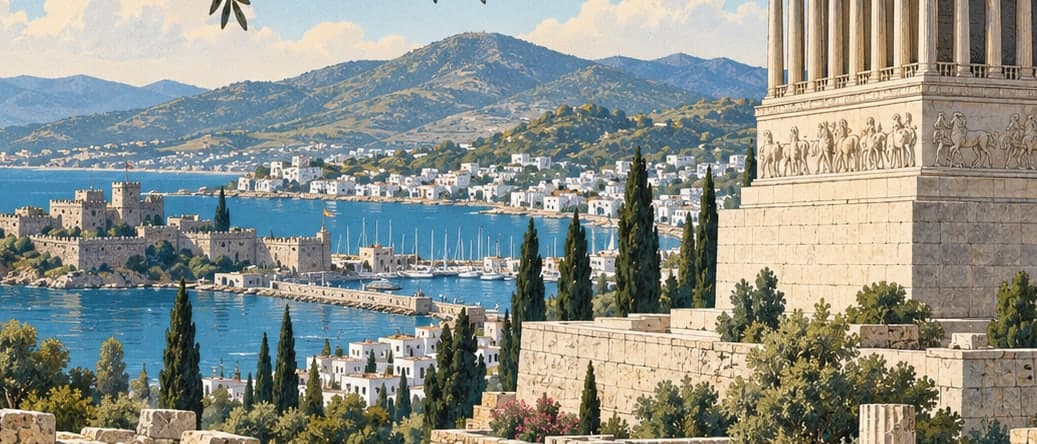
The castle sits on rocky ground between two harbours. In antiquity this was an island; later it joined the town and became a peninsula. The plan is square, measuring 180 by 185 metres. Within the inner castle stand towers named after different countries: the French Tower, the highest at 47.5 metres above sea level, along with the Italian Tower, the German Tower, the Snake Tower and the English Tower. Apart from the eastern wall, the castle is ringed with double curtain walls.