Guide
Oinoanda first appears as a place name in Hittite texts, but nothing surviving at the site can be dated earlier than the third century BC, and the mythology of its founding is not known.
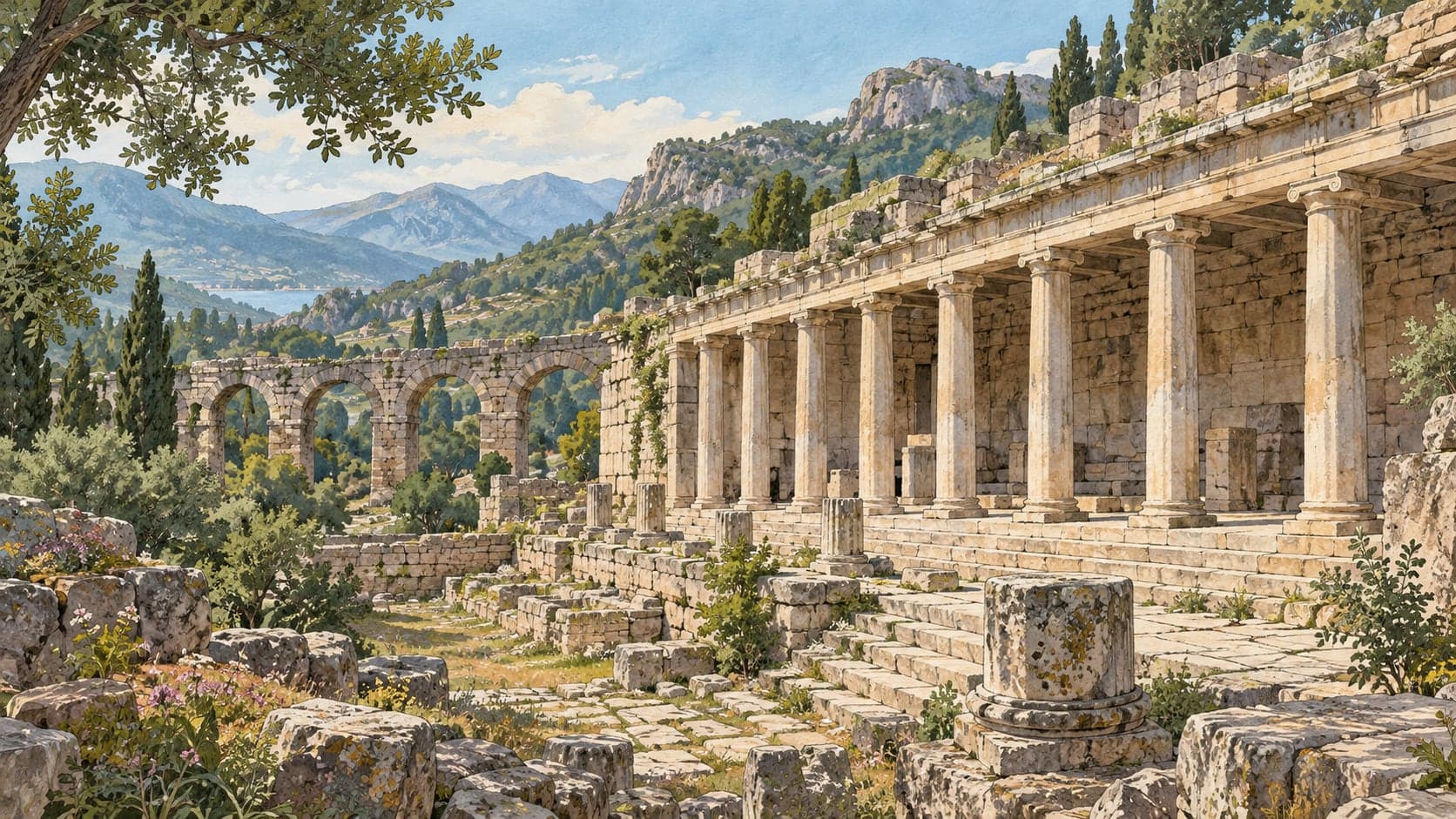
Its real fame rests on Diogenes, an Epicurean philosopher who lived here in the first half of the second century AD and had his thought carved as a long inscription on the walls of the north stoa. The building later collapsed and its pieces were scattered, so fragments of that text can now be found all over the site.
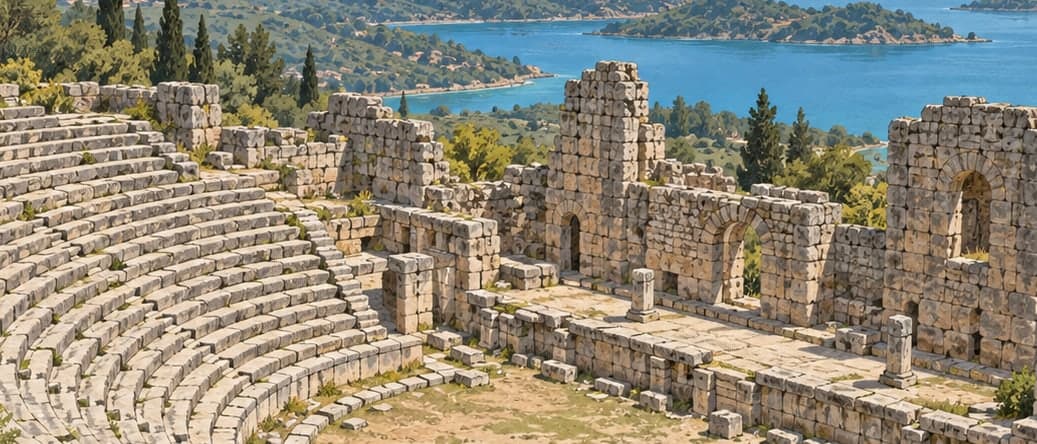
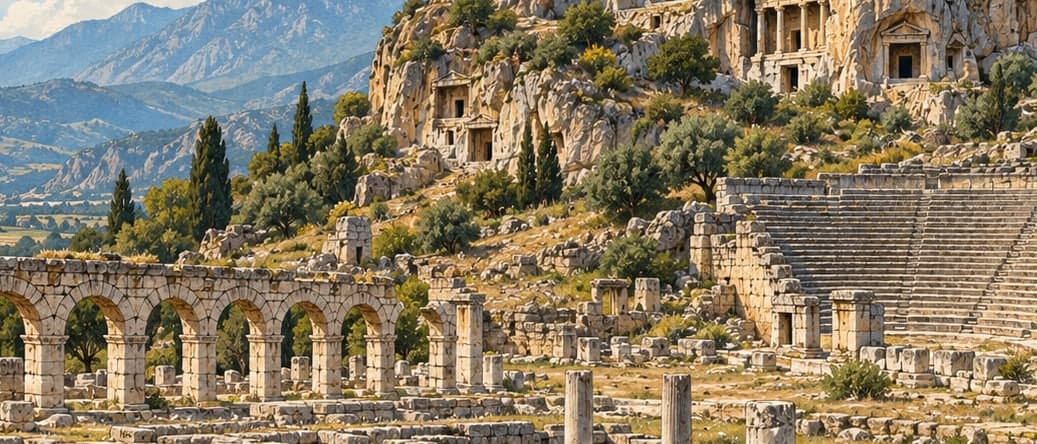
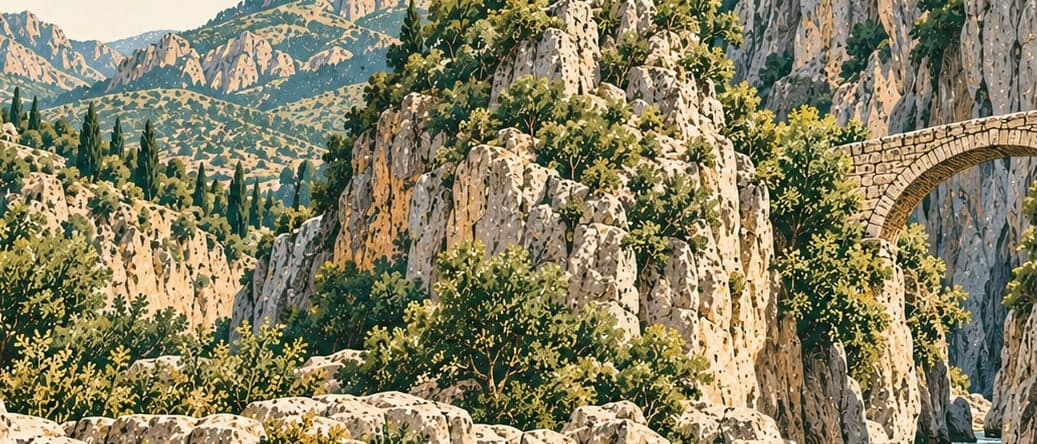
The earliest remains are the walls in the south of the city, dated to around 200 BC and notable for their very fine masonry and a pentagonal tower. In the Roman period a Doric temple was built overlooking the upper agora, probably under Augustus; a fragment of an inscription written for the emperor was found inside it. From about AD 70, under the Flavians, the smaller of the city's two gymnasium-and-bath complexes was built south of the road up to the upper agora. The large one went up west of the upper agora in the 140s, paid for in part by Opramoas of Rhodiapolis; a colonnaded court was added at the beginning of the third century and the building dedicated to Septimius Severus and Caracalla. The aqueduct south of the city is probably Flavian as well. In the early Byzantine period churches were built, the largest of them east of the lower agora on the site of the temple.
Tombs built into the hill slopes surround the city, and almost all of those that can be dated are Roman. The largest is the heroon built by Licinnia Flavilla in the second half of the second century AD, which carries an inscription giving her family's genealogy — through it the Lycian elite of the Roman period can be identified. North of the town of Seki, east of the city, a mound by the Seki stream known as Eceler Höyük goes back by its surface finds to the Chalcolithic.