Guide
The han stands at a central point in Milas, close to the Belen mosque. It was built by Hacı Abdülaziz Ağa, son of Abdullah Efendi, and endowed to the medrese built near the Ağa mosque. The portal gives 1719–20 as the date of the han and 1737–38 for that medrese, which do not sit easily together. The name comes from a later owner: Hacı Mehmet Çöllüoğlu of Tavas, who bought the place.
It remained in private hands until 2010 and had largely collapsed by then; the municipality of Milas began a project that year and had it restored.
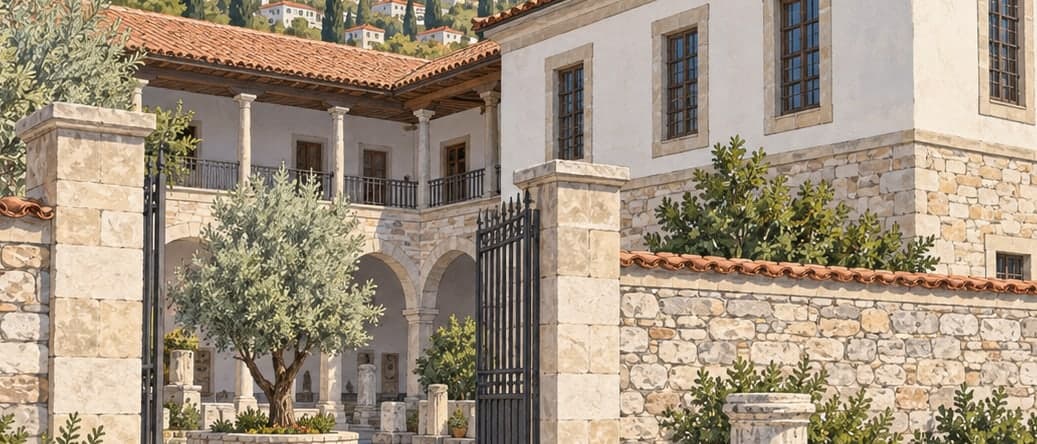
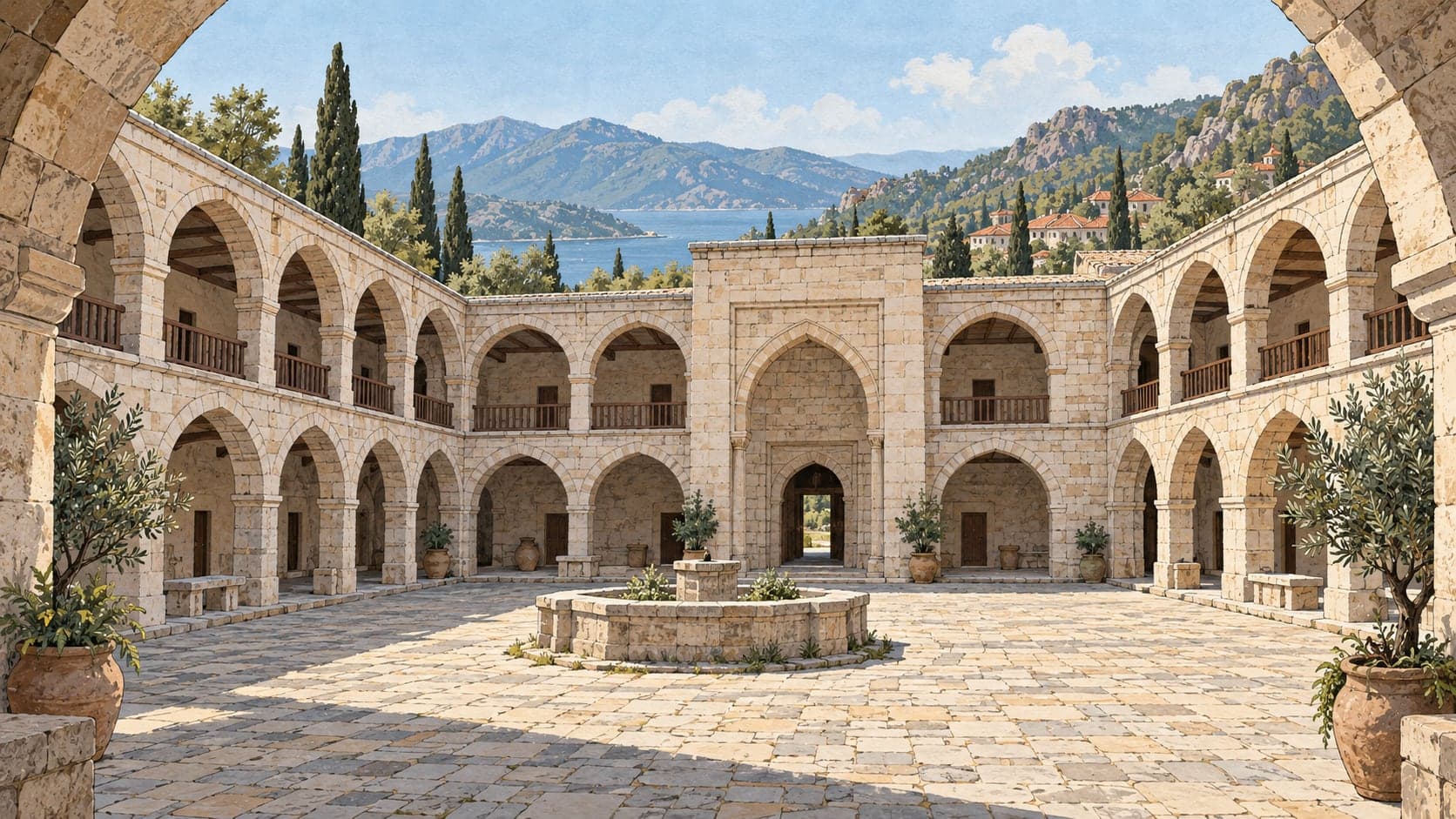
There are two entrances in the form of halls, on the north and the south. The building is essentially a stone-paved courtyard with two floors of rooms around it — the lower floor for the animals, the upper for the people. Every upper room has a hearth and rectangular niches cut into the wall for possessions, and the upper rooms open onto wooden-posted verandas arranged like an apron, supported from below by piers and reused columns.
The tops of the doors and of the double-basin windows are blind pointed arches. The lower windows were made small against the cold and for security, while the doors, for the opposite reason, were kept high so animals could pass in and out easily. Stone was used along with reused ancient architectural blocks, some of them carved, and the hipped roof is covered in channelled tile. The han covers 1,051 square metres and served through its history as the religious, commercial and administrative centre of Milas.