Guide
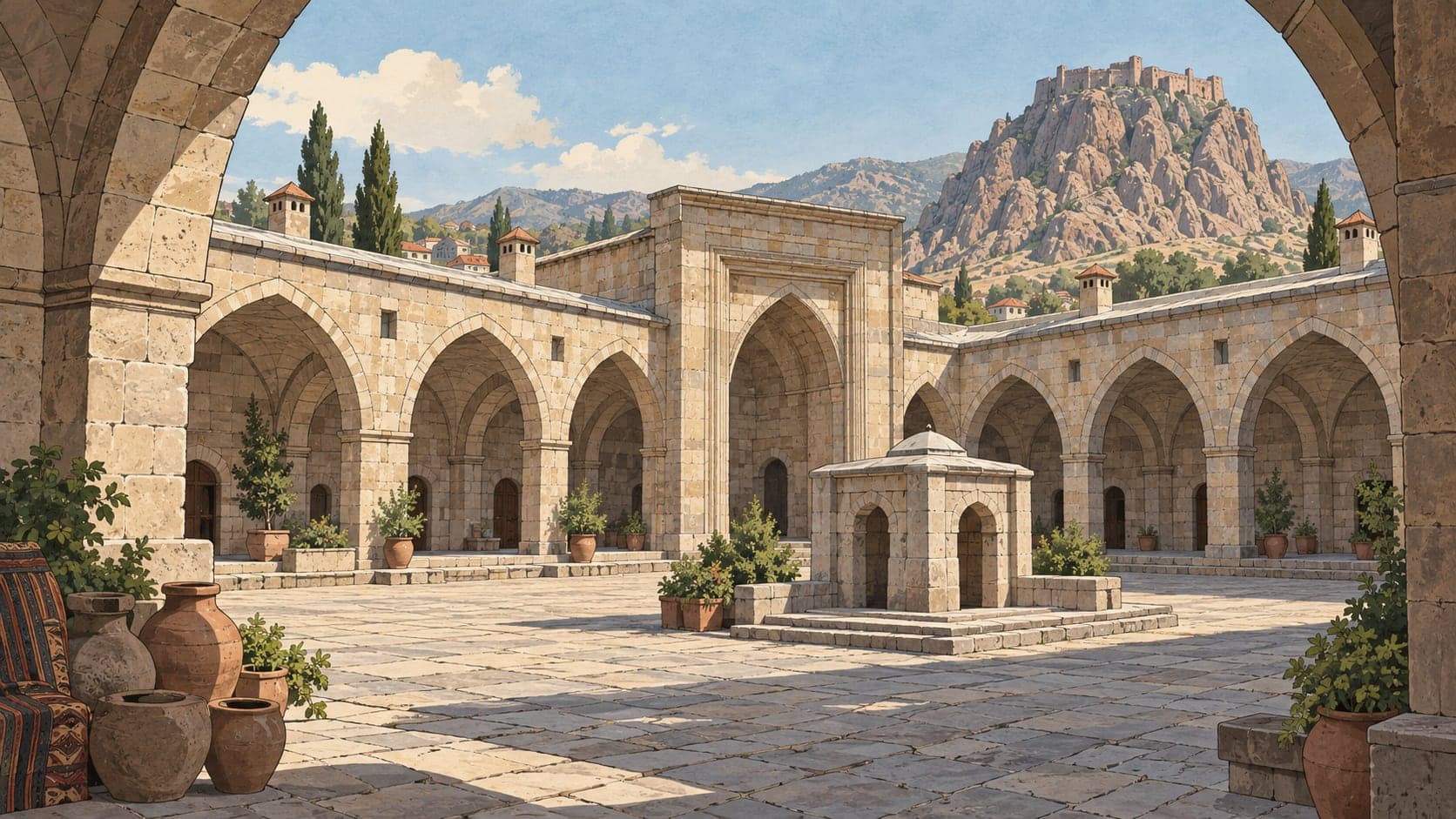
The building belongs to a Seljuk stone complex and is of the type that combines a courtyard with a covered hall. The courtyard has been destroyed; the closed winter section survives.
It is square in plan, masonry, with the look of a fortress from outside — buttressed projections along the walls and a monumental portal. At the centre four great piers carry a lantern opening, and around them twelve piers carry vaulting.
It was built in 1278, in the reign of Gıyaseddin Keyhüsrev III, by Ebu'l-Mücahhit Yusufhan, who commissioned it from the architect Oğul Bey, son of Mehmet. The leopard emblem that was the architect's mark is worked above the door. The portal states that its square plan makes it the only example of its kind in Anatolian Seljuk architecture.