Guide
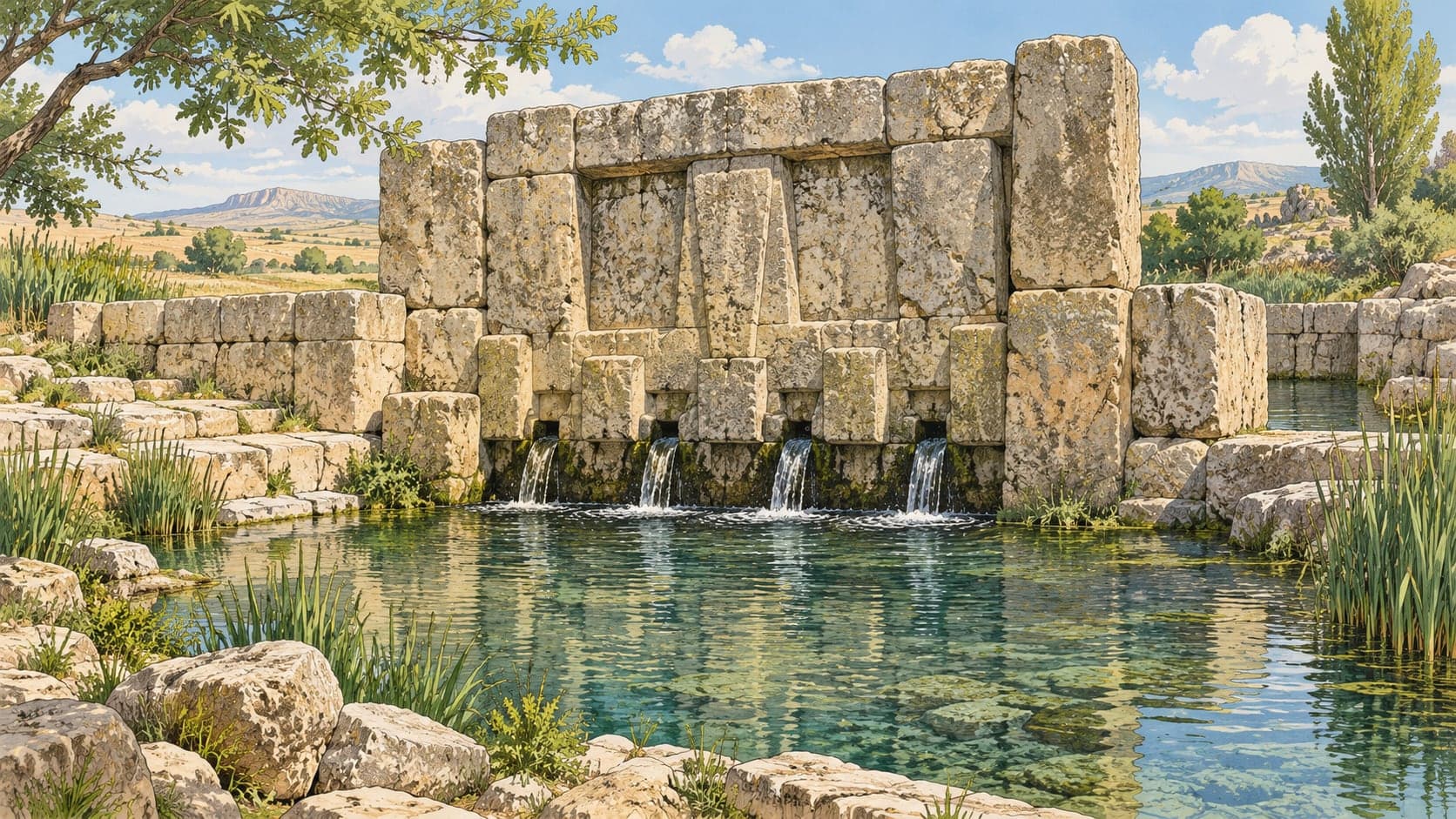
Eflatunpınar is a Hittite monument built over a spring near Beyşehir in Konya province, dated to the last quarter of the thirteenth century BC and thought to belong to the reign of the great king Tudhaliya IV. What sets it apart from the other Hittite rock monuments is that it is not carved on a natural rock face at all: it was constructed, from andesite blocks cut to fit one another and assembled with great care, and laid out as an open-air sanctuary.
The monument consists of a large pool over a natural spring, with horizontal water channels running parallel to the pool wall that feed the water into it. Figures of gods and goddesses are carved in relief on the rectangular blocks above. It was added to the UNESCO Tentative List in 2014, and the reason given was the water system itself: it is one of the rare arrangements in which flowing water was gathered in a central pool and drawn on sparingly when needed, and Eflatunpınar is the finest surviving example of a system that has continued to function since Hittite times without losing its purpose. It also tells us a good deal about the water engineering of the period. The monument is 22 kilometres from Beyşehir, at Sadikhaci.