Guide
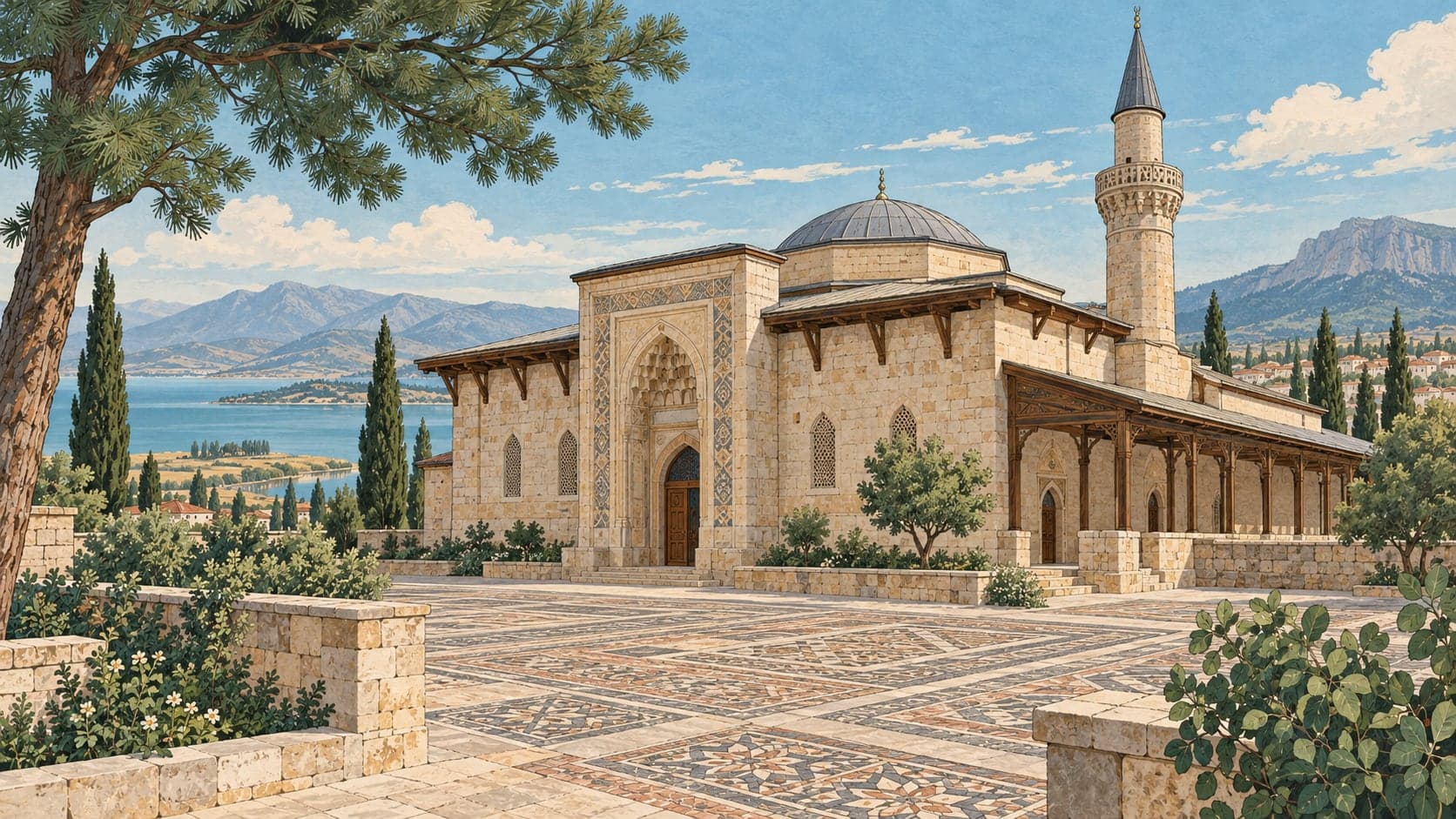
The Eşrefoğlu mosque stands a hundred metres from Lake Beyşehir and is, according to the Culture Portal, the largest of the timber-ceilinged, timber-supported mosques of Anatolia. Built between 1296 and 1299 under the Eşrefoğulları, it is among the finest Anatolian examples of the wooden-columned mosques found in the old Turkestan cities such as Samarkand and Bukhara.
More than forty wooden columns carry it. The story told is that the timbers were kept in water for six months before they were used.
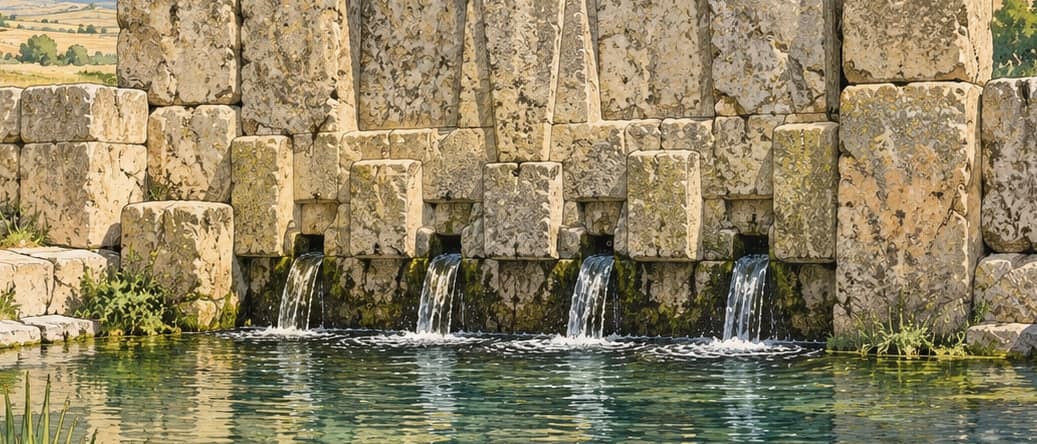
The roof was built to solve a problem that the building created for itself. For centuries the snow gathering on it in winter was pushed through an opening at the middle of the roof into the pool below, and the damp that produced kept the wooden columns from splitting and drying out under the heat of the stoves. That opening was glazed over in 1965 and no longer does its work.
The mihrab is six metres high and faced in tile mosaic. The mosque has a monumental portal, and the minbar is walnut throughout, carved and jointed without glue, worked with a fineness and regularity that carries geometric shapes and plant ornament. The ceiling is painted in colour, and the motifs in madder on the consoles are particularly worth looking at.
In 2023 the mosque was inscribed on the UNESCO World Heritage list as one of five in the group called the Medieval Anatolian Wooden Hypostyle Mosques. The others are the great mosque of Afyonkarahisar, the great mosque of Sivrihisar in Eskişehir, the Ahi Şerafettin — Arslanhane — mosque in Ankara and the Mahmut Bey mosque in Kastamonu.