Guide
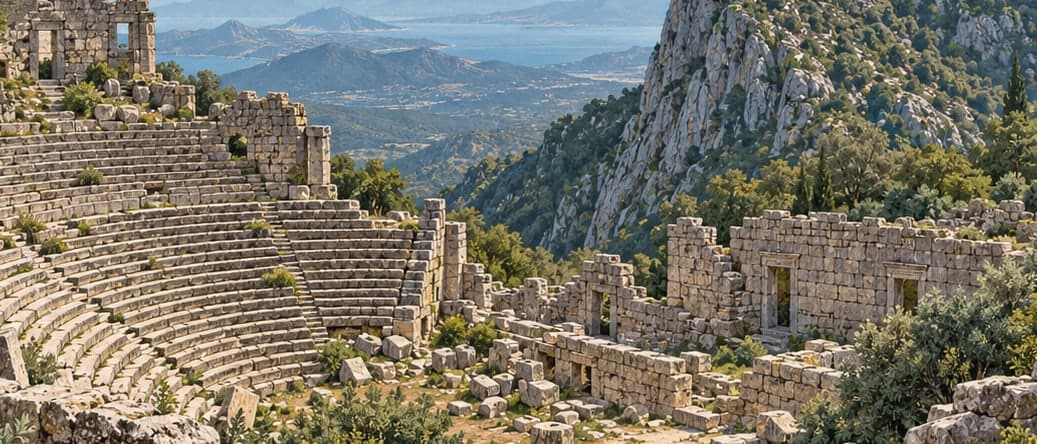
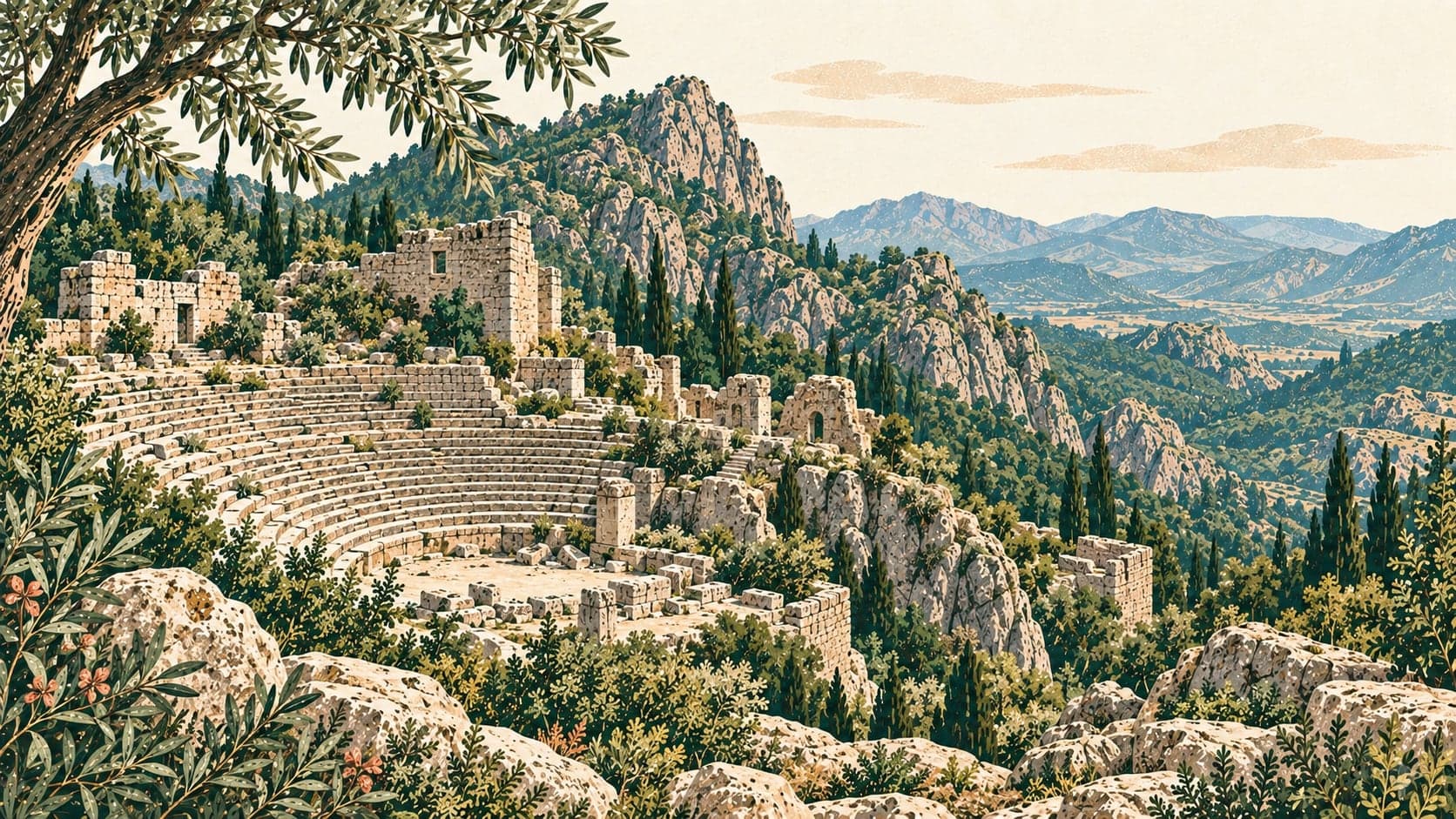
Güllük Dağı, the mountain the ancients called Solymos, was declared a national park in 1970 — the Ministry's record gives 12 October in its data fields and 3 November in its text — and covers 6,702 hectares north-west of Antalya. Its best-known feature is the ancient city of Termessos, and the Directorate states plainly that Termessos was among the main reasons the mountain was protected in the first place: the archaeological remains set against the landscape produce one of the most striking cultural and natural scenes in Anatolia.
The park carries the plant diversity of the Mediterranean climate. Survey and literature together have recorded 756 plant taxa belonging to 102 families and 401 genera, of which 102 are endemic — an endemism rate of 13.49 per cent. By IUCN categories one taxon is critically endangered, four endangered, eight vulnerable, twenty near threatened, twenty-six of least concern and seventeen conservation dependent; the remaining 679 fall into no category.
The park forms a continuous whole with the Düzlerçamı wildlife reserve and is an important habitat for fallow deer, wild goat and the Antalya salamander. Recorded here are 41 invertebrate taxa, 2 fish, 5 amphibians, 20 reptiles, 113 birds and 35 mammals. Fourteen of the invertebrates are endemic. The fish Capoeta antalyensis is listed as vulnerable. Among the amphibians, Lyciasalamandra antalyana is a local endemic with a very restricted range. The tortoise Testudo graeca is vulnerable, as are the lesser kestrel and the turtle dove among the birds — of which 77 species are resident — while the meadow pipit is near threatened. Of the mammals, the wild goat Capra aegagrus is vulnerable.
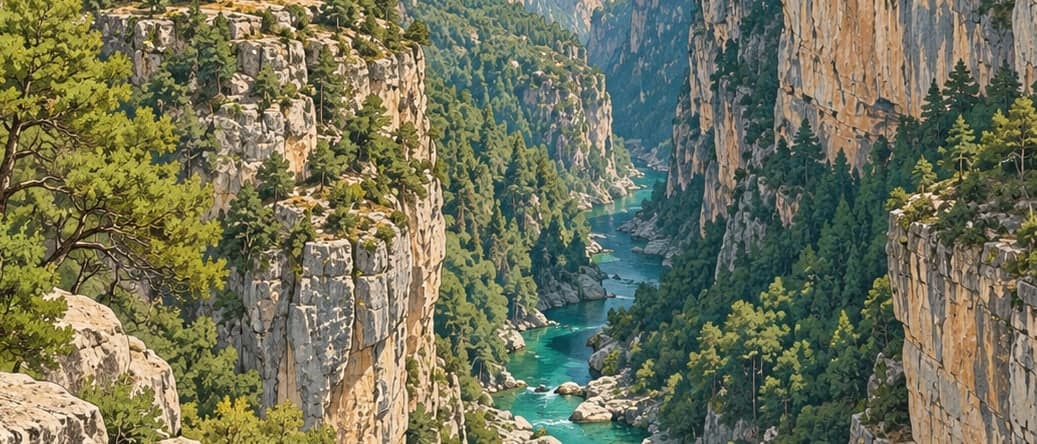
The most important geological feature is the Mecene canyon between Güllük Dağı and Kocadağ, formed by chemical weathering and tectonic movement; its walls, between 500 and 600 metres high, show the stratigraphic sequence of the western Taurus in an exceptionally clear section.
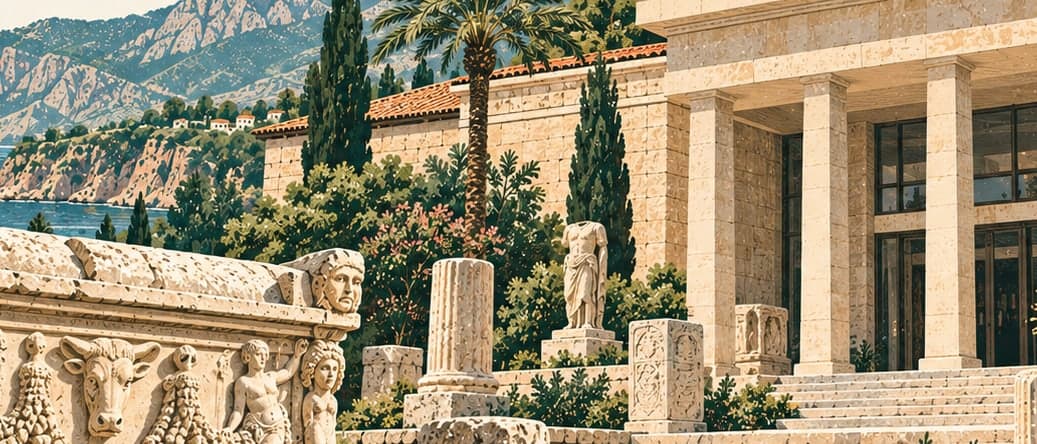
Within the park are an entrance control point, an administration and visitor centre, a day-use area with picnic ground, lavatories and a prayer room, car parks and infrastructure, the cemetery, mosque and mourning area west of the old Cumalı village settlement, a water supply installation, and a fire watchtower. The day-use area's capacity is given as 250 visitors and 100 vehicles. Alongside visiting Termessos itself, the park supports wildlife watching for fallow deer and wild goat, botany, bird-watching tours, picnicking, walking and mountain biking.
Getting there: follow the sign at the 23rd kilometre of the Antalya–Korkuteli road, and the day-use area is 500 metres further on. From there it is seven kilometres to the ancient city, by private car or on foot.
- Designated
- 3.11.1970
Entry fee
- Mediterranean group 1 · category 1 · Per person
- 95 ₺