Guide
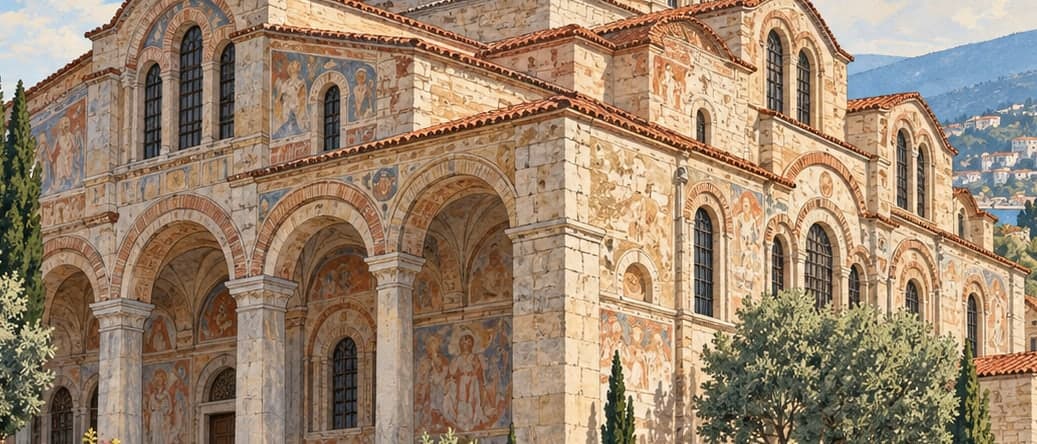
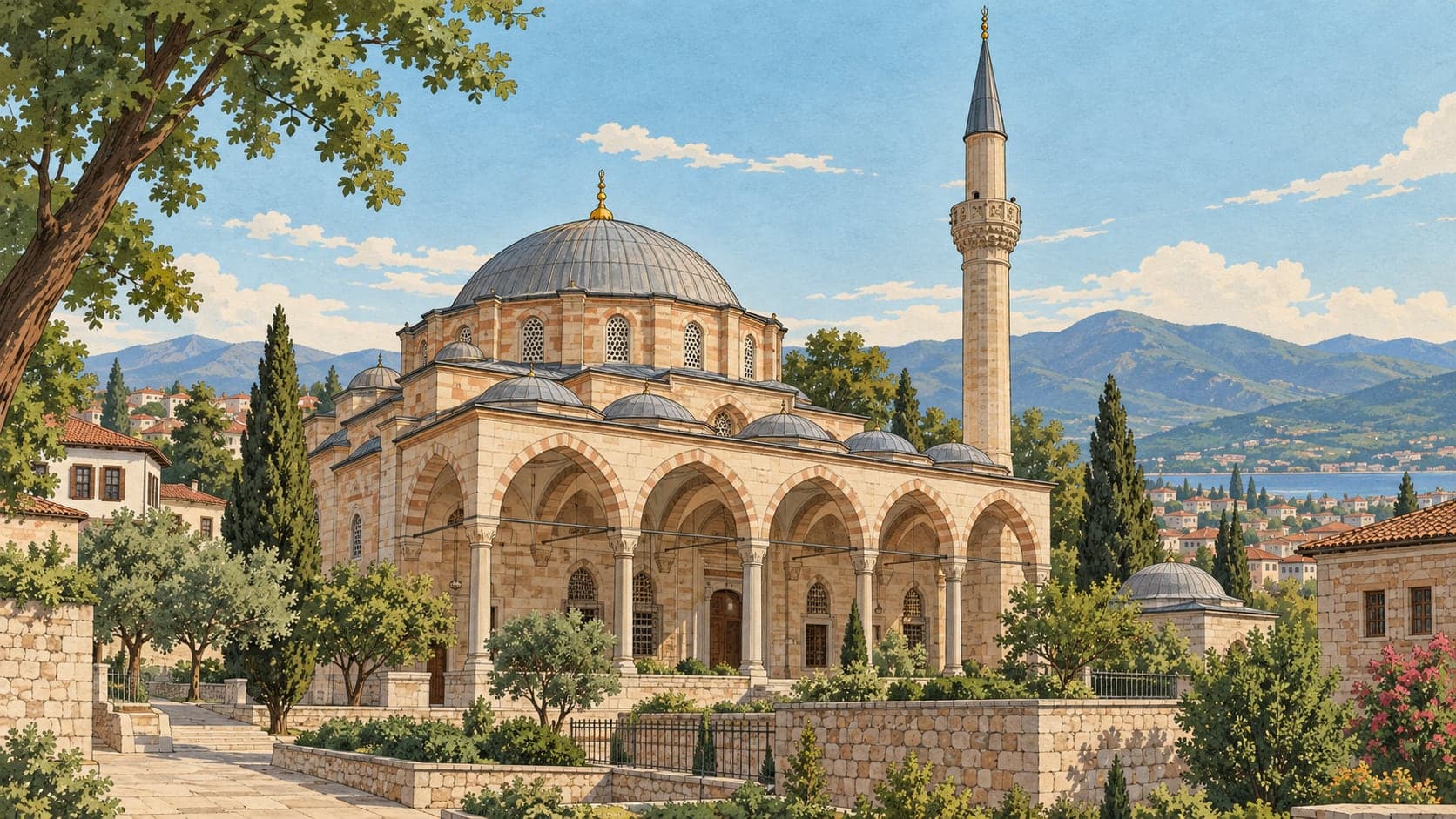
Ayvalık's Hayrettin Paşa Mosque began life in 1850 as a church dedicated to Kato Panaya, and it was converted for Muslim worship after 1928, when the Greek Orthodox population of the town left under the population exchange. It is the largest church building in Ayvalık by floor area, and what makes it worth a stop is its plainness: no dome, no carved ornament, just a long rectangular basilica whose character comes from the columns and arches of its porch and from the round windows set into the walls. Specialists who have studied the building think it also served a teaching purpose in its early years.
Inside, seven columns on each side divide the hall into three aisles that end in three apses, with composite capitals crowning the shafts. The nave is covered by a barrel vault while the side aisles and the narthex carry cross vaults; from outside the apses read as half-cones, from inside as half-domes. Twelve painted panels of Christian subjects once stood beyond the columns, and these were covered over with paint when the building became a mosque. The iconostasis wall is gone for the same reason, and a mihrab was added. The minaret stands where a flight of steps on the south side used to climb to the narthex. The walls are coursed cut stone, and the steps, window arches and frames use the local stone Ayvalık builders call sarimsak. The mosque is in the Hayrettin Paşa quarter of central Ayvalık and is reachable on foot or by local transport.