Guide
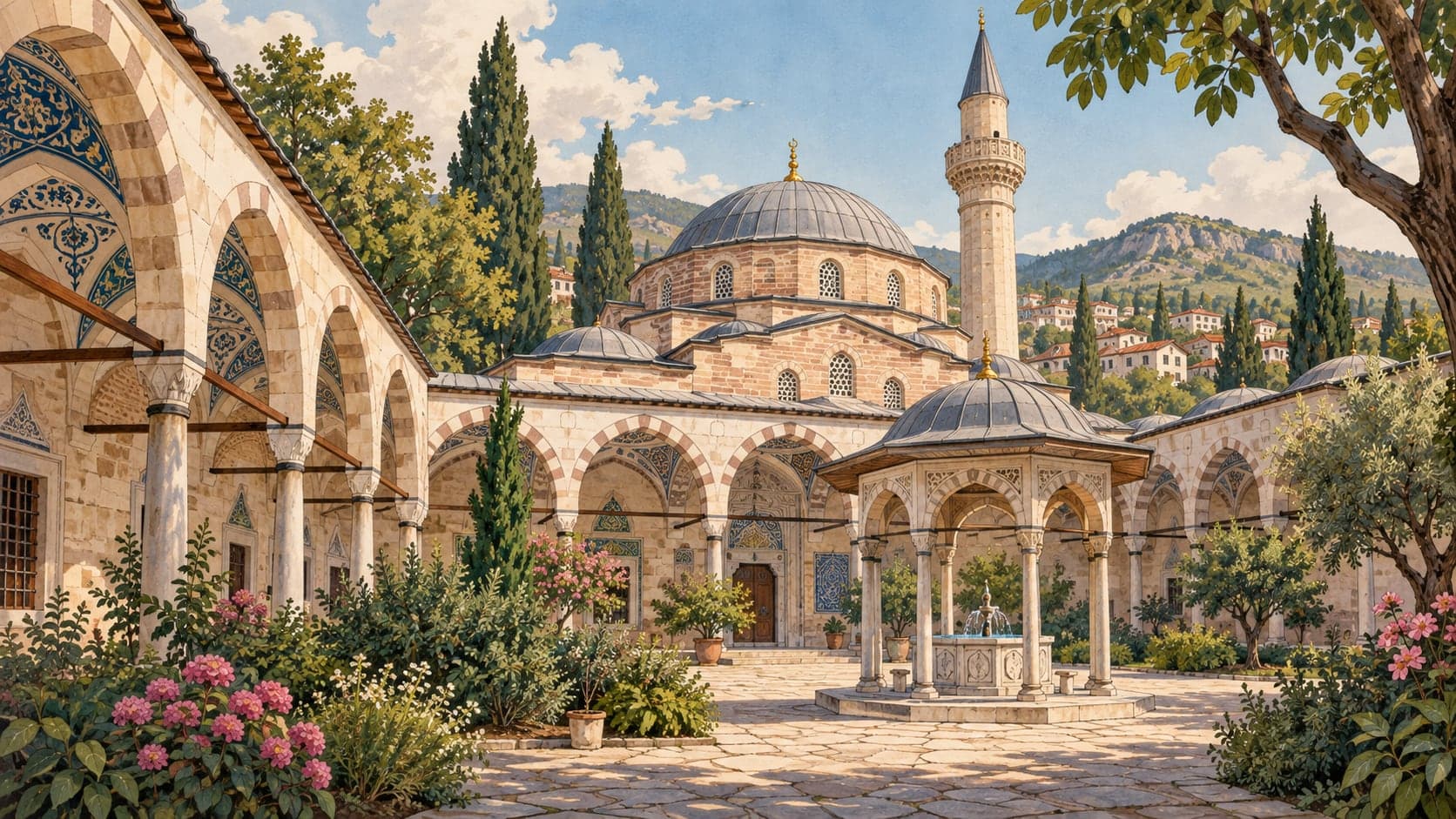
The Yıldırım Mosque is the oldest Ottoman building in Balıkesir. It has no foundation inscription, but its endowment deed and other sources place it in 1388 and name Bayezid I as its patron. It stands in a large courtyard with a medrese and a soup kitchen, forming a complex, and was repaired in 1818 and again after the earthquake of 1897.
Inside, the rectangular hall is divided into three aisles by two rows of five columns. The columns are reused, set without bases, and their capitals are reused too — six Byzantine, three Ottoman and one an old base turned upside down. Other architectural pieces taken from ruins in the area appear through the building. The walls are cut stone with wide joints, with a single course of brick in the west wall alone. Traces of the first building show here and there on the outside, but the overall appearance is late, under a tiled roof.
The qibla side is plain like the others, with rectangular windows either side of the mihrab and round-arched ones below them. The west front is livelier: of its two rows of windows the lower are original and the upper, round-arched, belong to the repair of the early nineteenth century.
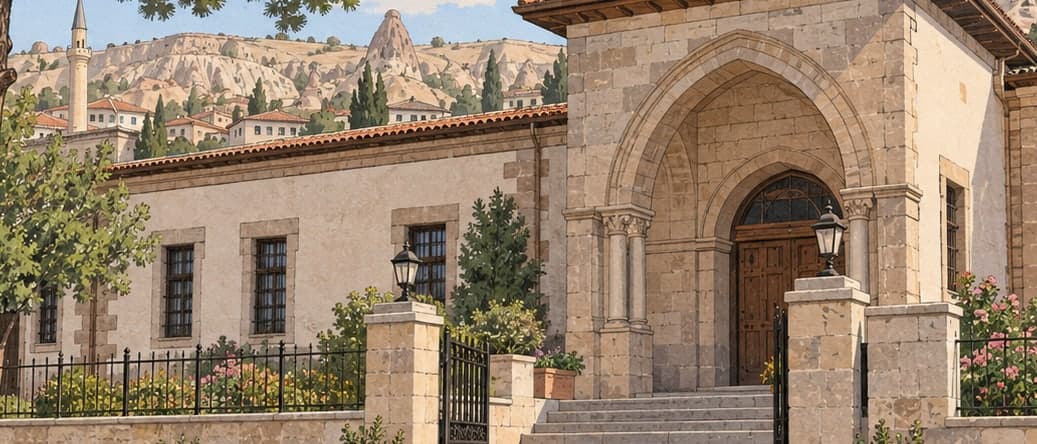
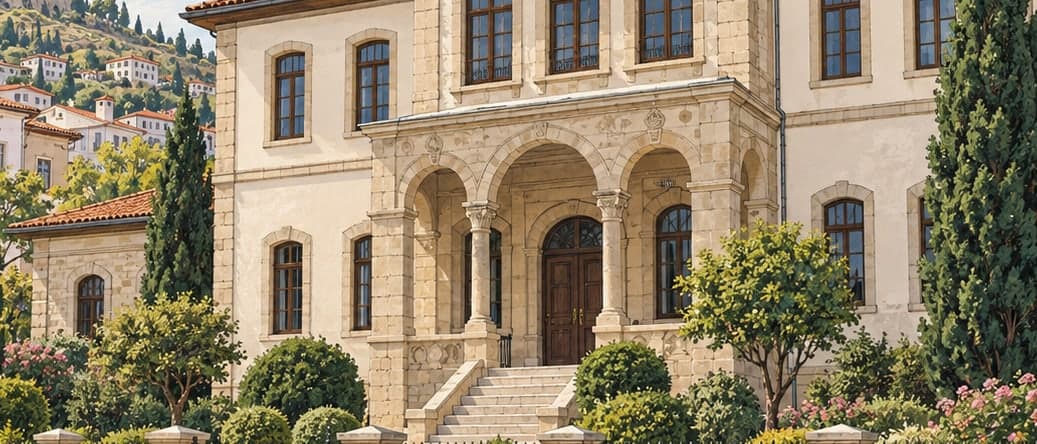
There are doors in the north, east and west walls. The wooden and glazed porch on the north was added later. Over the main door, between thick square piers with stalactite capitals, sits a low pointed arch of cut stone, and inside it a framed panel for an inscription that was never filled.
The west door is the grander of the two. A tiled canopy on four wooden posts covers it, and its wooden ceiling is richly worked with an Empire-style boss at the centre; the ceiling was renewed after the 1897 earthquake. The heavy rectangular frame projecting from the wall around the mihrab is also new, though the five-sided niche behind it narrows upward through stalactites.