Guide
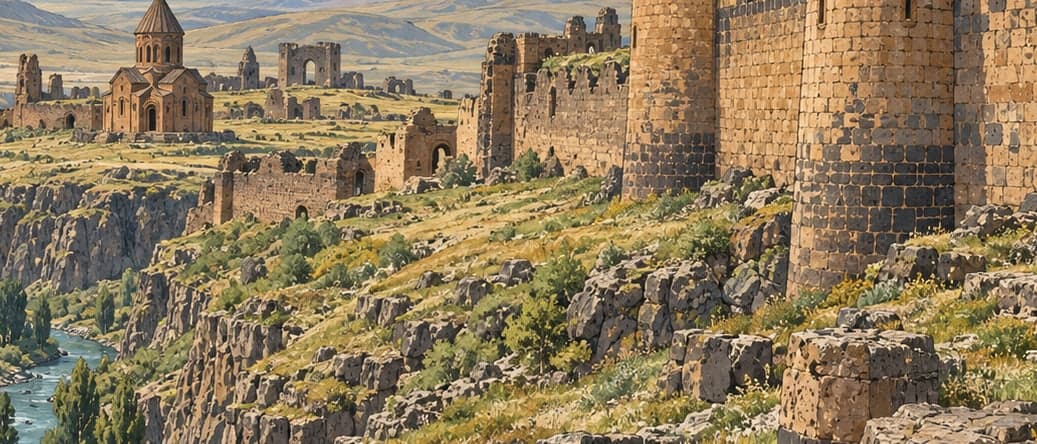
The cathedral at Ani stands on the high ground above the Arpaçay valley, in the southern part of the ruined city, and it is one of the registered monuments of the site. It was commissioned in 1001 by Katrenide, wife of the Bagratid king Gagik I, and the architect named in the record is Trdat, the same builder credited with repairing the domes of Hagia Sophia in Constantinople. When Alp Arslan took Ani in 1064 the building was turned into a mosque and the sultan is said to have led the first Friday prayer inside it, which is why Turkish sources also call it the Fethiye Mosque.
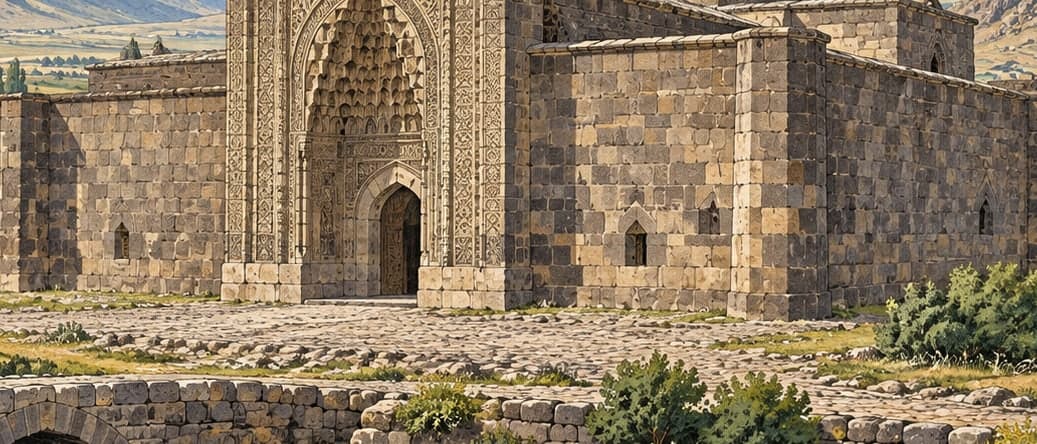
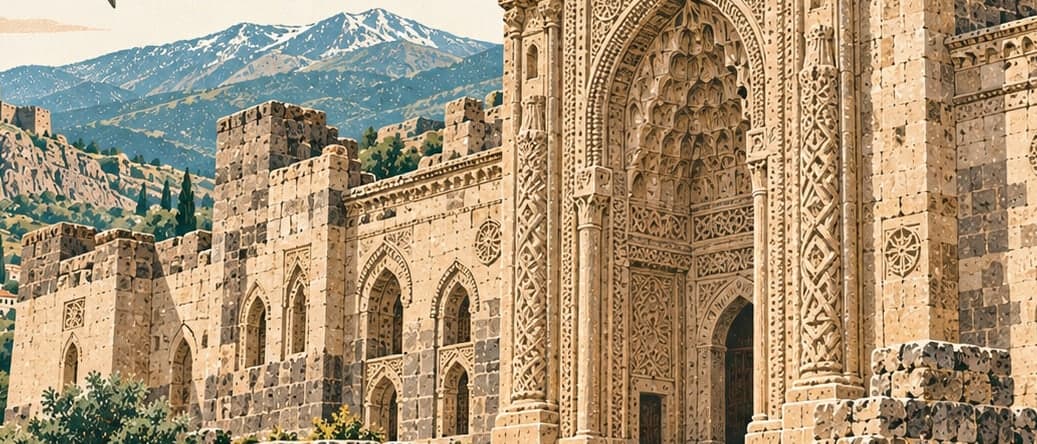
The fabric is reddish tuff, raised on a stepped platform. The plan is a cross, with the central space marked off by heavy piers carrying the arches. The semicircular apse sits higher than the rest of the interior and is articulated with niches, a treatment typical of eleventh-century church building in the region. Three doorways survive, and each had its own use: the western one for the congregation, the northern for the patriarch, the southern for the king. Light comes through tall, narrow arched windows, and the outer walls carry relief work including crosses, khachkars, geometric and plant patterns, and eagle figures. The cathedral is inside the Ani archaeological site at Ocaklı village; buses run there from central Kars twice a day, and tour operators and private cars make the trip as well.