Guide
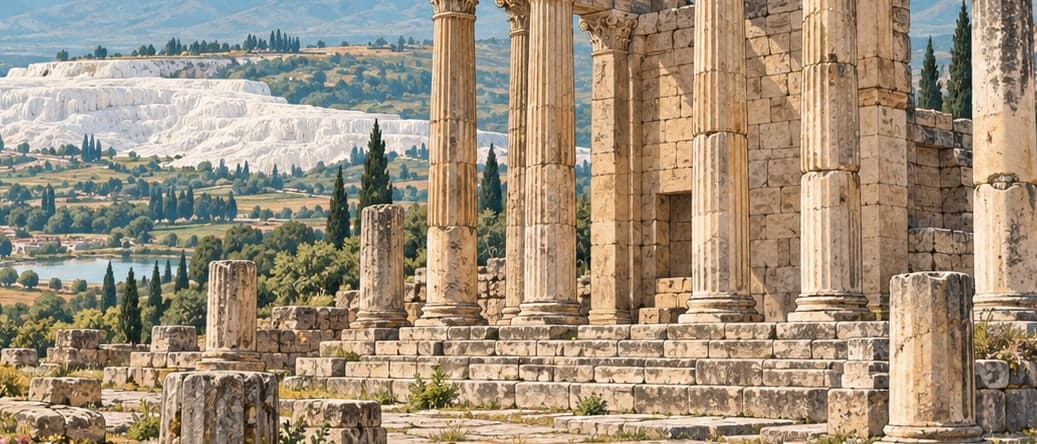
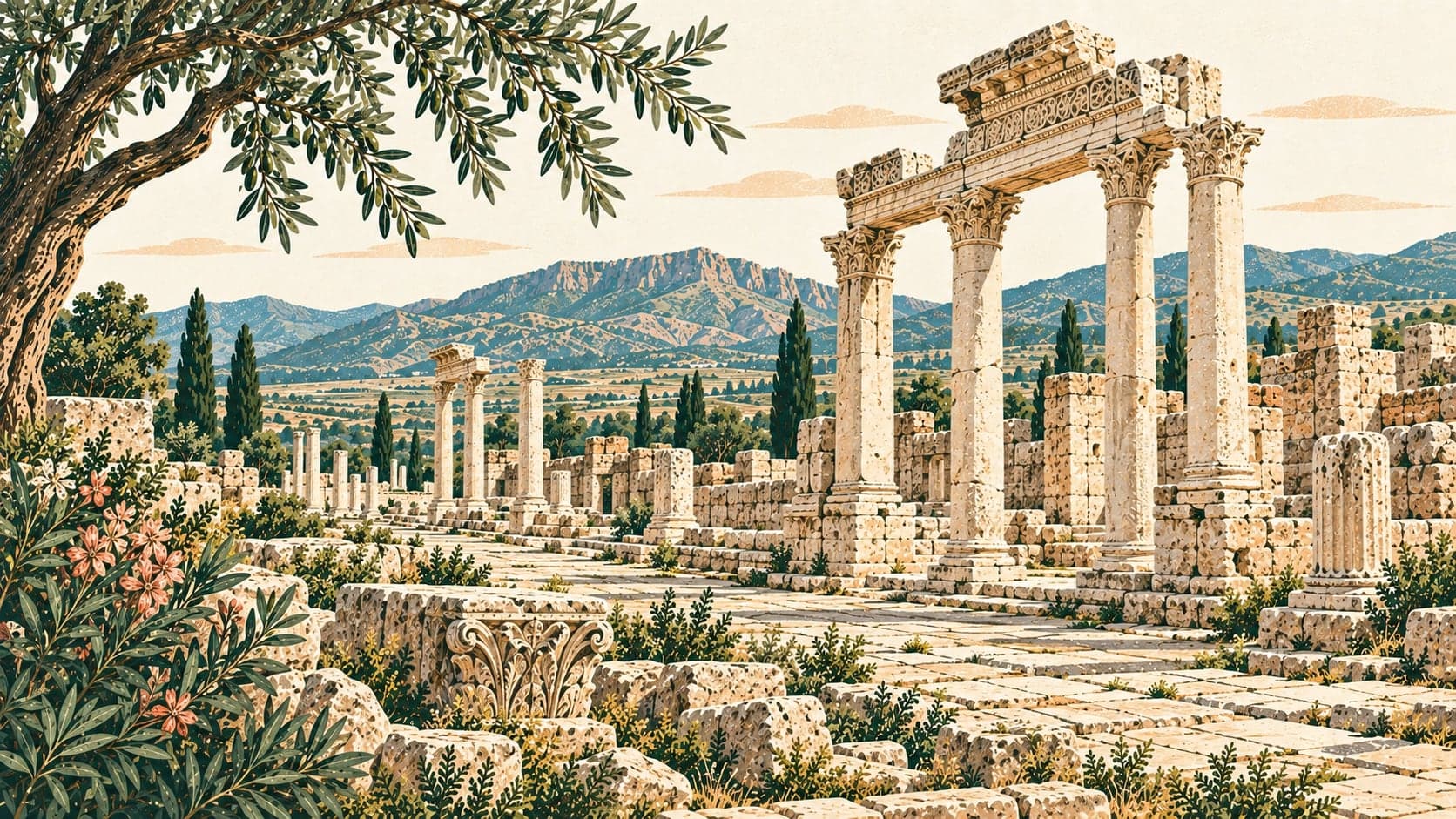
Lounda was a settlement of the late Hellenistic, Roman and Byzantine periods, of the size of a small town rather than a city. Its remains lie in the district of Çal, between the villages of Mahmutgazi and Aşağıseyit, in the place called Değirmenderesi, on the land around the bend where the Büyük Menderes turns from its southward course and runs north. The site occupies a valley and its slopes about a kilometre east of the village of Yukarıseyit.
No monumental buildings appear on the surface, which does not necessarily mean none were built when the settlement was founded. The climate here is transitional, between the Mediterranean and a harsh continental type, but the valley is closed on all four sides and the river keeps it mild, and that made life at Lounda easier.
The settlement is thought to have been founded in the late Hellenistic period and to have been lived in without a break until Byzantine times, after which, from the eighth century AD, it appears to have contracted and broken up. At its most populous, in the second and third centuries AD, it may have spread out as far as the flat ground around the valley.
The rock-cut tombs in the canyons along the valley slopes were in use in the late Hellenistic and early Roman periods. In the valleys to the west, climbing toward Yukarıseyit, there were Hellenistic tombs, probably with antechambers.
No coin struck by Lounda has ever been found, which suggests that the place never became a city and remained a town even in the Roman period. Having no defensible position, its population is likely to have fallen away quickly, and the site was probably abandoned by the eighth century at the latest — before the Arab armies reached the region — except for those families who lived by the river. Life went on in the fertile land around it all the same.