Guide
The mosque was built in 1486 by Mehmet Paşa, lala to Şehzade Ahmet, son of Bayezid II.
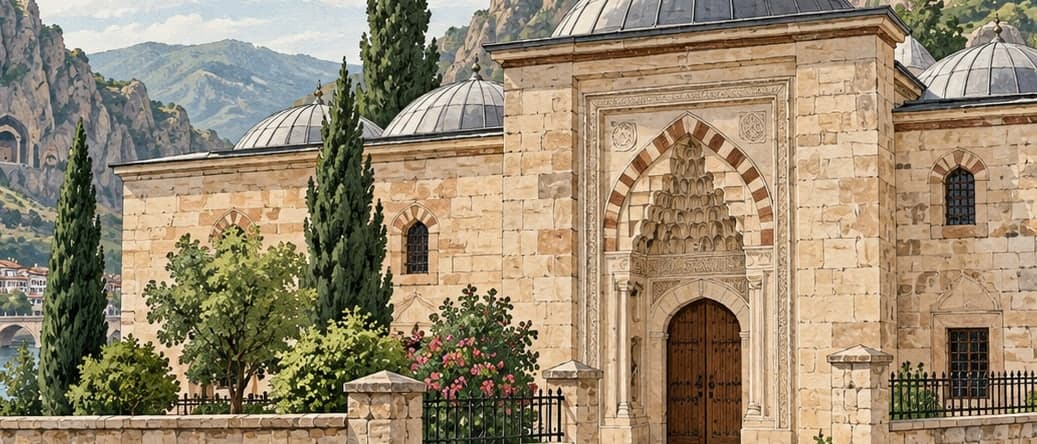
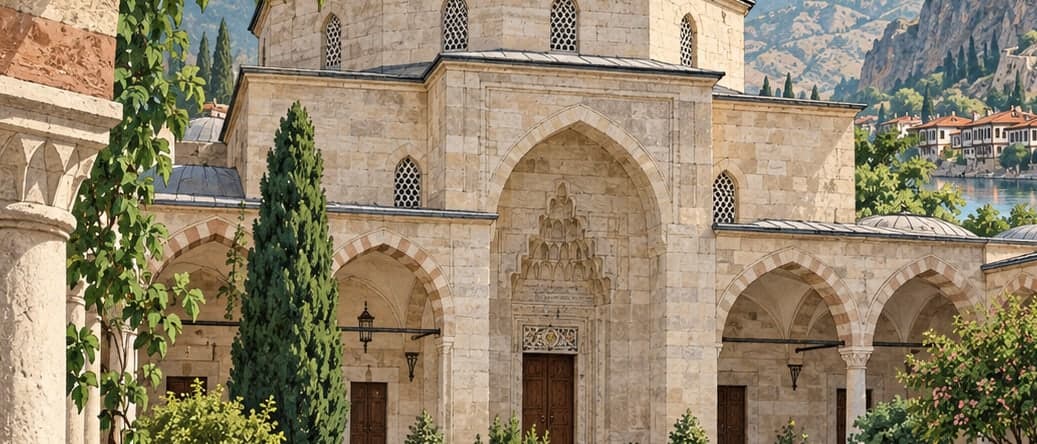
The plan is an inverted T, and the prayer hall itself is square, its high ceiling covered by a dome on an octagonal drum. On the north front seven octagonal columns divide the porch for latecomers into six bays, each under a dome, the columns tied to one another by marble arches worked in red and white. The way in is through the third bay from the left, a bow-arched door set in a deep niche and carrying the mosque's foundation inscription.
Two of its finest pieces are not both in place. The door — one of the best examples of Turkish wood carving — is displayed in the Amasya Museum. The marble minbar, decorated with curving branch and leaf motifs, is likewise a rare example of Turkish marble work, and that one is still in the mosque.