Guide
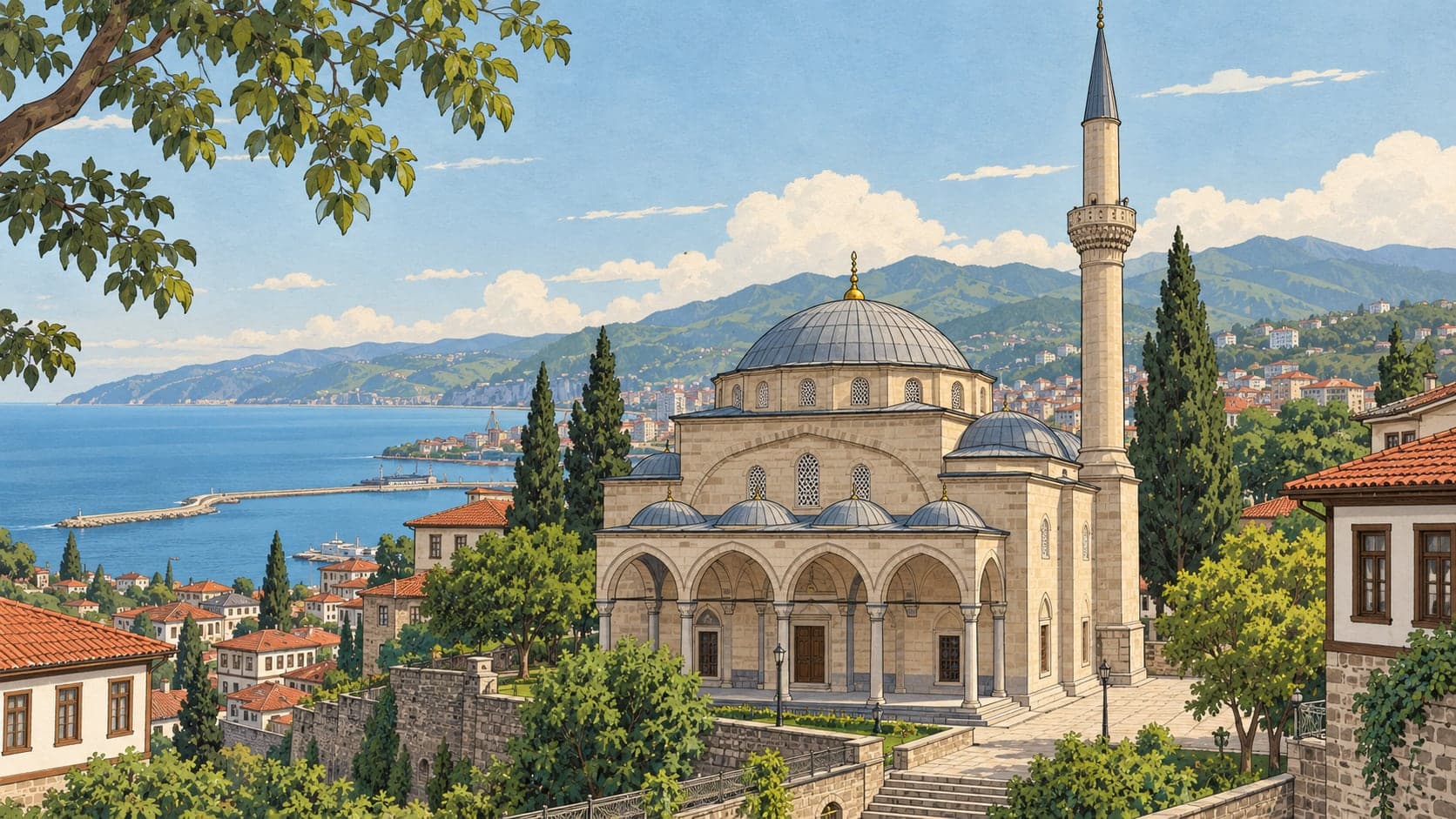
The building inside the walls in the centre of Trabzon was the church of the Theotokos Chrysokephalos, known to have belonged to a monastery complex. It mattered as the place where the Komnenos emperors were crowned, and with the conquest of 1461 Mehmed II turned it into a mosque. Taken as a symbol of that conquest, it was known in the Ottoman period as the Old Mosque, and today also as the Ortahisar Fatih mosque and the Fatih great mosque.
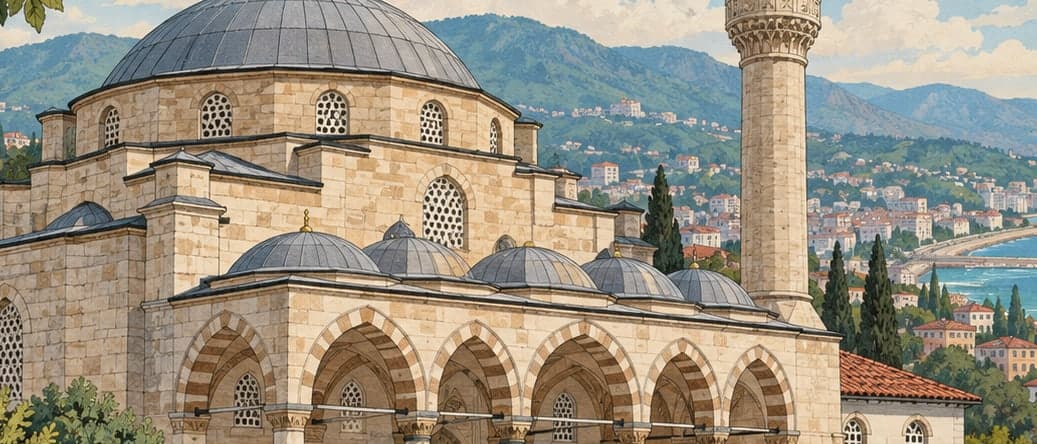
It is masonry, built of cut stone and rubble, with three aisles. Written sources record that various additions were made after the conversion: a mihrab, a minbar and a minaret were added, and the aisles, the narthex, the main apse and the outer narthex were all turned into the enclosed prayer space. Painted decoration was applied to the centre of the dome, the pendentives and the edges of the dome windows.
The mihrab is white marble and soft red stone, with a shallow muqarnas hood, and carries a single line of Qur'anic text in sülüs on a marble panel; its carved ornament is made of stylised plant and geometric motifs.
The walnut minbar is a work of art in itself. Its carving is mostly geometric and plant motifs, and the side panel uses true kündekari while the other parts imitate that technique. It carries some repairs and additions, and when it was first made is not known.
The minaret stands north of the mosque, to the right of the main door, built of two-coloured stone with a single balcony. It is about thirty-five metres high, and parts of it carry the character of Ottoman architecture in the westernising period.