Guide
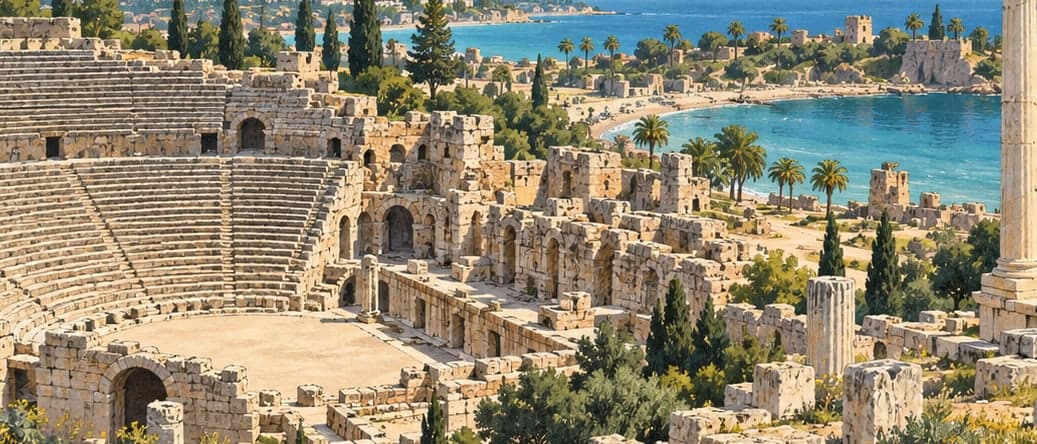
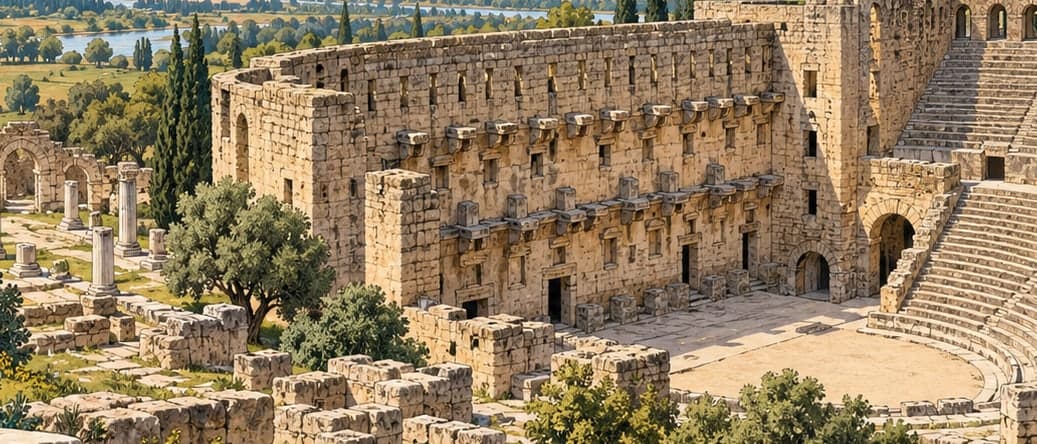
The museum at Side is inside a Roman building: the Agora Bath, put up in the Roman period and altered over centuries, which now houses the collection while keeping its own fabric. It stands in the centre of the ancient city, among the theatre, the agora and the monument of Vespasian.
The bath was uncovered in excavations in the 1950s, partly restored between 1959 and 1961 with three of its sections closed off, and opened as a museum in 1962 at a ceremony attended by Arif Müfid Mansel, who led the excavations at Side, and by Jale İnan. The objects found since digging began in 1947 form the core of the collection, which has grown with recent discoveries and with pieces never displayed before; the display areas were renewed under the ministry's Geleceğe Miras project, and one result is that inscriptions in Sidetic, the city's own script, can be seen together for the first time.
Inside, themed cases run from the Late Bronze Age through the Roman and Byzantine periods. Terracotta figurines from the early settlement, and scales, weights and steelyards that show the city's trading past, sit alongside statues of gods and goddesses from its public buildings, friezes on the theme of the marine thiasos, and carved architectural pieces showing the birth of Aphrodite. Sculpture from the South Stoa-Gymnasium and the Imperial Hall is shown with coins, ornaments, amphorae, a statue of Hermes, sarcophagi with Erotes, and bronze and marble figurines.
The ministry sets the collection against the city's own history: Side had a Luwian-rooted language and its own writing system, monumental architecture and a harbour opening to the Mediterranean. Archaeological evidence shows settlement from the eighth century BC, with some finds from the region traceable further back, to the Late Bronze Age.