Guide
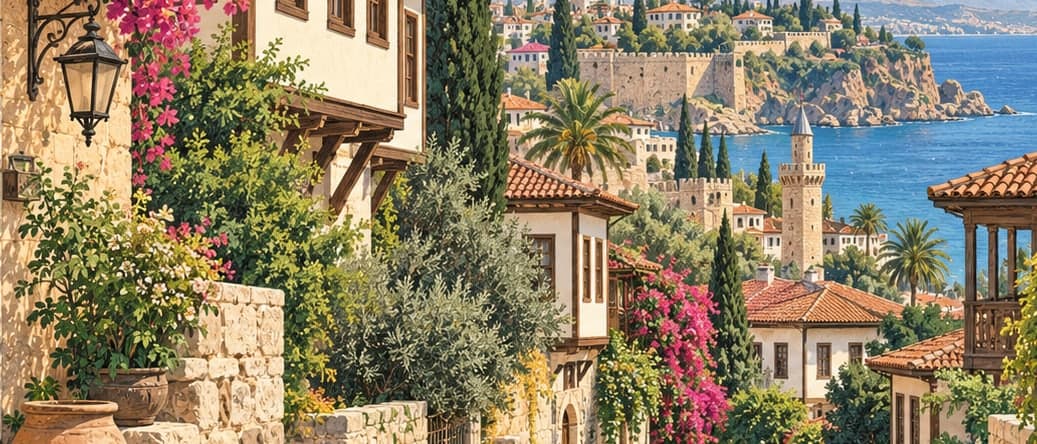
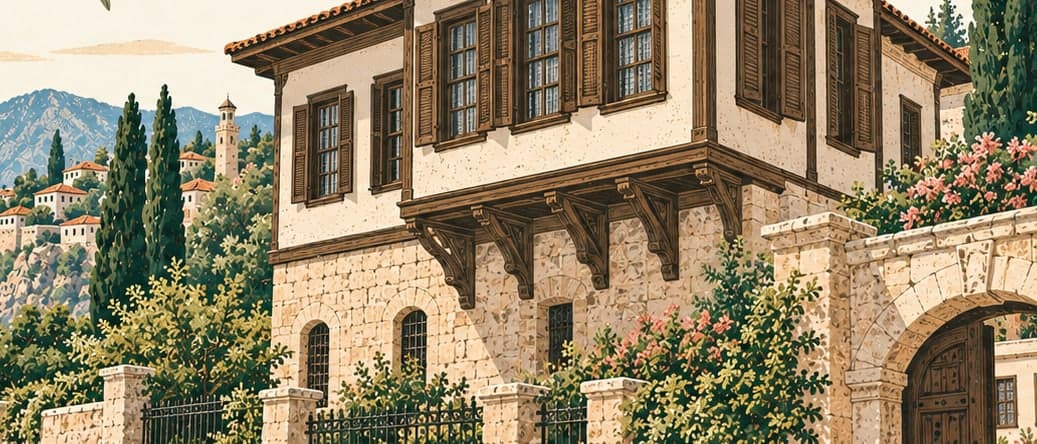
The museum is not one building but four, standing together inside the Yivli Minare complex in Antalya's Kaleiçi: the mevlevihane itself, a bath, and the tombs of Zincirkiran Mehmet Bey and Nigar Hatun. It is in the old town, beside the Yivli Minare mosque on İskele Caddesi, close enough to walk to from the city centre.
What is shown is the Mevlevi order — information panels, reconstructions, costume and objects belonging to the tradition. The building is also used rather than only displayed: classes in Islamic philosophy and thought, readings from the Mesnevi and the Divan, seminars, performances of Sufi music and sema ceremonies all take place here.
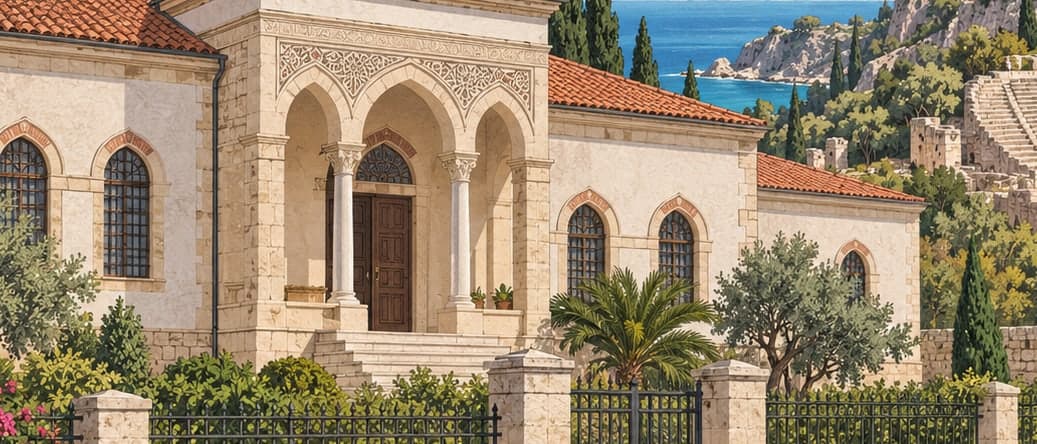
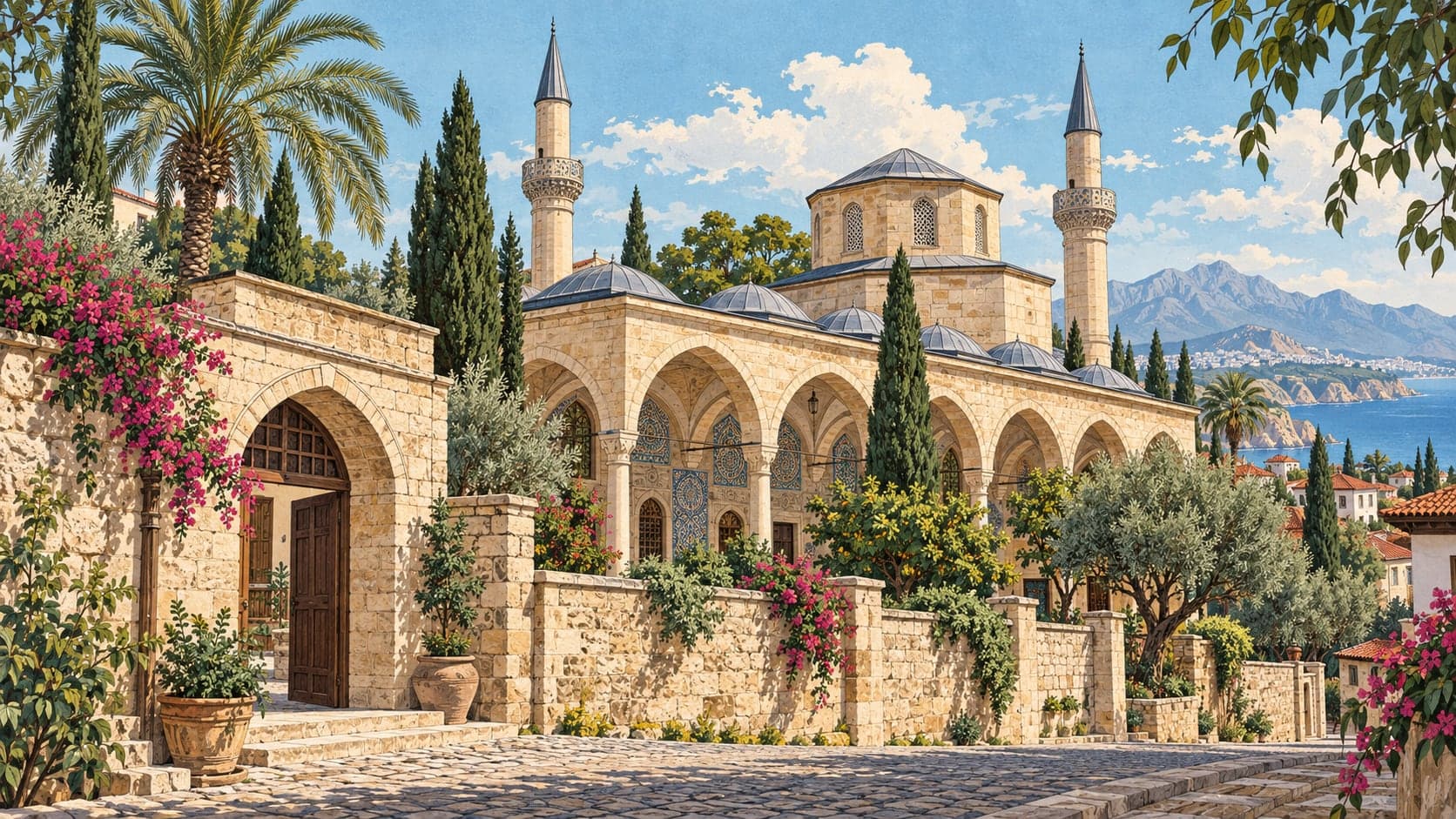
The mevlevihane stands on a raised terrace among the buildings around the fluted minaret. It is a rectangular two-storey masonry building entered through an arched door on the south front; off the main space there is a pointed-vaulted eyvan to the east, one room to the north-east, two to the north and three to the west, all under barrel vaults, and these are thought to have been the dervishes' cells. Its date is genuinely disputed. It is said to have been built as a mevlevihane or dervish lodge in the Seljuk period, but a nineteenth-century source names Şehzade Korkut as its founder and endower, which would put its use as a mevlevihane from the early sixteenth century; in the seventeenth, Evliya Çelebi describes it as one.
The bath goes by several names and its date is not known either, though it is argued to have been built as a palace bath in the first quarter of the thirteenth century and is known to have served the lodge from the early sixteenth. Its plan, size and position suggest private use rather than crowds. Of the two tombs, Nigar Hatun's — she lived from 1450 to 1503 and was the mother of Şehzade Korkut and Fatma Sultan — is built of dressed and rubble stone with brick and some reused marble, in a manner recalling Seljuk tombs though probably no earlier than the fifteenth century. Zincirkiran Mehmet Bey's is octagonal on a square base under a pyramidal cap, with three sarcophagi inside said once to have been tiled, and an inscription over the door dating it to 1377.