Guide
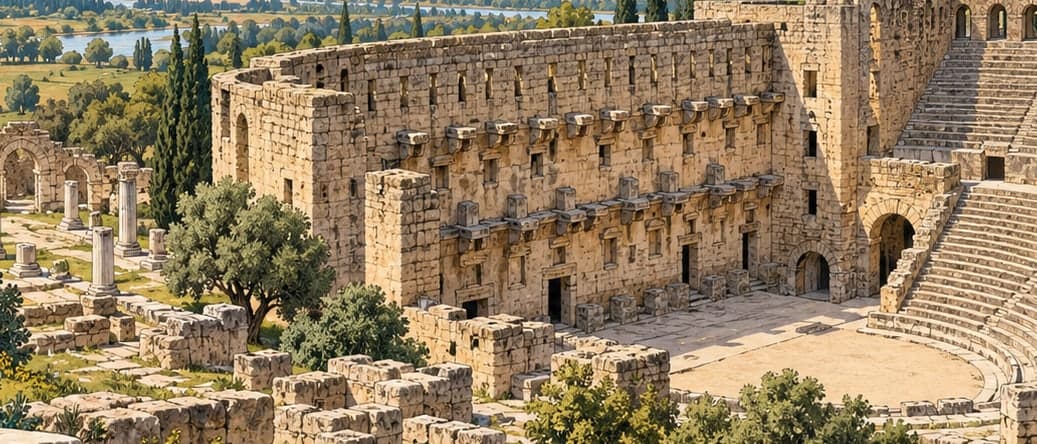
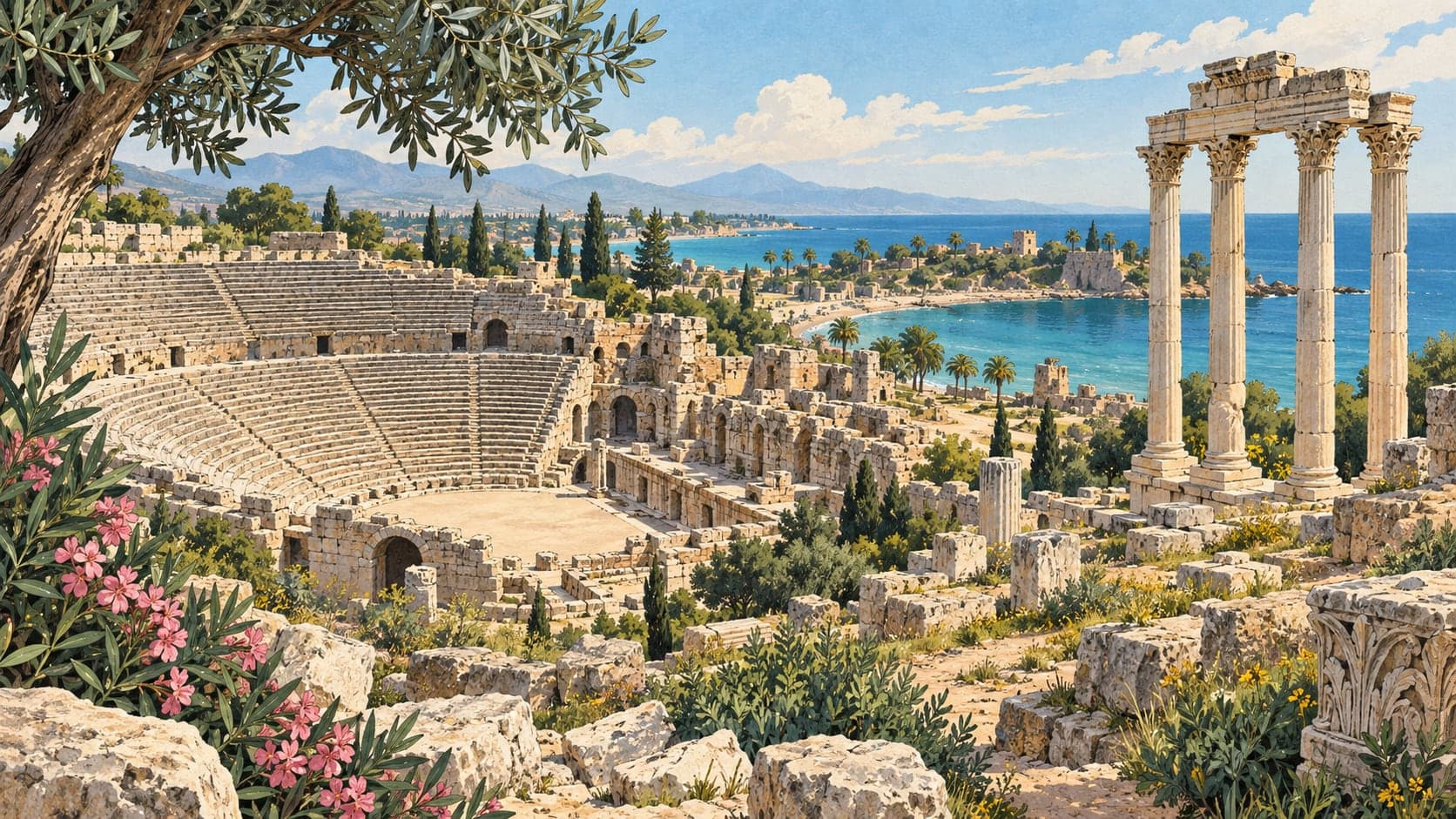
The theatre is at the middle of Side, and the ministry calls it the only example of its kind in Anatolia. It stands where the peninsula the city occupies narrows.
What makes it unusual is that two traditions meet in one building. In plan it follows the Hellenistic habit of carrying the seating past a half circle, but the way it is built is Roman. The scaenae frons, the stage building, rises through three storeys. The part of the cavea up to the diazoma rests against a slope; above that the incline was made with vaults, including trapezoidal ones, and the upper rows were set on that constructed slope. That is what sets it apart from anything else in this landscape.
Its decoration shows the baroque manner of the Antonine period and carries the line of architecture that begins with the theatre of Pompey in Rome. A frieze of Dionysus runs along the podium of the first storey, telling the life of the god of wine and master of the theatre in order from west to east, ending at the east with the battle of the giants. The face of the stage building was likewise given movement with architectural ornament and sculpture.
The temples of Apollo and Athena stand apart from the theatre and are worth the walk, particularly toward the end of the day.