Guide
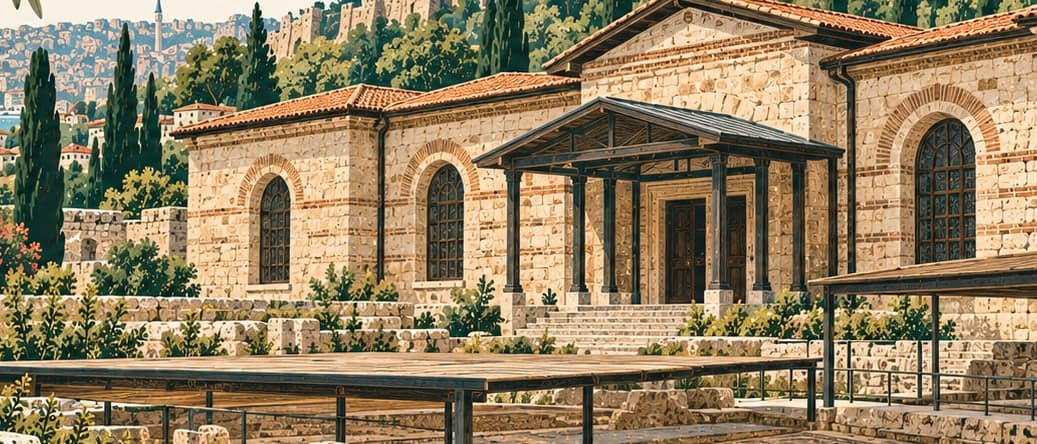
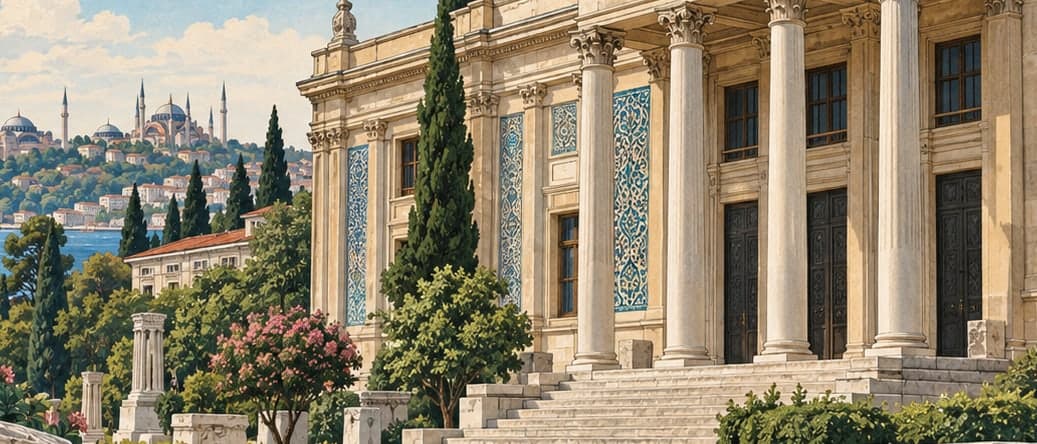
The Carpet Museum occupies the imperial pavilion of the Sultanahmet Mosque, and the building is part of the point. Built with the mosque between 1609 and 1617 for Ahmed I by the architect Sedefkar Mehmet Ağa, it is the earliest example of the hunkar kasri — a pavilion where the sultan could sit, rest and talk before or after prayer. Repeated repairs have cost it many of its original details; its last major restoration followed a fire in 1949, and the original roof and decoration are gone. The construction ledger's list of purchases records that it was furnished with costly fabrics, kilims and carpets.
The museum runs over two floors. The entrance corridor and the ramp up to the first floor hold the large carpets; the three rooms upstairs hold the small ones. The Directorate General of Foundations, which runs it, describes it as the only museum in Türkiye devoted solely to carpets.
The collection was formed from carpets given to mosques over the centuries under an old Islamic practice of endowment, which is why so much of it is both historically and artistically significant. It holds 448 carpets, of which 62 are shown in rotation — so what you see on one visit is not what you would see on another.
The earliest piece dates to the 14th century, from the period of the Anatolian principalities. Beyond that the display takes in early Ottoman carpets of the 15th century; classical-period carpets of the 16th and 17th, including Uşak, Bergama, Konya and Kula work; an 18th-century Kazak carpet; a 16th-century Persian carpet; Caucasian and Turkmen carpets; and a 19th-century Yagcibedir prayer rug, alongside prayer rugs of the 19th century from around Kula, Gordes, Konya, Ladik and Milas.
The museum is in the courtyard of the Sultanahmet Mosque and is reached by tram.