Guide
Pınara lies 40 kilometres from Fethiye. Its name is read as Pinale in Lycian inscriptions, and the ministry notes that the name of nearby Minare village recalls it, without claiming a connection.
The ancient writer Stephanus, quoting Menekrates of Byzantium, gives the founding this way: when Xanthos grew too populous, a group of its elders founded a city on the high summit of Mount Kragos and called it pınara, meaning round. The ministry adds an observation in support — the upper acropolis, where the city's earliest remains lie, really is round.
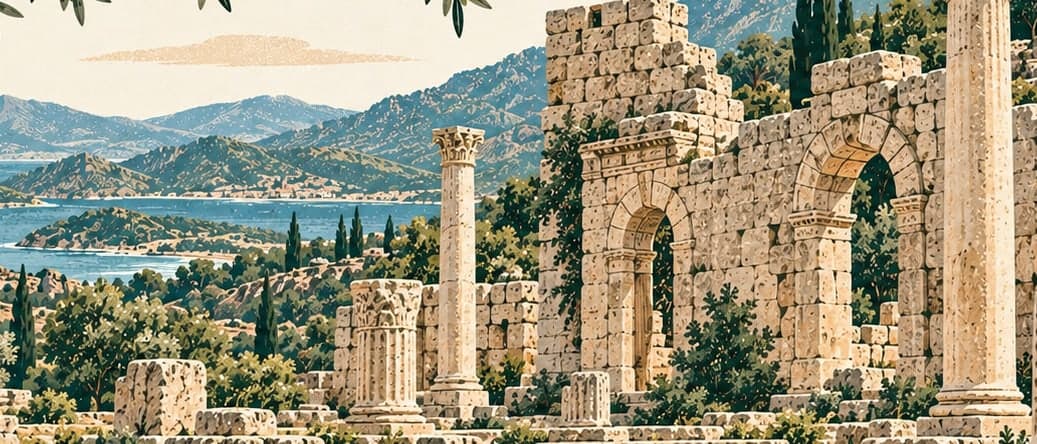
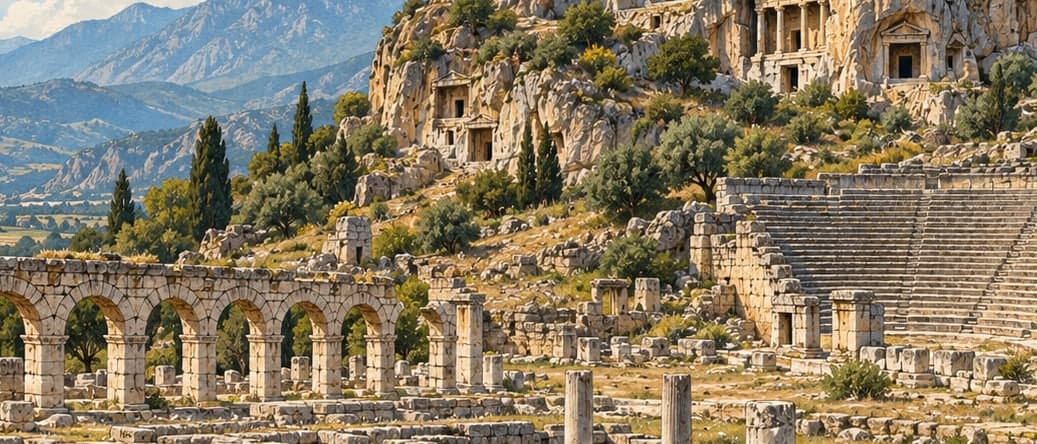
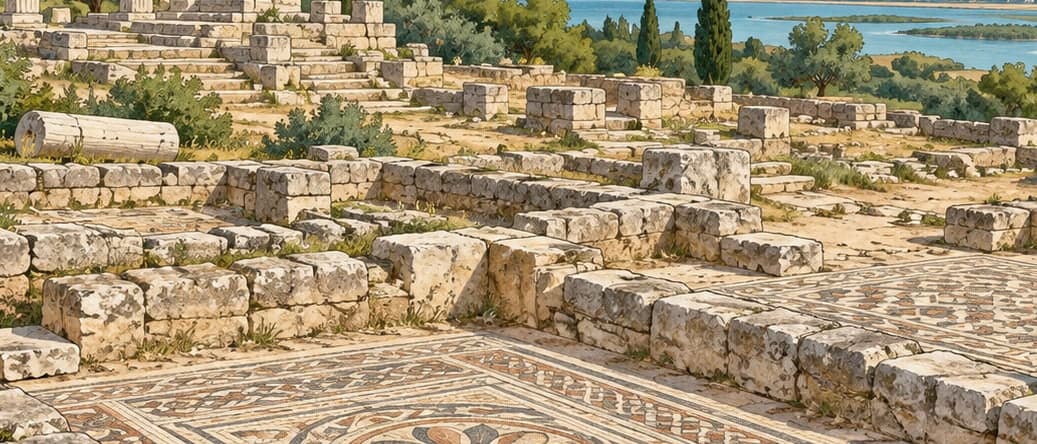
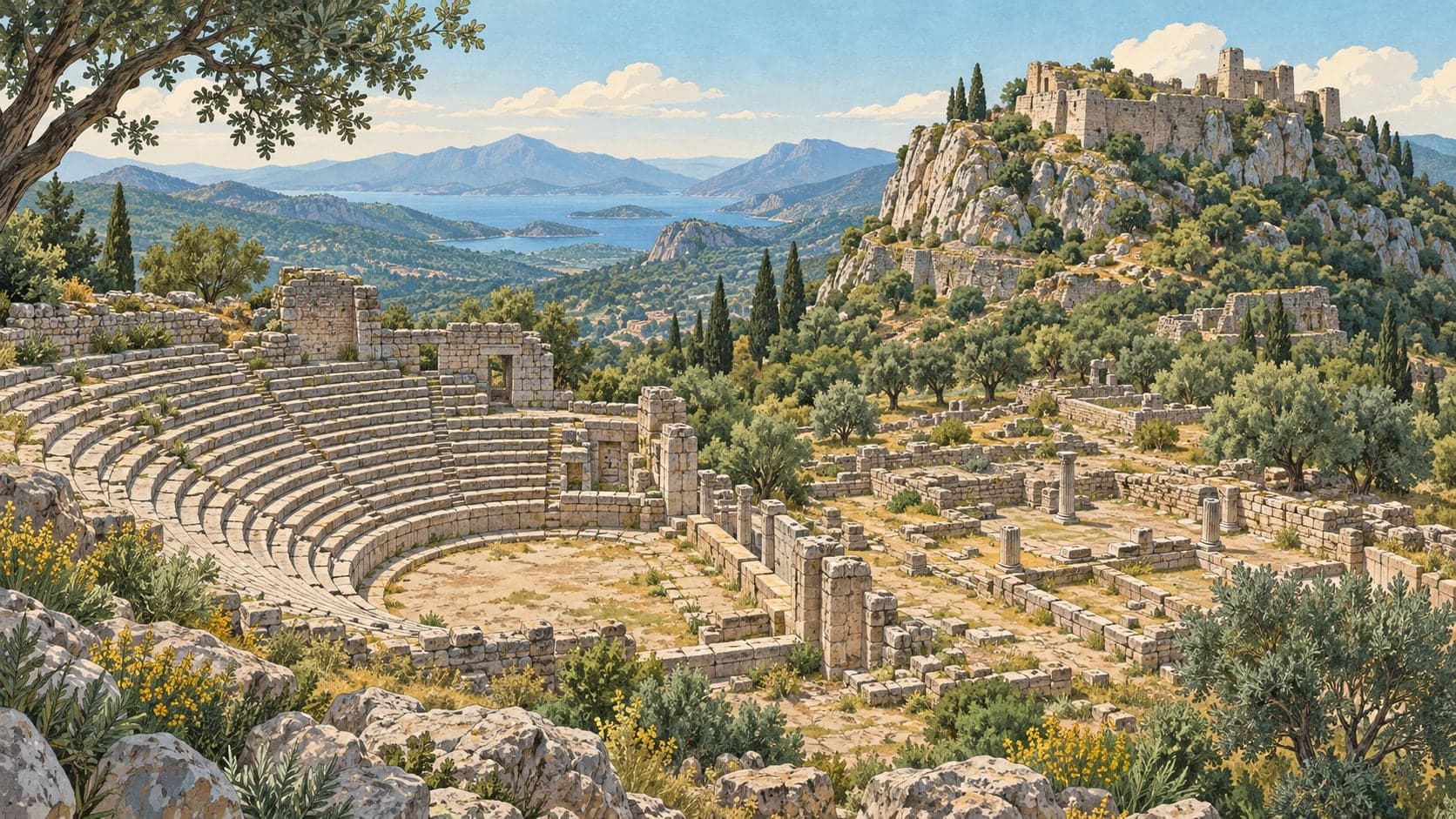
Which part you can reach matters. The lower acropolis is the easier, and holds the odeon, the agora, a temple and pillar tombs; its slopes are sheer but it is supported by a terrace and strengthened with walls, and the spring below it gave the city its water. The upper acropolis rises on a steep face.
That face is covered with hundreds of rock tombs, most of them in the form of houses. One of the house-type tombs matters more than the rest, for the reliefs on its pediment and inside its ante wall: the walled city shown in that relief is Pınara, and the tomb is taken to be a prince's. The site as a whole is made up of baths, a theatre, an agora, an odeon, the rock tombs and the two acropoleis.