Guide
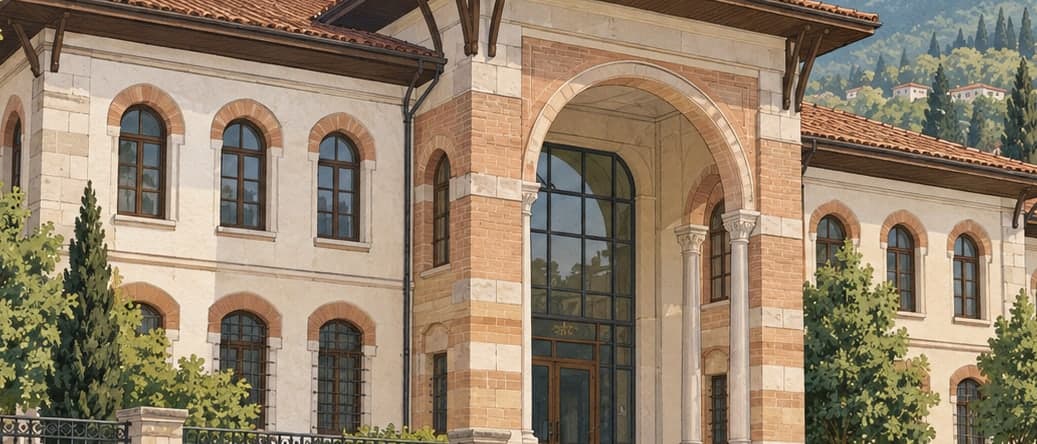
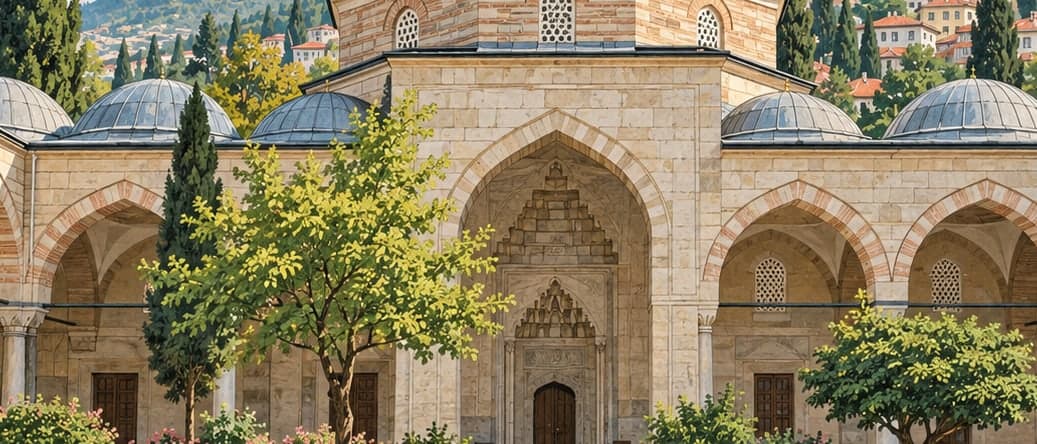
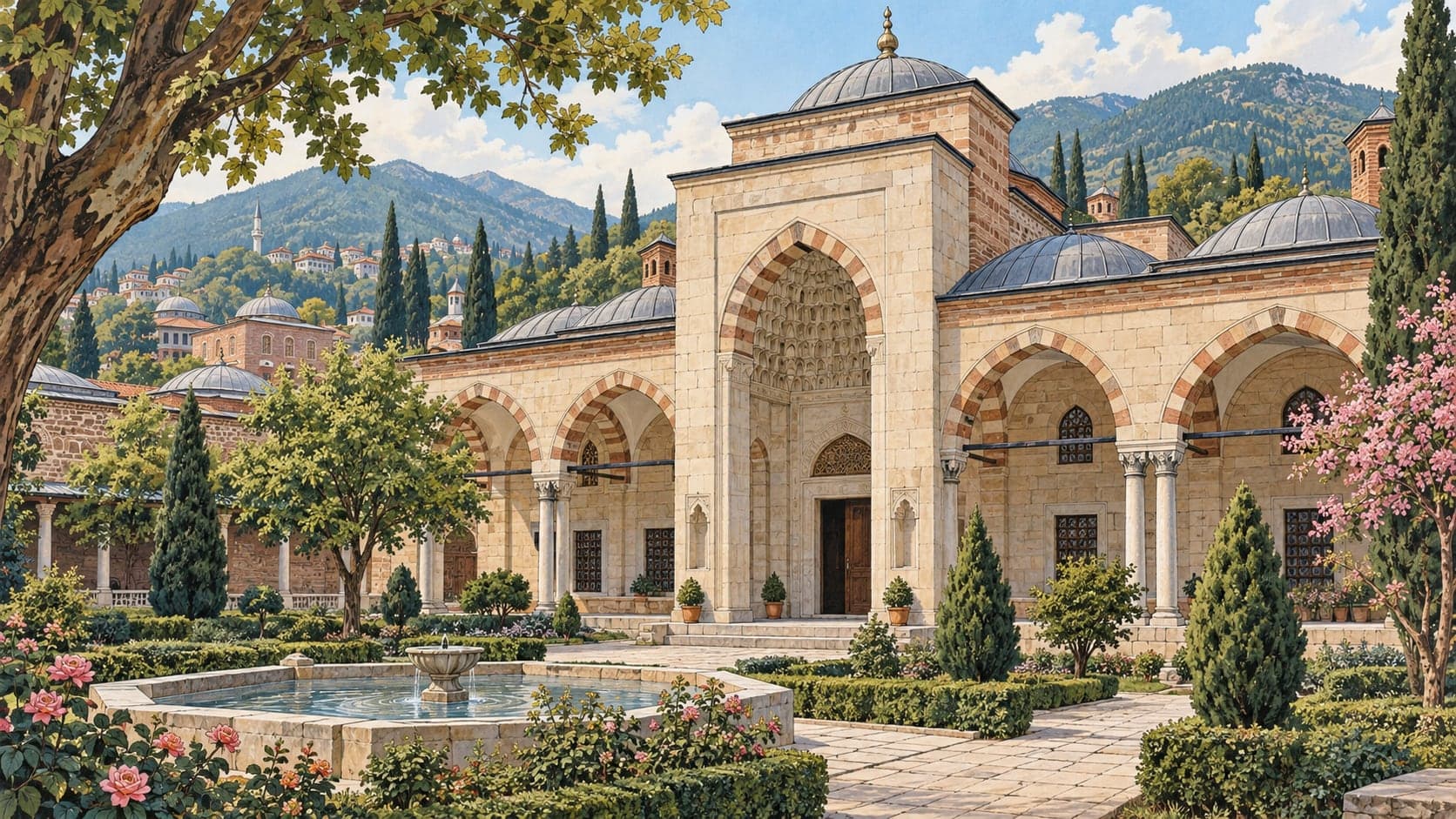
The Bursa Museum of Turkish and Islamic Art occupies the Yeşil Medrese, built in 1419 under Çelebi Mehmed as part of the Yeşil complex. The building was reorganised in 1972 and has served as this museum since 1975. Before planning a visit, note that the Ministry's page opens by stating the museum is closed for renovation; no reopening date is given.
Its halls and rooms hold material from the 12th century to the 20th: metalwork, ceramics, wood, embroidery, arms and armour, manuscripts, Islamic coins, Islamic inscriptions and gravestones, and ethnographic material of the Seljuk and Ottoman periods. Among the collections a visitor would remember are objects connected with the traditional Karagöz and Hacivat shadow play, bath equipment from the Bursa region, items from the city's lodges and dervish houses, Ottoman decorations and medals, calligraphic panels by various masters including Şeyh Hamdullah and Hafız Osman, and copper kitchen and coffee ware.
The most important single pieces are manuscripts. They include a book of prayers written in 975–976 by Ibn Hilal Ibn al-Bawwab, a richly illuminated copy of the Surat al-Baqara of the 14th century, a Quran dated 1323, a Quran belonging to Sultan Murad II, and a Quran bound in gazelle hide that a Mamluk sultan presented to Bayezid I. Fifteenth-century tiles stand beside them.
The garden works as an open-air museum in its own right: gravestones of distinction found at various sites around Bursa, spanning the 15th to the 19th century, are displayed there. The address is 1. Yeşil Caddesi, Müze Sokak, Yıldırım, and buses from the centre of Bursa to the Yeşil quarter serve it.