Guide
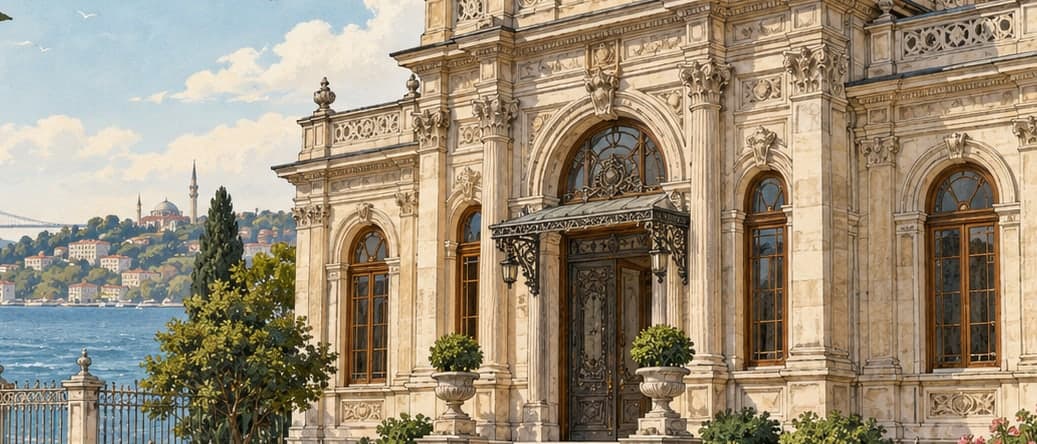
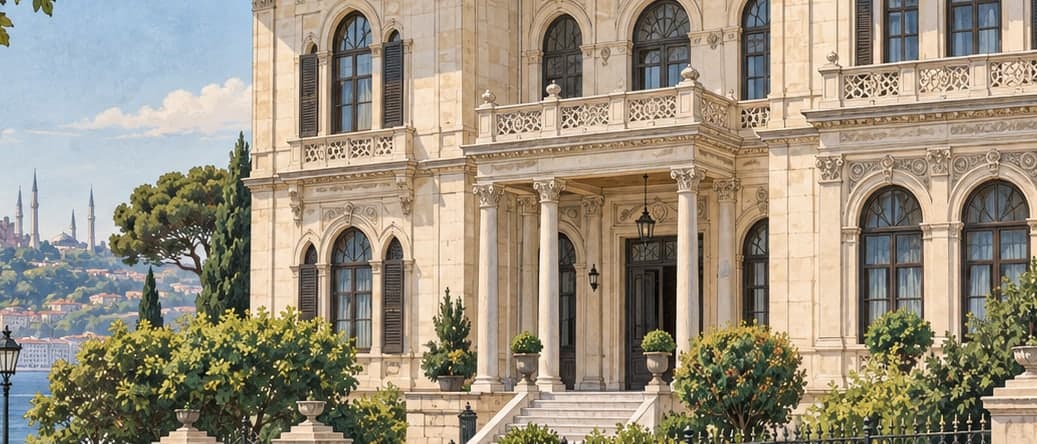
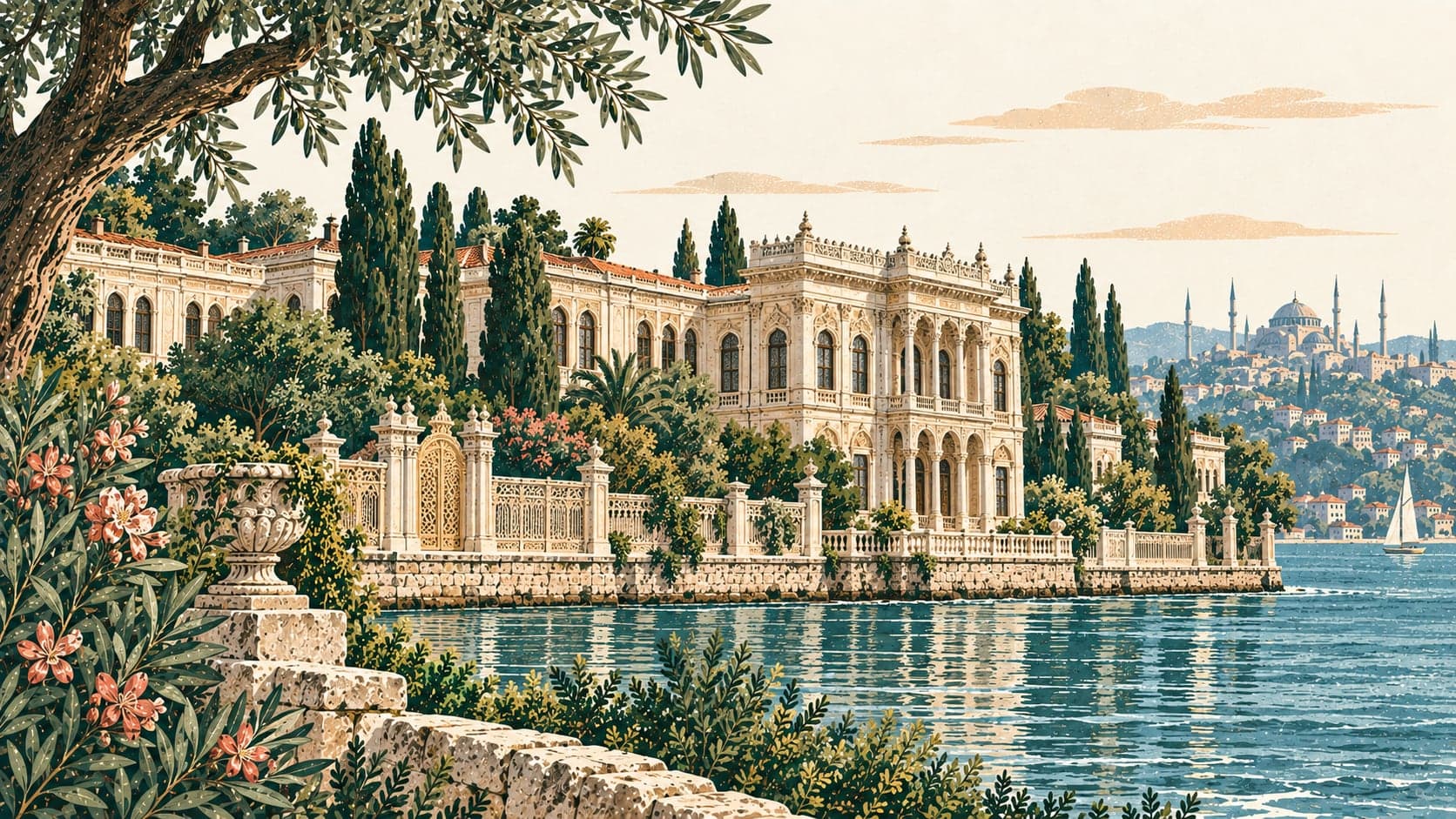
Yıldız Palace is not a single building. It is a whole of palaces, pavilions, administrative, guard and service buildings and parks set within gardens and woodland that begin at the shore of the Marmara and climb north-west up the whole slope to the ridge, in what is now the Beşiktaş district. It was first built for Mihrişah Sultan, mother of Selim III, and served as the main palace of the Ottoman state above all in the reign of Abdülhamid II, from 1876 to 1909. It is on Türkiye's Tentative List for World Heritage, and opened as a museum in 2024.
The ground was a hunting place for the sultans from the reign of Süleyman I onward. It is not known exactly how far the gardens and woods called the Civan Kapucıbaşı and Kazancıoğlu gardens overlapped the palace grounds, but they very probably took in the site; they were added to the royal gardens in the reign of Ahmed I. Various sultans used the area for hunting and rest in the seventeenth and eighteenth centuries, and although there were small pavilions here under Ahmed III and Mahmud I, the foundations of the complex proper were laid by Selim III. Buildings were added at different times as need arose, and these — among the most carefully made of their day — turned the place into somewhere to live rather than merely to visit.
Abdülhamid II is said to have left Dolmabahçe in 1876, for reasons of feeling after the two depositions it had seen, and withdrawn to the better-protected Yıldız. In that period Yıldız became the main focus of political power, overshadowing the Sublime Porte, the seat of government that had been the axis of political life in the Tanzimat era. The court that ordered the execution of Mithat Paşa and Mahmud Celaleddin Paşa sat here in 1882 and took the name of the Yıldız Trial from it. After that the palace became known as a centre of fear and intrigue under Abdülhamid's rule, and for a time his censorship administration forbade the use of the word yıldız in the Ottoman press on the grounds that it might carry political overtones. When he was deposed after the events of 31 March 1909 the palace was plundered by a crowd and partly burned; it is said that during the plunder, people who had informed for him or worked as police agents sought out and tried to destroy the documents concerning them.
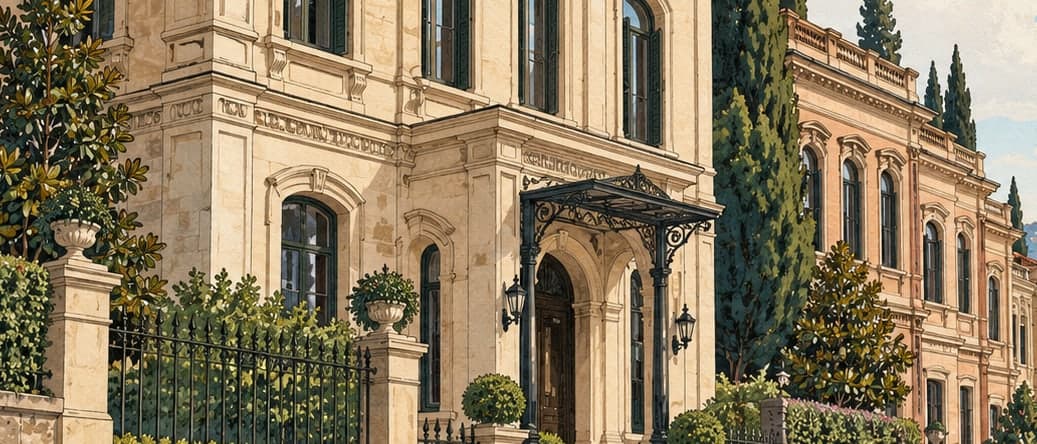
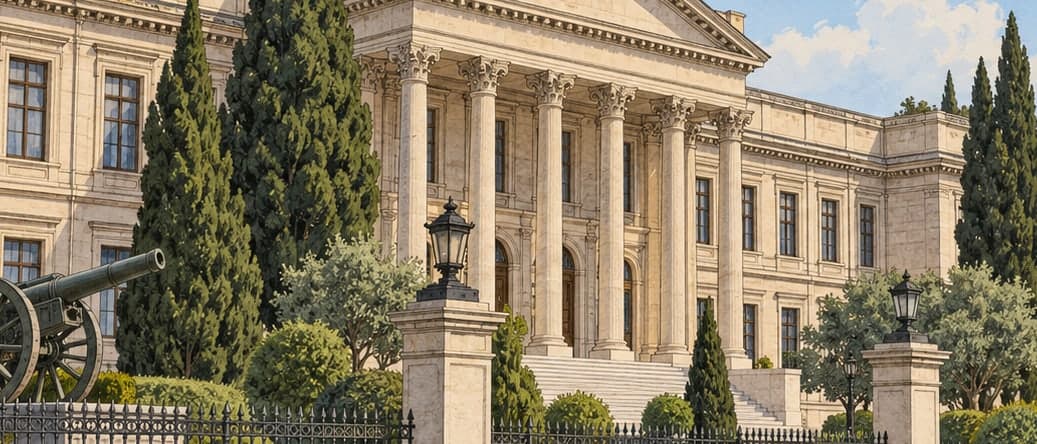
The architecture is one of the most developed examples of nineteenth-century Ottoman eclecticism. The layout follows the natural slope and at the same time answers Abdülhamid's concern for security: rather than one central building, independent pavilions and kiosks are placed freely within a large park. Paths, courtyards, terraced gardens, terraces and service buildings are joined by controlled passages, and the whole is ringed by a security belt closed to the outside. In this it reinterprets in a modern form the stepped, courtyard-divided structure of Topkapı, but with a looser arrangement in place of Topkapı's central mass — making Yıldız at once workable and controllable. The garden was also a resting place known to everyone in İstanbul, and a bridge over the road linked Yıldız to the Çırağan Palace.
The palace library is among its most striking buildings, built for Abdülhamid II in the late nineteenth century and placed just east of the Şale Pavilion, at the centre of the intellectual and bureaucratic life of the complex. Neoclassical and orientalist elements are used together in it, in the eclecticism of the period. The outside is plain, the inside rich: painted decoration on the ceilings, wooden cupboard systems on the wall surfaces and coloured glass in the windows give it a light and warm atmosphere. The hall is fitted with built-in wooden bookcases running all the way round, two storeys with a gallery system in the manner of European libraries, with spiral stairs to the upper floor, work tables, reading desks and corners set aside for private correspondence.
The library was more than a reading room. Its collection held a great many books on geography, history, diplomacy, science and art gathered at Abdülhamid's own direction, and the palace correspondence records, part of the Yıldız papers and the sultan's intelligence reports were kept here — so that it served both as his personal study and as an archive where the palace bureaucracy worked through documents, one of the information centres of the administration. The building has been restored true to its original form, and the parts open to visitors are among the rare surviving examples of late Ottoman library culture.
Visit status for this record: open to visitors.
Entry fee
- Yıldız Sarayı · Local
- 175 ₺
- Yıldız Sarayı · Foreign
- 900 ₺
- Yıldız Sarayı · Reduced
- 60 ₺
Visiting hours
- Visiting hours
- 09:00:00 - 17:00:00