Guide
To understand the Yemeniciler arasta you need the market it belongs to. Safranbolu was a stopping point on the Gerede-Sinop caravan road, one of the main links between the Asia-Europe trade route across northern Anatolia and the Black Sea, and the size of the Cinci Han, built in the centre of town in the middle of the seventeenth century with 63 rooms and camel stables, shows how much traffic passed through. The market grew around that han, and it grew by trade: ironwork, coppersmithing, saddlery, shoemaking, leatherwork and the rest were arranged along separate streets according to the guild system, which is why the streets are still known by the craft that worked in them — the saddlers' street, the shoemakers' street, the butchers' street, the merchants' street. A few craftsmen of the relevant trade can still be found in some of them.
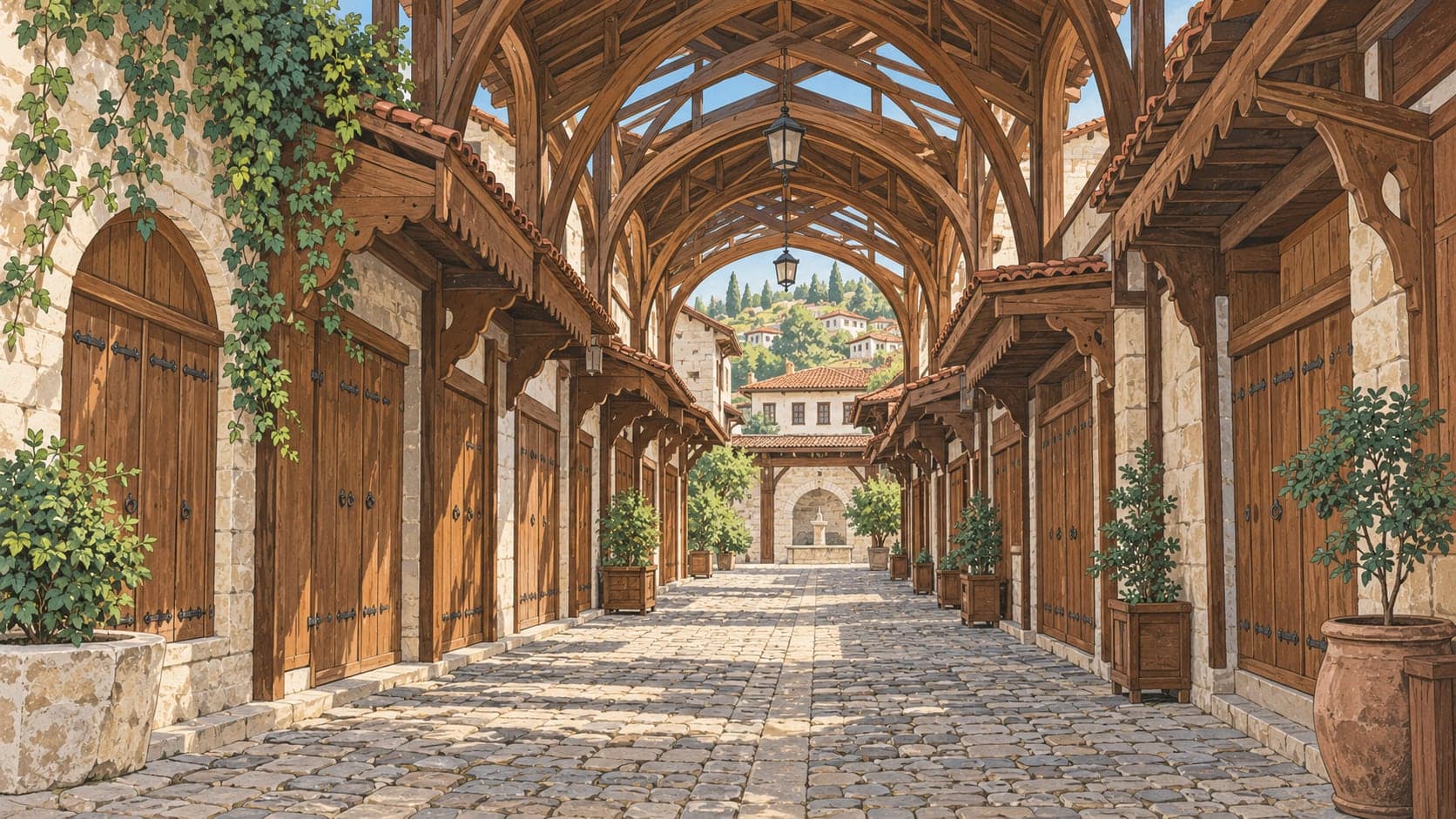
The Yemeniciler arasta itself adjoins the Köprülü Mehmet Pasha Mosque and consists of 48 wooden shops built wall to wall. It is the old guild market where the soft leather shoe called the yemeni was made, and that craft remained an important trade in Safranbolu until the end of the 1950s; during the War of Independence the market supplied what it could of the army's need for footwear. It has been restored and now serves tourism. The Ahmet Demirezen shoemaking museum within the arasta is open at weekends. The arasta is in the old market quarter of Safranbolu.