Guide
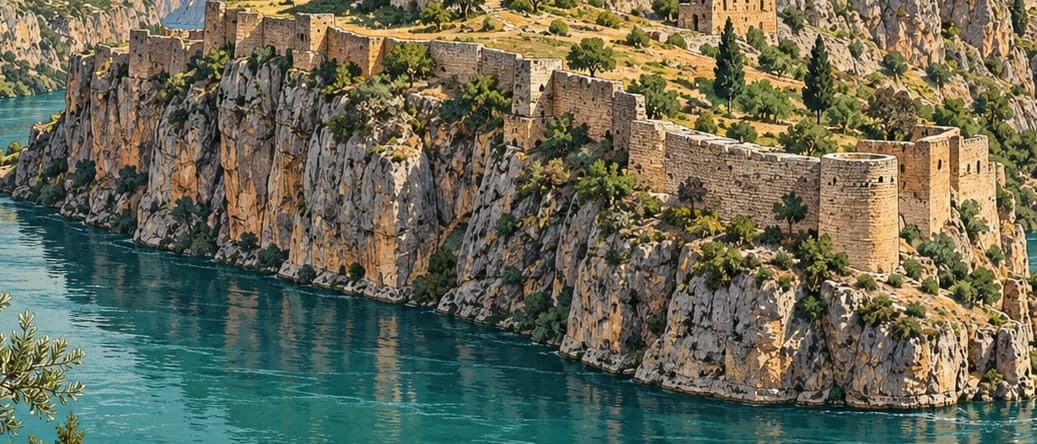
Zeugma — locally Belkıs — spreads over hills ten kilometres east of Nizip in Gaziantep. In 300 BC Seleucus I Nicator, one of Alexander's generals, founded a city here at the point where Alexander had crossed the Euphrates and named it Seleuceia on the Euphrates. Opposite it he founded a second city named for his wife Apama, and joined the two with a bridge. From 31 BC the place came under Rome and was renamed Zeugma, meaning the crossing or the bridge.
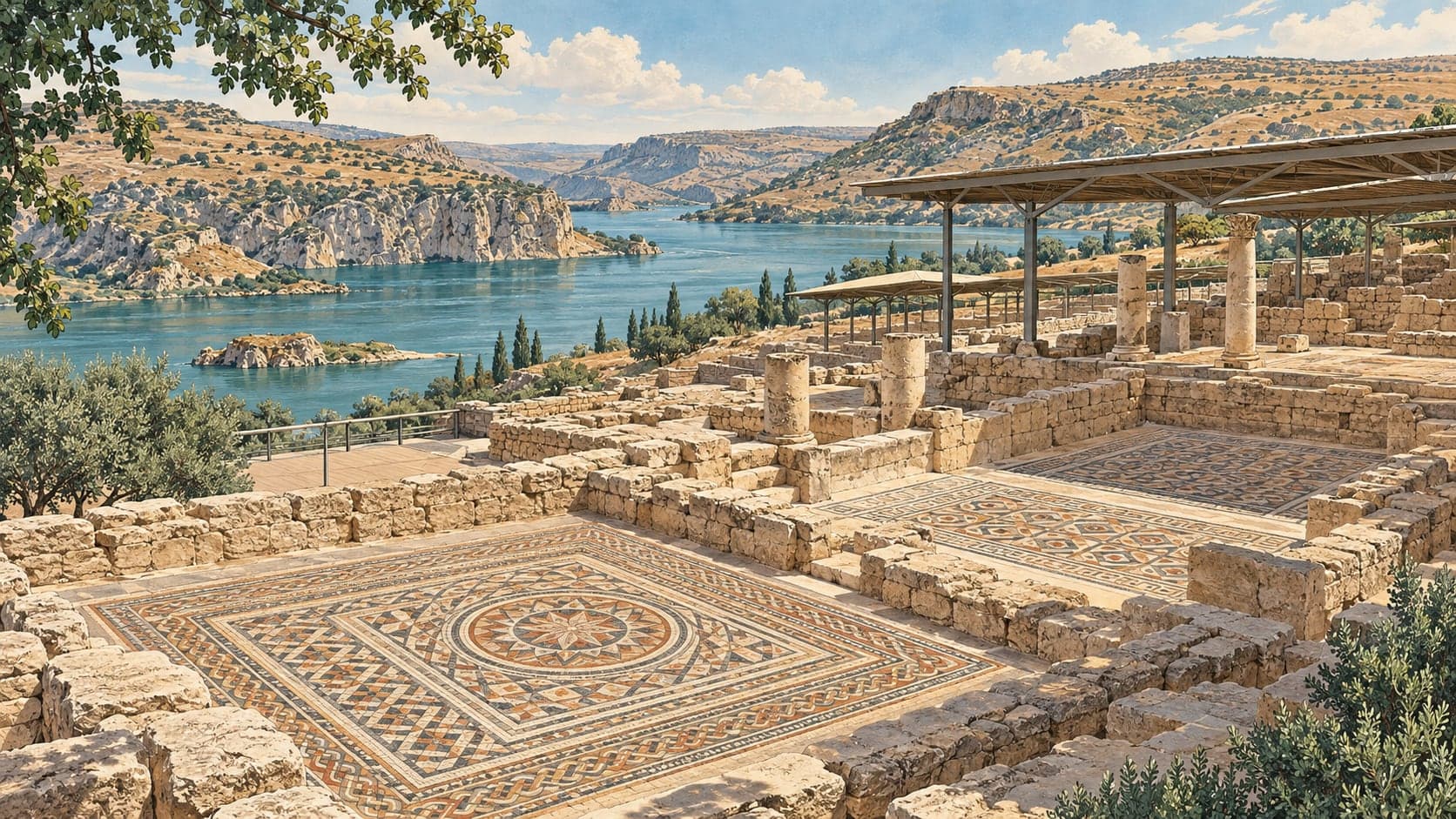
The Roman centuries were its best. In AD 256 the Sasanian king Shapur I took the city, burned it and tore it down, and it never recovered its former standing. What the Roman city left behind is above all its floors: the mosaics of its wealthy villas reached a level the Ministry sets beside the finest anywhere. Only part of the area has been excavated, and even that has been enough to show Zeugma as a mosaic city in the fullest sense.
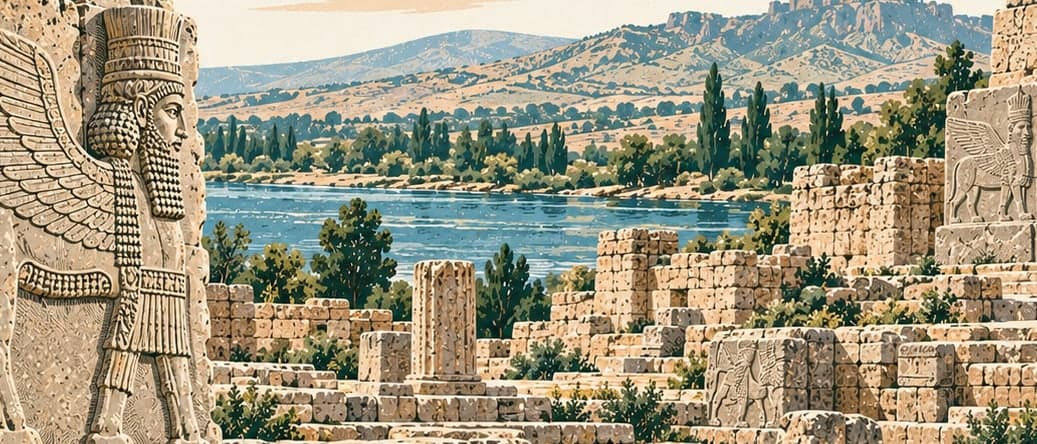
Excavation also produced the bullae — clay seal impressions — which the Ministry credits with bringing a world record to Gaziantep and to Türkiye, and which count among the things that make the site singular. As the most important city on the eastern edge of the Hellenistic and Roman world, Zeugma holds two integrated temples of a kind unmatched elsewhere, dating from the Commagene period, alongside the Roman houses with their mosaics, most of which belong to the 2nd and 3rd centuries. The Zeugma Archaeological Site was placed on the UNESCO World Heritage Tentative List in 2012. It is reached on vehicles running to Belkıs Merkez Mahallesi in the Nizip district.