Guide
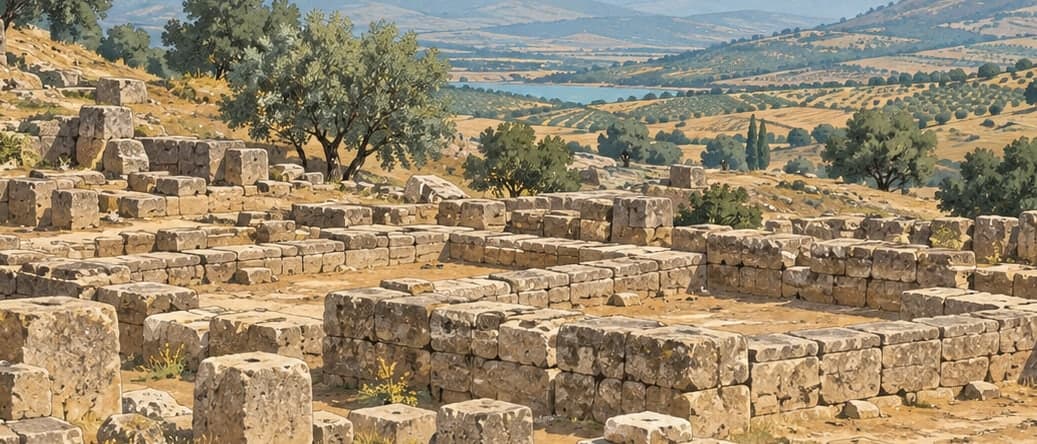
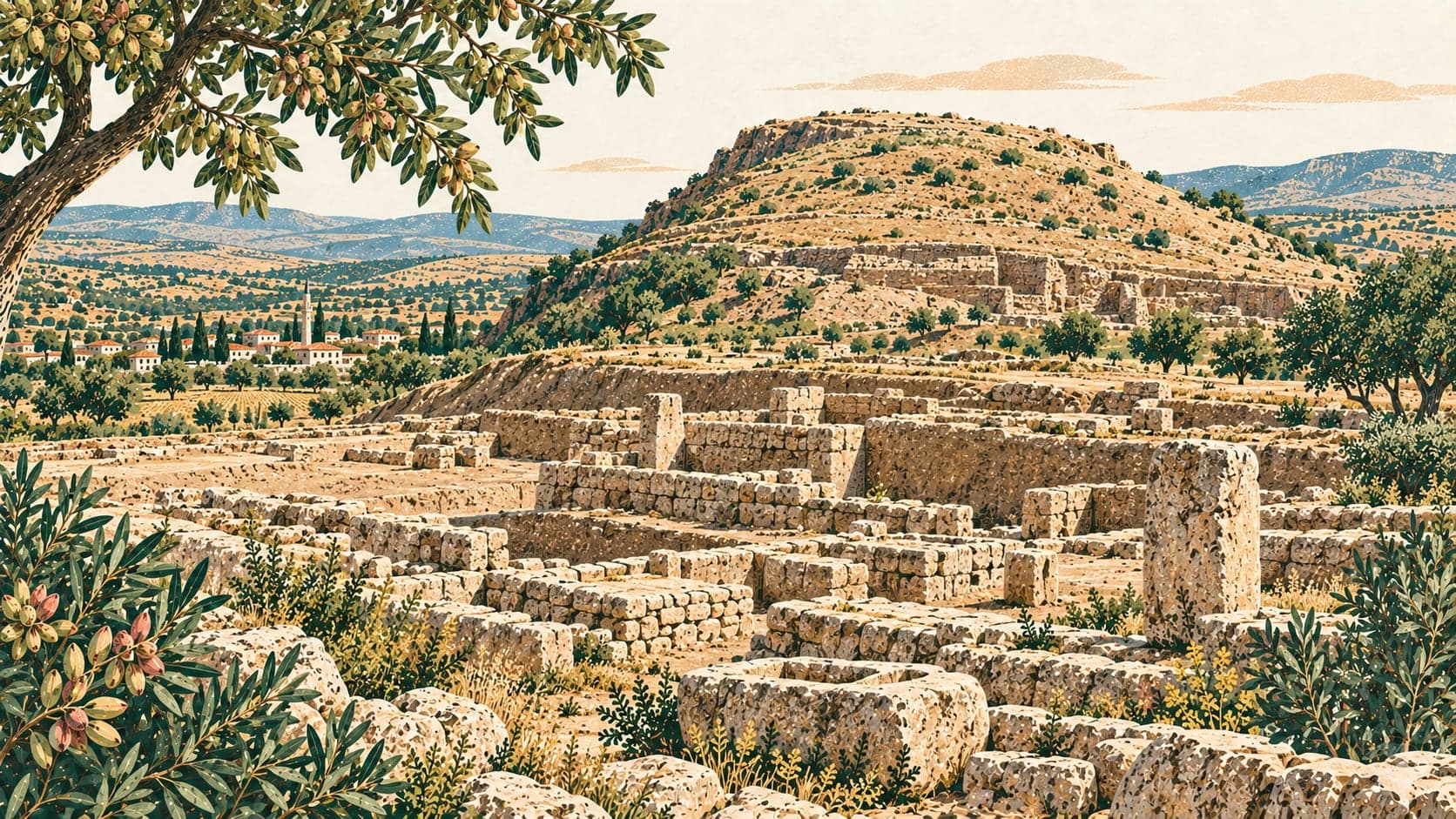
Tilmen Höyük is a settlement mound about ten kilometres east of the İslahiye district of Gaziantep. It sits on ground ringed by branches of the Karasu river, measures 225 metres across and rises twenty-one metres. It lies on the western edge of the Sakçagözü plain, where there are more than fifty mounds, and is one of the largest of them.
Digging began in 1959 under Professor Uluğ Bahadır Alkım and went on until 1964, when work moved to nearby Gedikli Karahöyük. Once that was finished, excavation at Tilmen started again in 1969 and ended in 1972. A second campaign opened in 2005 with N. Marchetti of the universities of Rome La Sapienza and Bologna and Professor Refik Duru of İstanbul University taking part.
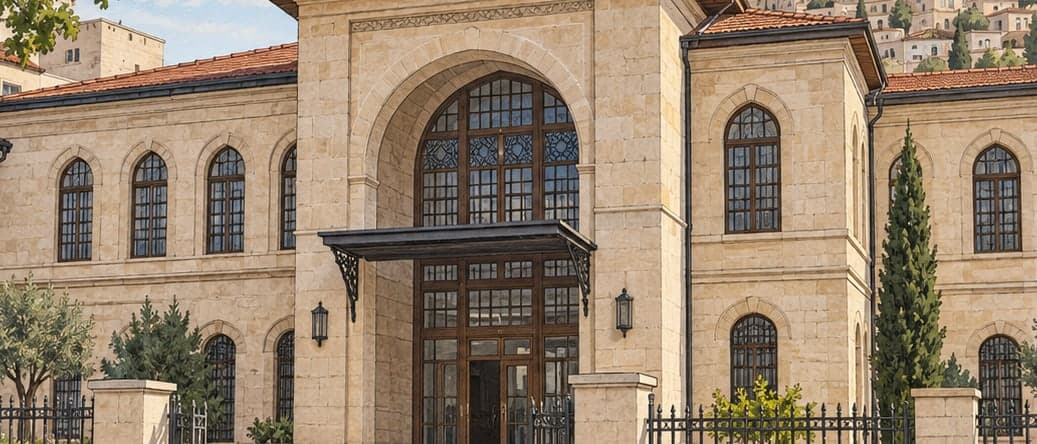
Much of the settlement has now been uncovered, and restoration continues. The project for the repair and landscaping of the mound is run by the directorate of the Gaziantep Archaeological Museum under Professor Refik Duru.
The layers at Tilmen run, from the latest down, through the Islamic periods, the Roman and Byzantine period, the Iron Age of the first millennium BC, the Middle Bronze Age of 2000 to 1500 BC, the Early Bronze Age of the third millennium BC, and the Late Chalcolithic of 3400 to 3000 BC. The Roman, Byzantine and Islamic periods show up in pottery and a few other finds but have left no building remains, so four phases of settled civilisation can be read on the mound: Late Chalcolithic, Early Bronze, Middle and Late Bronze, and Iron Age.
Inner and outer walls of large stones laid without mortar, dated to the end of the second and the beginning of the first millennium BC, ring the site, strengthened here and there with square towers. Two basalt gate lions were found beside the monumental gate on the eastern side of these walls, which is taken to mean the eastern gate was the main way into the town. There are two smaller gates as well, one to the north-west and one to the south-west.
One of the monumental buildings brought to light closely resembles the palace in the seventh building level at Alalakh in the Amuq plain. Alalakh is known to have served for a time as the capital of an Amorite kingdom centred on Aleppo, and a clay tablet from Mari, today Tell Hariri, speaks of that kingdom as a union of twenty kingdoms. On this basis the excavated palace at Tilmen is dated to the second millennium BC and Tilmen is thought to have been one of those twenty kingdoms.