Guide
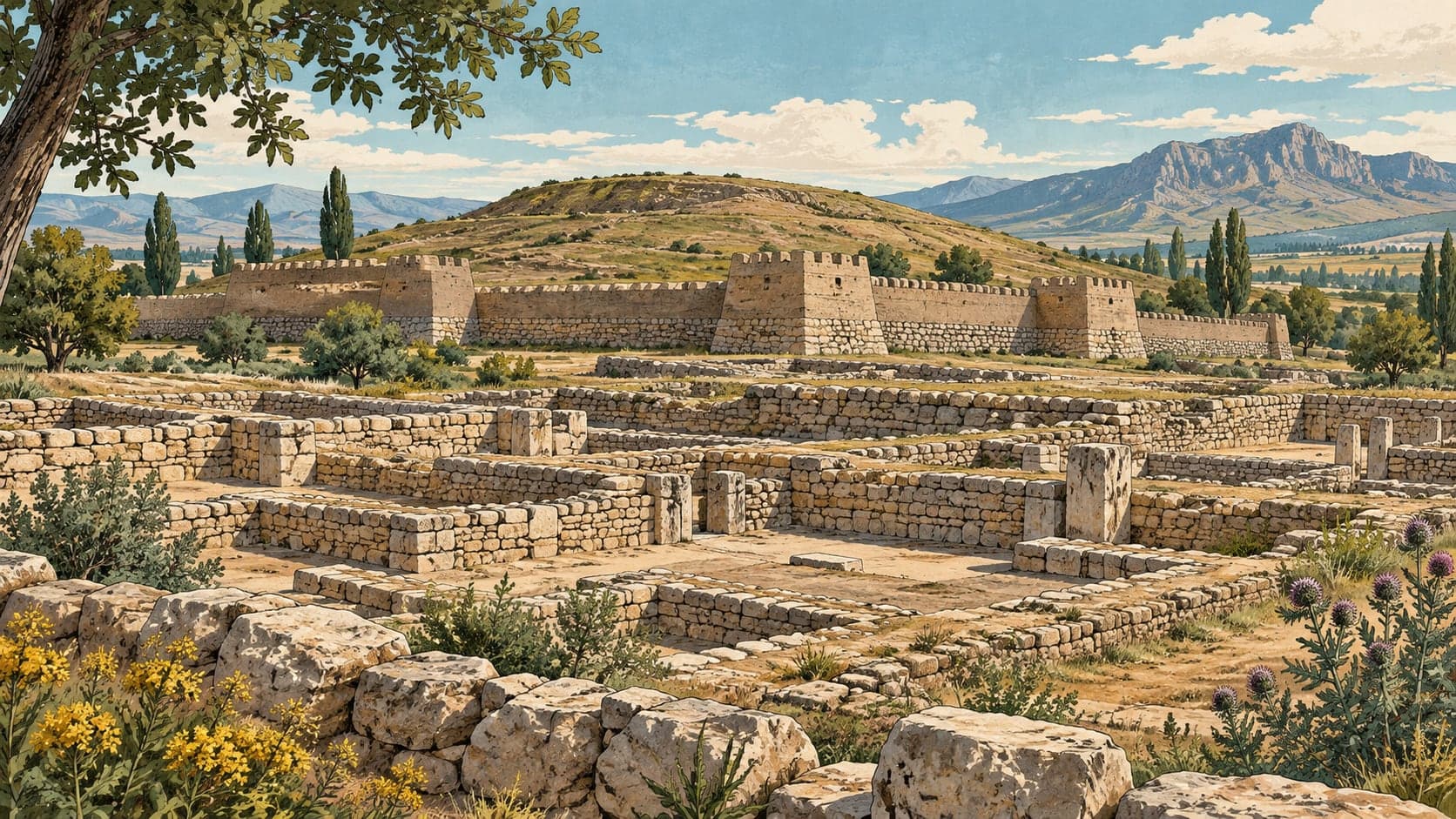
Alacahöyük lies in the town of Alacahöyük in the Alaca district of Çorum, 49 kilometres from the city and only eight from the Çorum–Ankara road. It was an important centre of Hittite culture and art, and excavation beginning in 1935 exposed four levels of civilisation, one beneath the other.
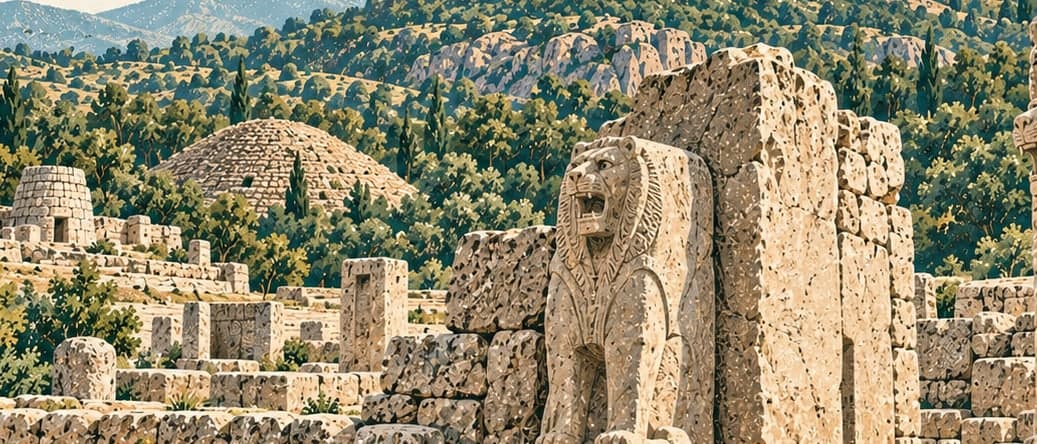
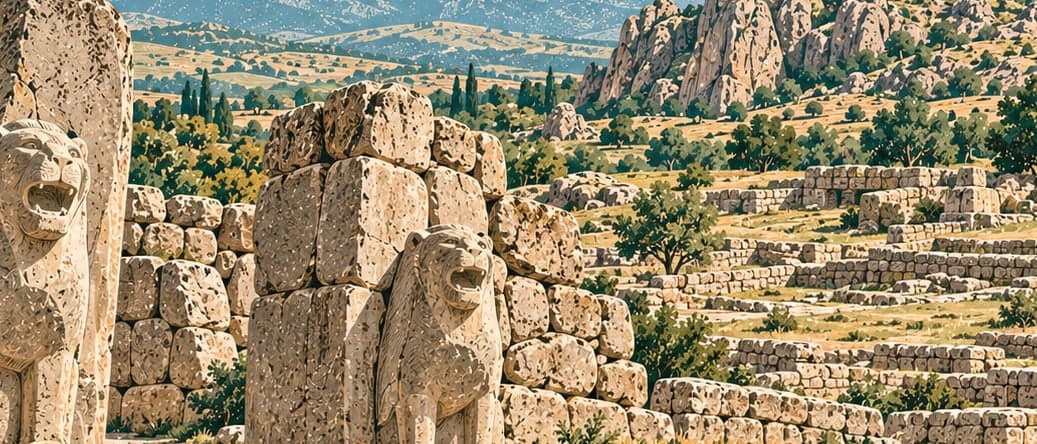
The first and uppermost level is represented by the Hellenistic, Roman, Byzantine, Seljuk and Ottoman periods; in the late Phrygian age the whole of the mound was inhabited, and settlements of small houses were found in this level. The second holds the temple, large buildings, private block houses, streets, water channels large and small, the city wall, and the sphinxes with their carved orthostats. The Sphinx Gate, built of andesite blocks on a limestone footing, is ten metres wide and forms the monumental passage to the great temple.
The third level is the Early Bronze Age, from about 2500 to 2000 BC, and it is what makes Alacahöyük matter in the wider history of Anatolia. Its royal tombs are the most important finds of that age, and they did a great deal to illuminate the native Hatti civilisation, the foremost of the cultures that fed into Hittite culture. The burials are gathered in an area set aside for them: rectangular graves walled with stone on four sides, closed with wooden beams, with the heads and legs of sacrificed cattle laid on the roofs. The grave goods — gold, silver, electrum, copper, bronze, iron and precious stones — show that those buried belonged to the ruling house, and the hammering, casting and inlay of the gold and silver vessels, along with the fine ornament of the gold jewellery, are the product of a long development. The fourth level reflects the late Chalcolithic, the first civilisation founded on virgin soil.
The sphinxes are what visitors meet first. The jamb blocks on either side of the gate were carved into sphinx form, and the inner and outer faces of the two towers holding them are decorated with relief orthostats; the bull figure on the western tower symbolises the storm god of the heavens. Thirteen tombs of the Early Bronze Age, thought to have belonged to princes and princesses, produced ornaments, sun discs, deer and bull statuettes, weapons such as daggers, swords and axes, and objects of terracotta, stone, gold, silver, bronze, copper and electrum.
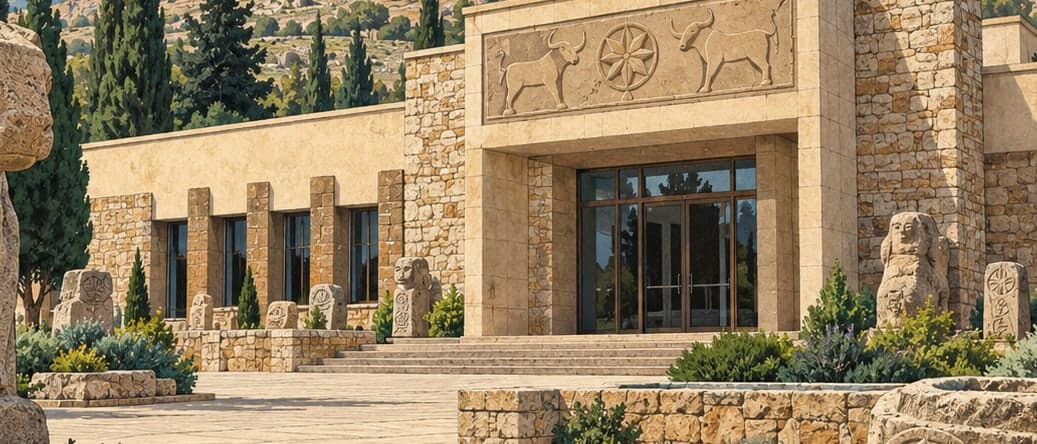
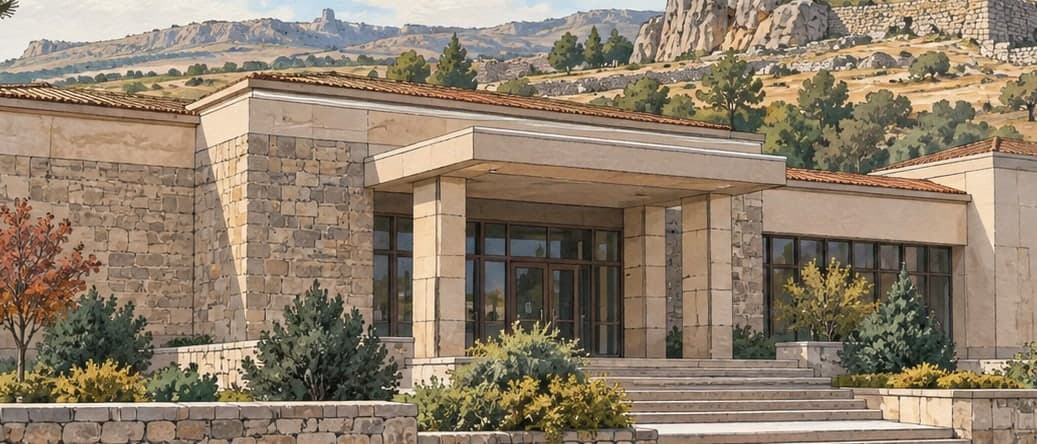
The first local museum at Alacahöyük opened in 1940, moved into its building within the site in 1982 and was reorganised in 2011. Its halls are named after the directors of the excavation. Wall panels in the Hamit Zübeyr Koşay hall explain the place of the Alacahöyük excavations in Turkish archaeology, and a case on the history of the dig displays excavation equipment and some of the scientific publications. Chalcolithic, Early Bronze Age and Hittite material is shown in the Remzi Oğuz Arık hall, and Hittite and Phrygian material in the Mahmut Akok hall. The excavation began in 1935 by the order of Atatürk, on behalf of the Turkish Historical Society and under the direction of R. O. Arık, and the Ministry counts it among the first national excavations in Türkiye.