Guide
Hattusa was the capital of the Hittites in the Late Bronze Age. It lies in the district of Boğazkale, eighty-two kilometres southwest of the city of Çorum and four kilometres east of Boğazkale itself, southeast of the district of Sungurlu. The city served as the capital of the Hittite Empire between the seventeenth and the thirteenth centuries BC, and it was inscribed on the UNESCO World Heritage List in 1986.
The first traces of settlement here reach back to the sixth millennium BC. In the third millennium the Hatti began to settle the area, and the place was then called Hattush. In the nineteenth and eighteenth centuries BC Assyrian merchants, who had established a trading colony centred on Kültepe, formed a settlement of their own in the lower part of the city. Around 1700 BC the city is known to have been burned and destroyed by Anitta, king of Kussara. Later the Hittite king Hattusili I moved his capital here. The city was attacked by a people coming from the north, called the Kaska in the Assyrian and Egyptian archives, and during that period the Hittites used Sapinuwa as their capital instead. In the thirteenth century BC king Mursili III made Hattusa the capital once more, and it remained the seat of the state until the empire fell.
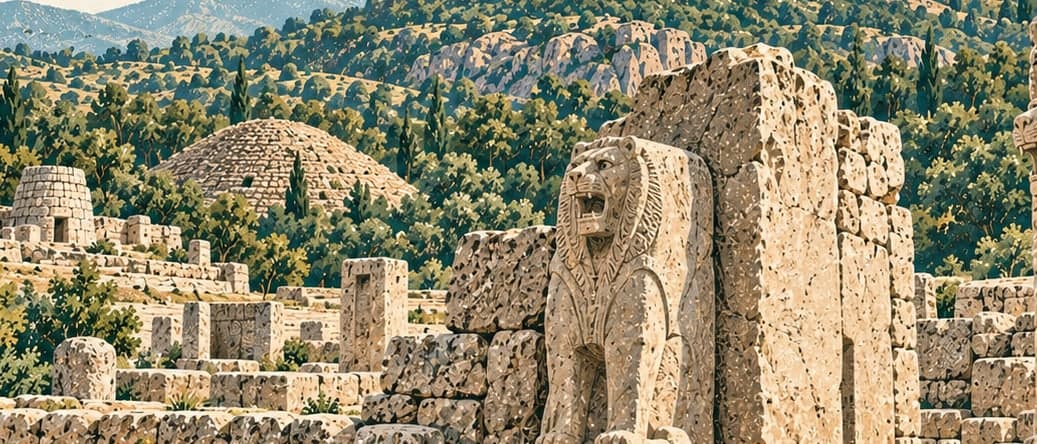
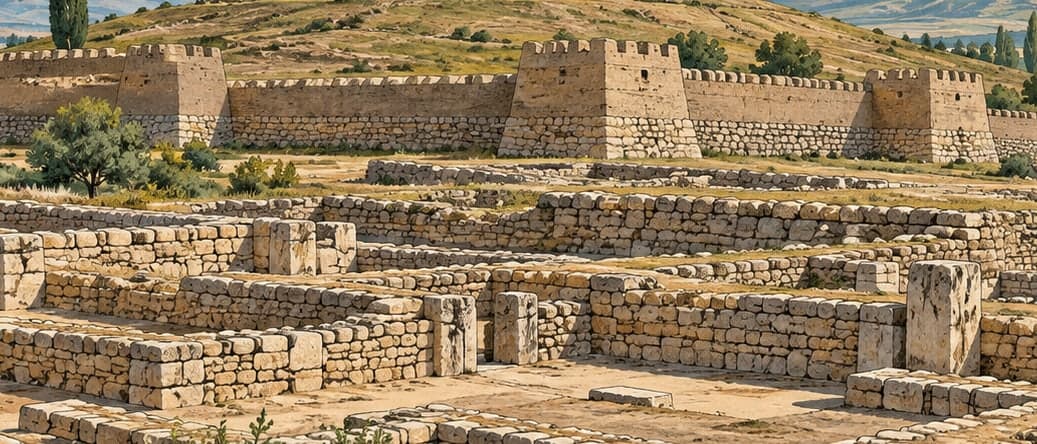
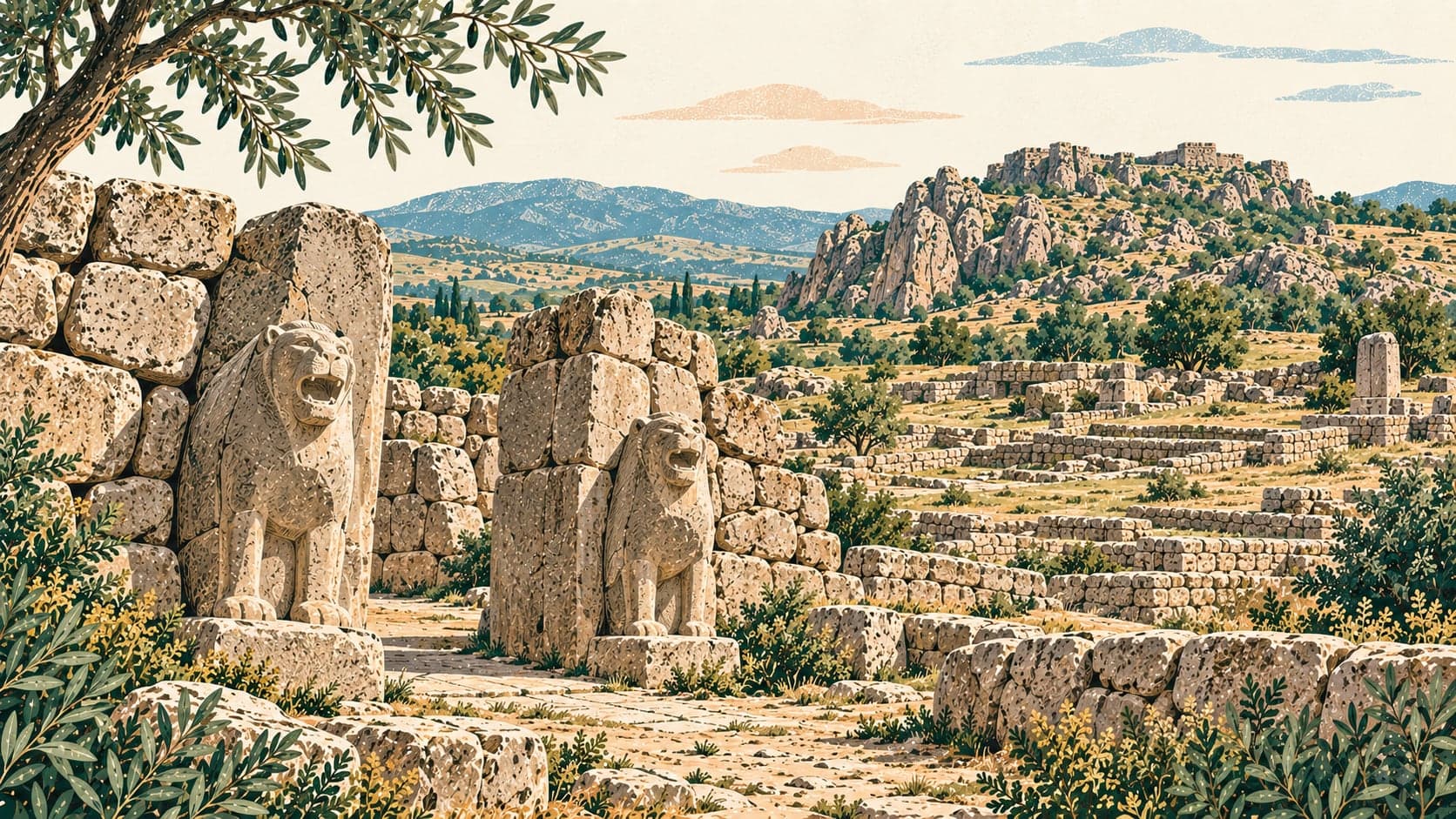
The city was built over roughly two square kilometres of mountainous ground, ringed by walls raised in the reign of Suppiluliuma I, who ruled between 1344 and 1322 BC. Within it stood the administrative centre of the state, the houses of the nobility, temples and military buildings. Members of the royal house lived in the upper city, and a citadel stood within the fortifications. The lower parts held houses mostly of timber and mudbrick, along with farmland and storerooms for the city's provisions. Only the stone foundations of the temples and palaces survive today.
The city fell with the collapse of the empire at the end of the Bronze Age, and communal life here broke off until the Phrygian period. The settlement was later used in part by the Galatians, but it never regained the importance it had held under the Hittites.