Guide
The caravanserai was built in 1609 by Ekmekçizade Ahmed Paşa and presented to Sultan Ahmed. It is understood that the chief imperial architect Sedefkâr Mehmed Ağa designed it, with the Edirne architect Hacı Şaban assisting him. As built it held four large stables, a number of rooms, two ablution fountains and a row of stone shops along the street.
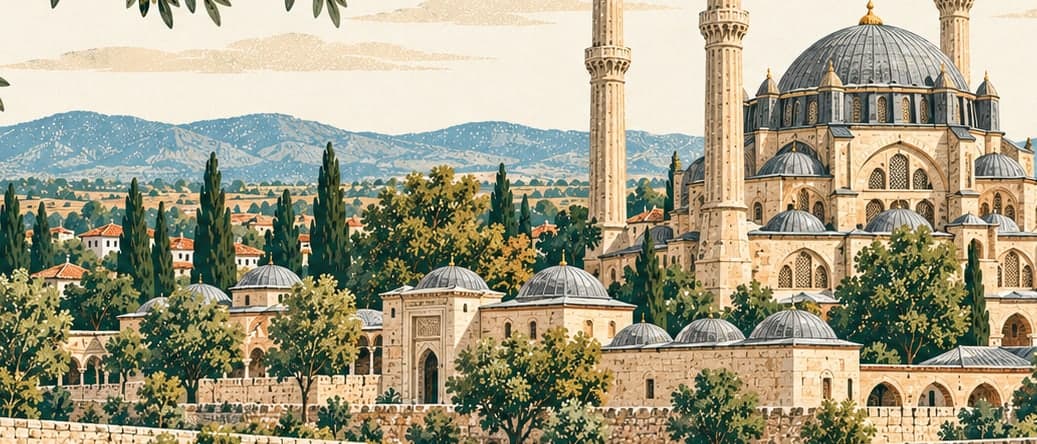
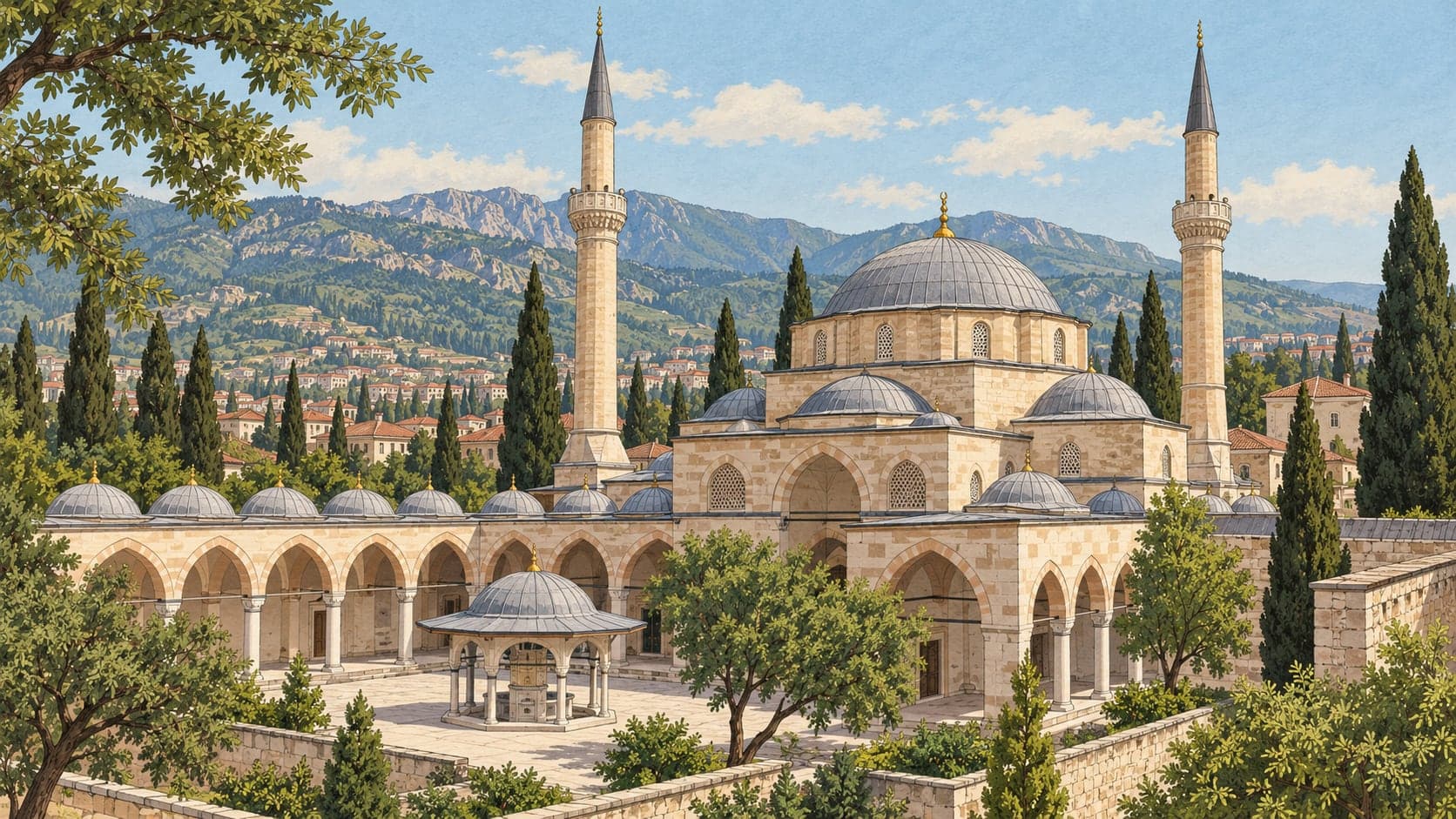
The building is of cut stone, brick and timber, and falls into two parts: two large rectangular halls set northwest to southeast under hipped roofs, and in front of them a sizeable courtyard ringed on the outside by the shops.
It now houses four museums, run as a registered private museum under the Edirne provincial special administration. Three of them occupy the first hall. The Museum of Turkish States in History covers the history of the Turks, their rulers, the symbols of rulership and other elements of that heritage, told through reconstructed scenes. The Museum of Ottoman Sultans presents all 36 sultans as hyperrealistic silicone figures with information panels for each period. The Sultan's Tent Museum recreates the Otağ-ı Hümayun, the imperial tent that was one of the symbols of a sultan's power away from the palace.
The fourth occupies the rectangular building in the southwestern part of the complex, entered from the inner courtyard. The Museum of Ottoman Works in the Balkans covers what the source describes as five centuries of Ottoman peaceful administration and building there, using architectural models and films documenting the present condition of the buildings, alongside 32 miniature reproductions at scales from 1/20 to 1/100.