Guide
The museum stands at Kıyıkışlacık in Milas, inside the ancient city of Iasos, and the ministry describes the site rather than the building when it accounts for what there is to see here.
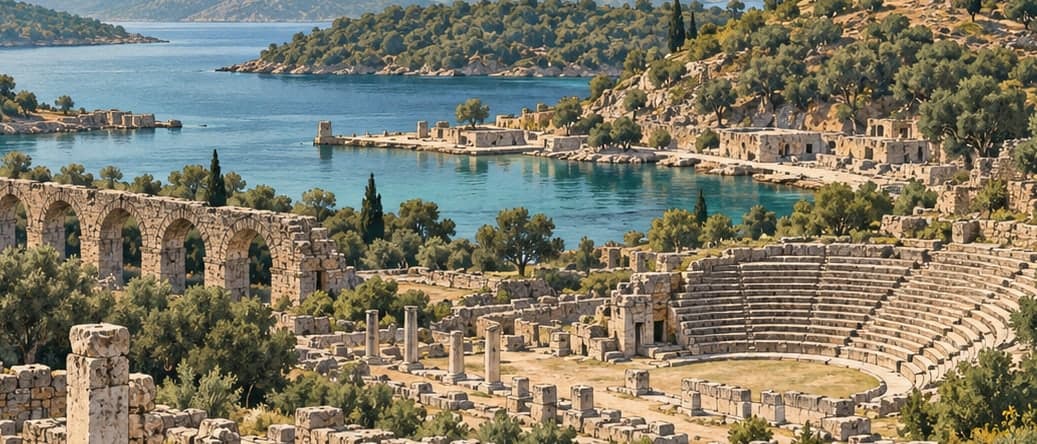
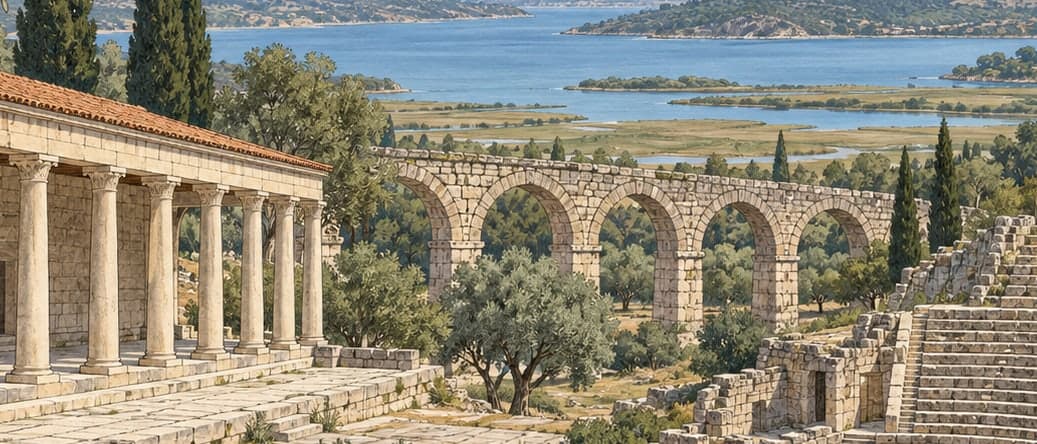
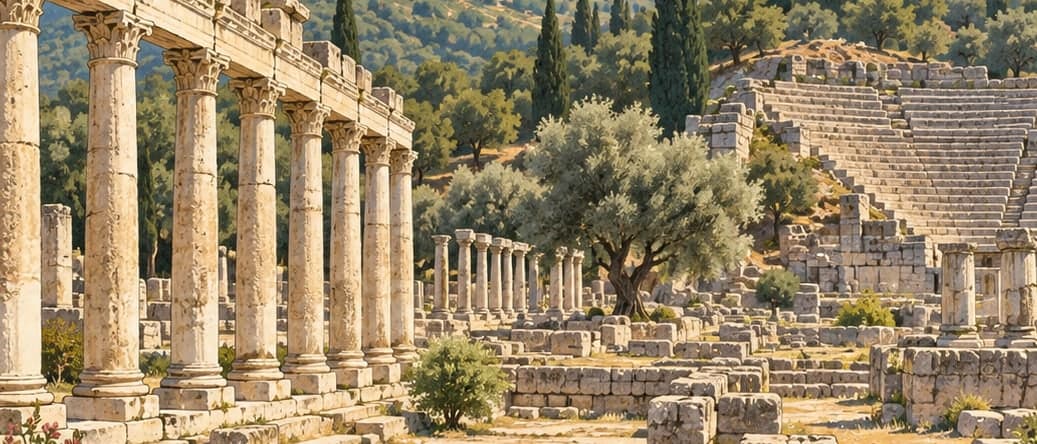
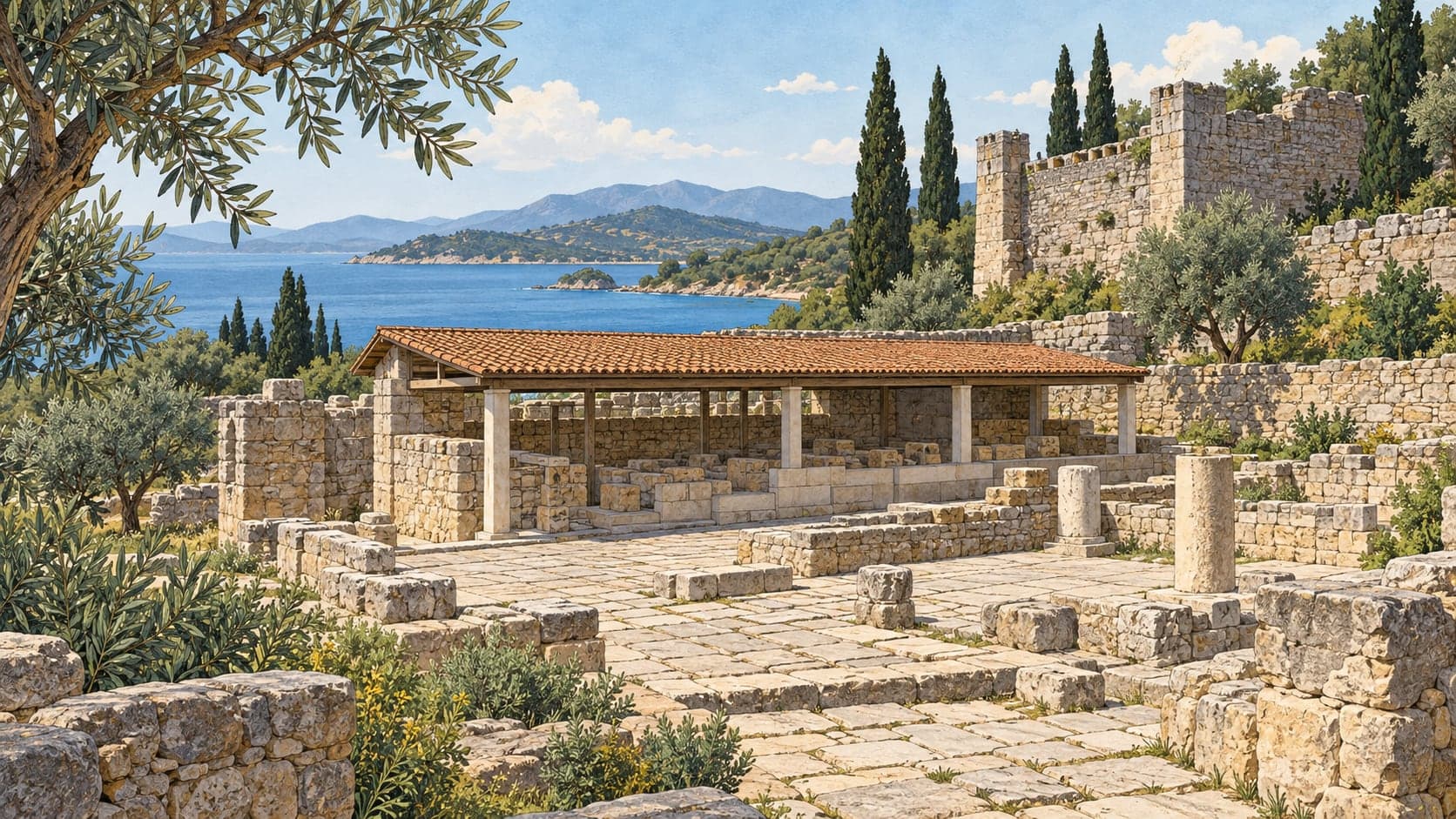
The agora occupies the flat ground of the city and measures 107 by 87 metres overall. It has had four entrances at different times; the one in use now dates from the Byzantine period. Buildings of several periods sit one on top of another in this area, running from Early Bronze Age I, between 3300 and 3000 BC, to the late Byzantine centuries that ended in 1453. Small sacred structures and altars stand in the middle of it, and the porticoes that enclose all four sides survive from building work of the second century AD.
The city walls are a separate question of date. They run for two kilometres and are placed in the fourth century BC, probably in the period when the city passed to the Hekatomnid dynasty.
On the southern slopes of the hill, on a natural terrace, one house is far more elaborate than the rest; it was built in the second century AD but carries Hellenistic architectural elements. The necropolis was in continuous use from the second half of the second century BC until the fourth century AD.