Guide
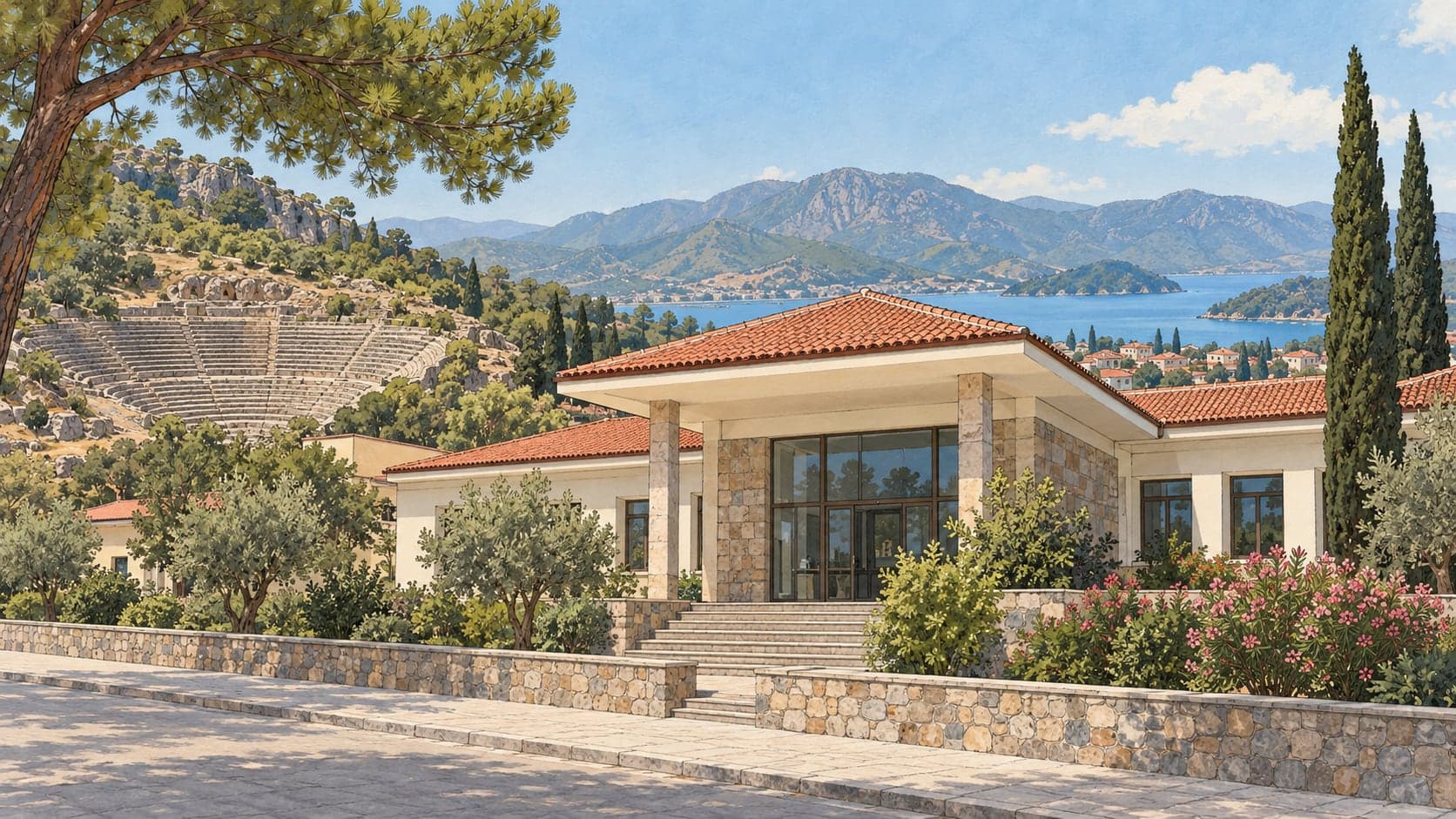
The Fethiye Museum, in the Fethiye district of Muğla, shows archaeological material and finds from Dalaman, Fethiye, Ortaca, Köyceğiz and Seydikemer. It began work in 1962, and the archaeological sites around Fethiye come under its charge.
The museum was first put together at the instance of the district governor Recep Ceylan, from works gathered around the town as it was being rebuilt after the earthquake of 1957. It began as an open-air museum in front of the theatre of Telmessos in 1962 and moved in 1987 to its present site at Kesikkapı.
The collection spans a long stretch, from 3000 BC to the late Ottoman period, and the works are arranged in order of date across two main halls. Most of them are ceramics. Among the monuments and inscribed pieces are the Izraza monument, a bilingual inscription in Carian and Greek, and a trilingual one in Lycian, Greek and Aramaic.
The museum holds votive stelae showing the Dioskouroi and a goddess, who were worshipped across much of the Roman empire. These were found around Telmessos, some of them acquired by purchase, and are made of the limestone of the area; such votive stelae are often met with in northern, north-western and western Lycia. The depictions of the Dioskouroi and the goddess seen on the Sidamara sarcophagus in the İstanbul Archaeological Museum and on the Dioskouros from Perge are dated to the second and third centuries AD and belong to the art of the empire, while the stelae here belong rather to popular art. The forms of the letters omega, sigma and epsilon on them suggest they may have been made between the second and fourth centuries AD.
Two votive stelae of Kakasbos, who is thought to answer to Herakles, are held here as well. Bought for the museum and made of limestone, they are dated to the second and third centuries AD and are treated as belonging to a cult group with local features particular to northern and north-western Lycia and Pisidia.
The museum also holds carved altars from the highland country above Fethiye. These belong to the rural artistic tradition of the Roman period and carry a relief of a goddess on the front. A study published in 2018 identified these unnamed goddess reliefs as Artemis, known across the region under the names Lagbene, Kynegetis and Eleuthera.