Guide
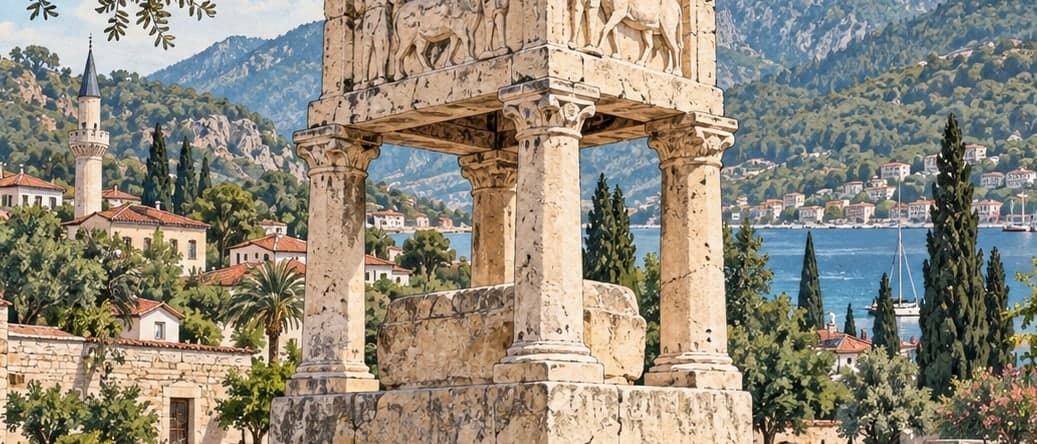
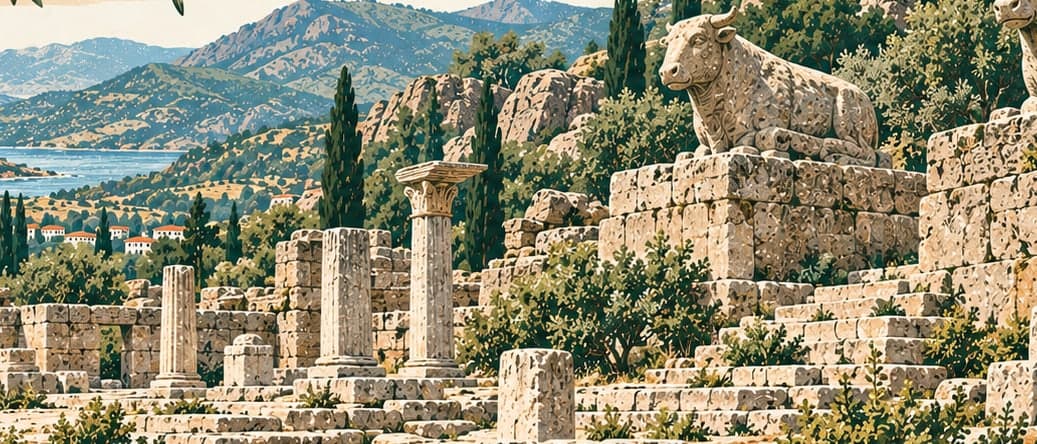
The monumental tomb of the satrap Hekatomnos stands on a point that commands ancient Mylasa and can be seen from every part of the settlement. The ministry calls it the archaeological find of the century. It is on UNESCO's tentative list — a candidate, not an inscribed World Heritage site.
Work on it must have begun in the first quarter of the 4th century BC. It was built by Maussollos for his father Hekatomnos, who gave the dynasty its name, after the satrap's sudden death, and was left unfinished when Maussollos moved his capital from Mylasa to Halikarnassos. That makes it the forerunner of the Mausoleum at Halikarnassos, one of the seven wonders of the ancient world.
The sarcophagus in the burial chamber measures 2.90 by 2.28 metres and stands 1.54 metres high, with a pedimented lid whose peak and corners carry small figures. All four faces are covered with relief carving that the ministry rates against the best-known work of the Classical age. On the back face, at the centre of a lion hunt, Maussollos is shown on horseback at the instant he delivers the killing thrust with the spear held up in his hand; behind him are huntsmen in Persian dress with dogs, and in front of him the satrap's companions in the hunt.