Guide
Karaca Cave lies within the village of Cebeli in the Torul district of Gümüşhane, 1,550 metres above sea level and seventeen kilometres from the town centre. It was found in 1983 by Şükrü Eroz, a geological engineer from the area, and opened to visitors in 1996.
The cave is reached by turning north off the Gümüşhane main road at the twelfth kilometre and following a road of four kilometres. That stretch is two-lane and surfaced, and tour coaches manage it without difficulty. At the cave there is a country café and rest facilities covering the basic needs of visitors.
Upper Cretaceous formations are widespread in the ground here, mostly andesitic and basaltic lavas together with tuffs and agglomerates. The series reaches a thousand metres in total thickness and holds intercalations of limestone, marl and sandstone between a hundred and two hundred metres thick. Karaca Cave found room to develop within the heavily fissured massive limestone enclosed by the volcanic rock of this series.
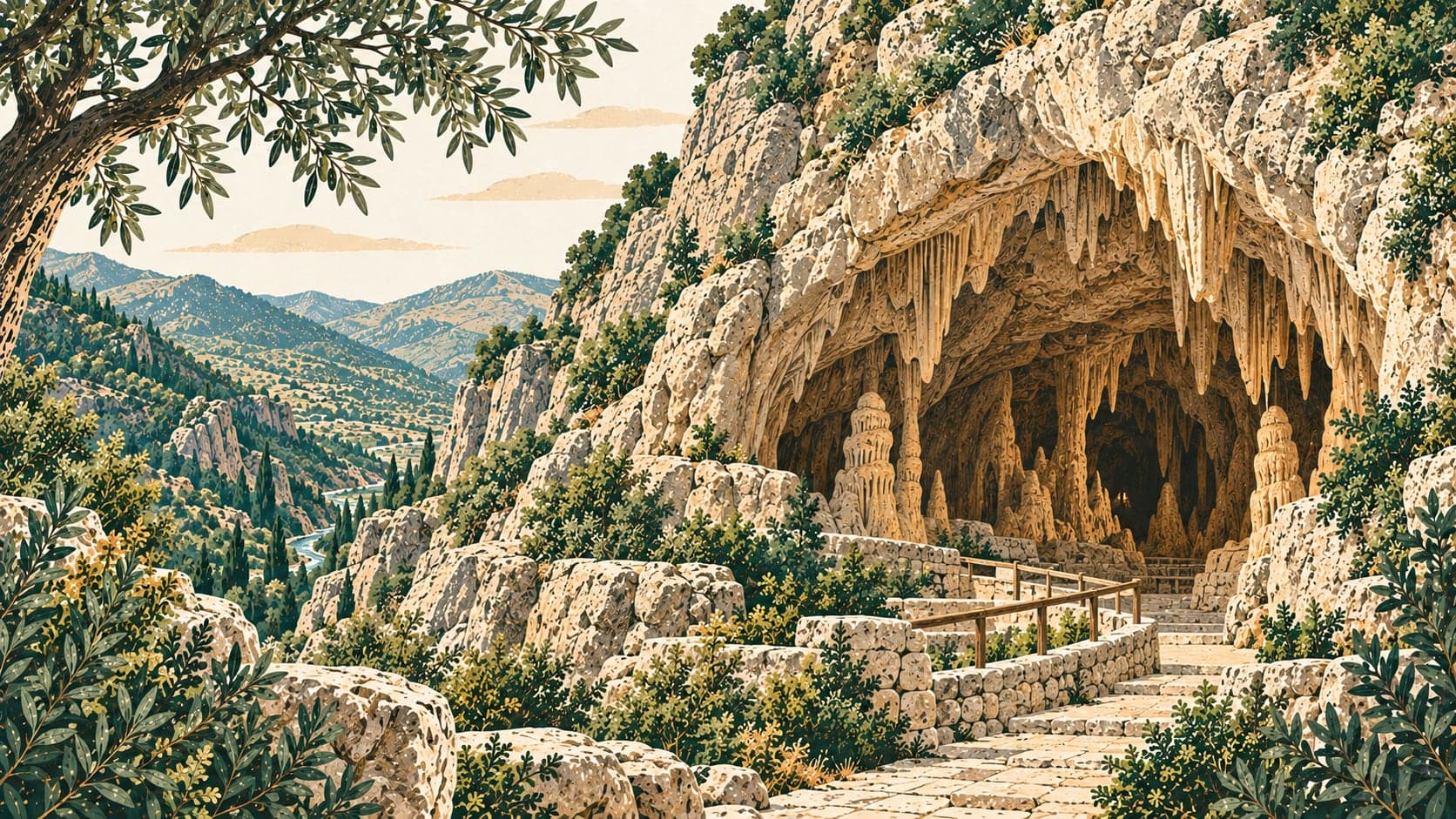
The cave is very rich in dripstone. Inside are stalactites, stalagmites, columns, walls patterned like organ pipes, flag and curtain forms, cave flowers, cave pearls, elephant ears, travertine pools and travertine steps, along with cave roses formed at the edges of the dripstone pools and even on small stalagmites rising out of them. The pools have grown large, and towards the far end of the cave they reach a metre deep. The travertines run in colours from white through to deep blue, which points to a heavy load of dissolved minerals such as iron and magnesium in the water that formed them.
The cave developed horizontally and is made up of four roughly elliptical chambers joined to one another. Two of these are divided in two by wall dripstone formed by water seeping through the fissure systems.
The source says the air of the cave does good for asthma and a number of other respiratory complaints.