Guide
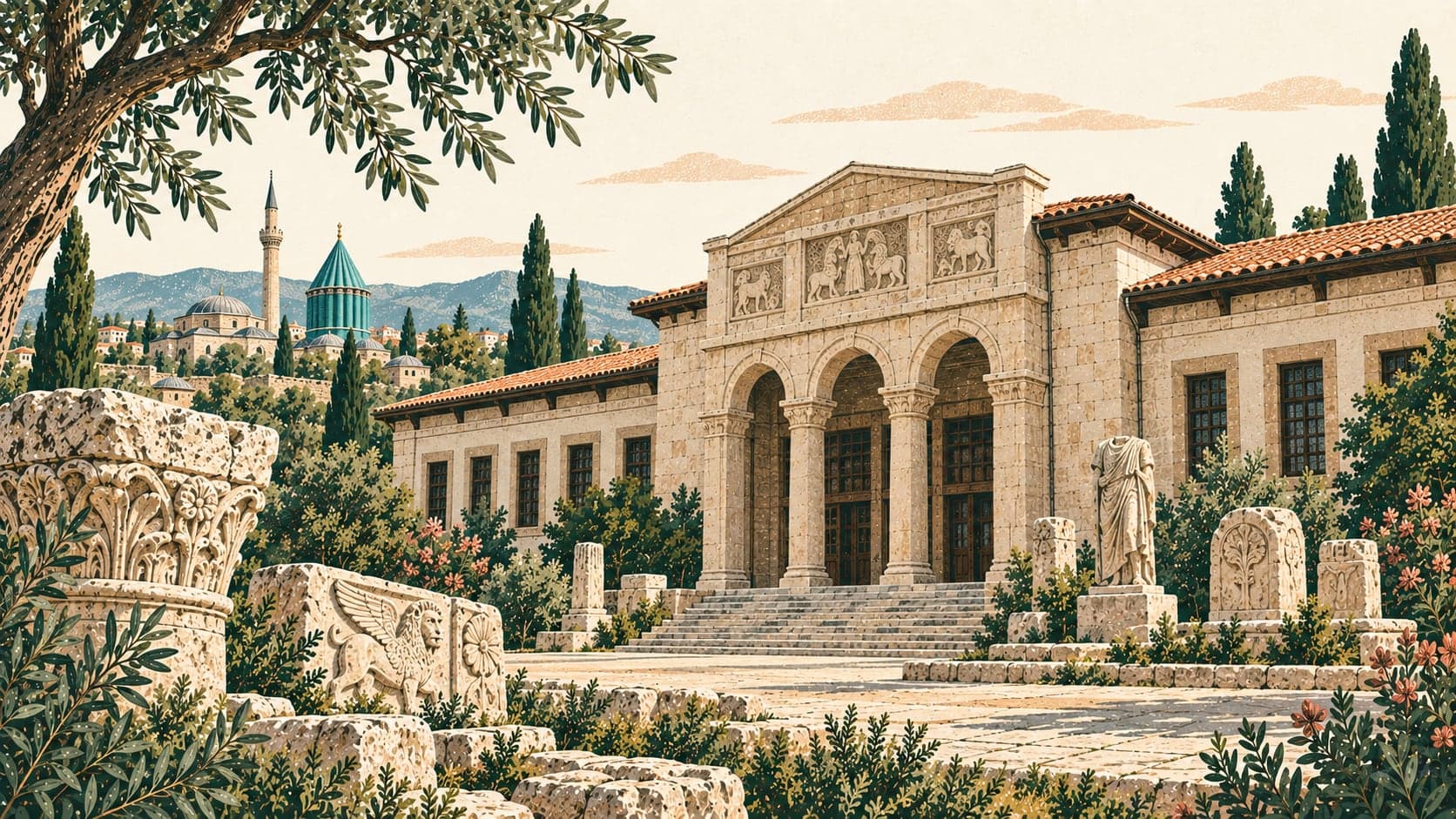
Konya Archaeological Museum is, according to Turkish Wikipedia, the first archaeological museum founded in Anatolia and the second opened in Türkiye, after the İstanbul Archaeological Museum. It is important internationally above all for its Roman marble sarcophagi. Among its other notable holdings are Neolithic finds from Çatalhöyük, pieces of bath architecture from the Assyrian Colony period, and Roman sculpture.
Antiquities from Konya and the country around it began to be gathered at the end of the nineteenth century and were stored in the Konya bedesten, the covered market built in the reign of Süleyman the Magnificent. At that time a circular had gone out to the provincial governors of the empire to collect objects for the museum being founded in İstanbul at Hagia Irene under Fethi Ahmet Paşa, and the governor of Konya sent pieces; what could not be sent is thought to have accumulated in the bedesten. The French scholar Clément Huart, who called at Konya on an Anatolian journey, wrote that there was already a museum in the city in 1891, describing stone works of the Seljuk, Greek and Roman periods in a derelict bedesten and calling it the Konya Municipal Museum — though what he saw was not a museum in the present sense. The bedesten was pulled down in 1898 and an industrial school built on the site in 1901.
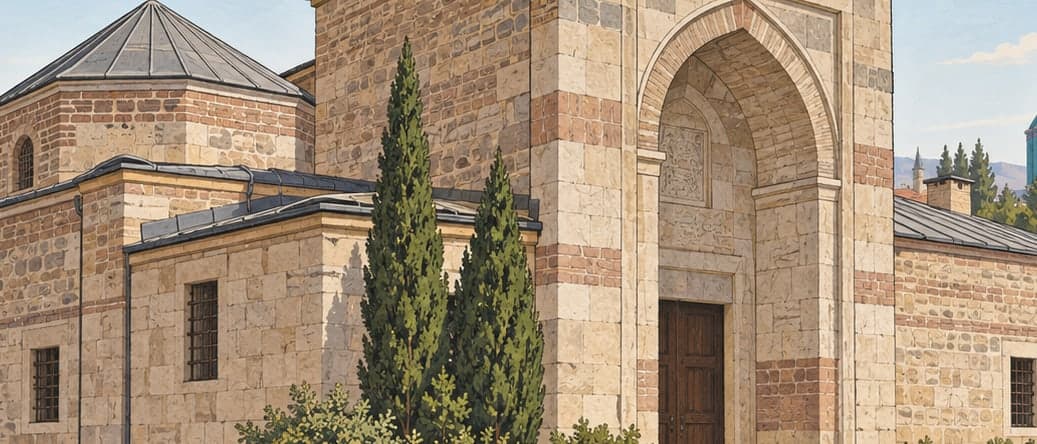
The museum proper was founded during the governorship of Avlonyalı Mehmed Ferid Paşa as a branch of the Imperial Museum in İstanbul, laid out as a store in the courtyard of the secondary school. Some sources give its founding as 1901 or 1902; from Ferid Paşa's correspondence and from the inscriptions the date has been established as 1899. The building, put up in the school garden as a branch of the Imperial Museum, was completed in August 1899 through the efforts of Azmi Bey, then director of education; its inscription is displayed in the garden of the Mevlâna Museum. With objects sent in from the districts of Konya while it was being built, the collection reached sixty or seventy pieces by the beginning of December 1899, and the museum opened on 10 December that year. The single room proved too small for display and another was added to the north of the old building in 1924. In later years the municipality moved the building during works to widen a junction, and it was rebuilt true to its original form at the south-west corner of the garden of the Karma Primary School.
Mustafa Halit Bey, a history teacher at the Konya secondary school, served for a long time as director after the collection moved to the school garden; Naci Fikret Bey, later Baştak, followed him as director until 1927.
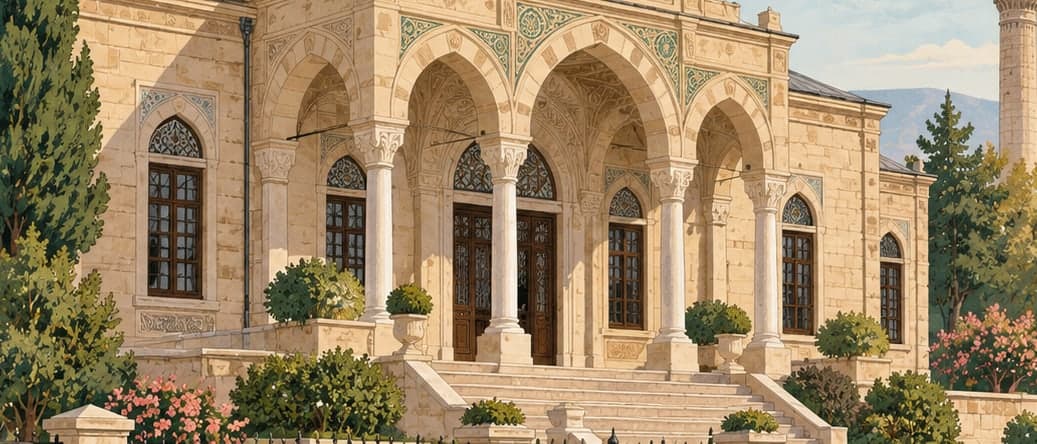
The collection then moved several times. In 1926 the Mevlâna lodge in Konya was arranged as a museum under the name Konya Museum of Antiquities, and the objects in the store in the school garden were taken there. Mustafa Kemal spent about two and a half hours in the museum during a visit to Konya in 1931 and wrote in its visitors' book that he was very pleased with its arrangement and order. The archaeological collection was moved to the İplikçi mosque in 1951 according to some sources and in 1953 according to others; the museum at the Mevlâna lodge was rearranged in 1954 and took the name Mevlâna Museum. When the İplikçi mosque was opened for worship in 1960 the archaeological works were carried to the courtyard of the Alâeddin mosque, where they stayed until the new museum building at the corner of Sahip Ata Caddesi and Ahmet Küçük Armağan Sokağı was finished in 1962.