Guide
The Karatay Medrese was built in 1251 — Hijri 649 — by Emir Celaleddin Karatay in the reign of Kaykaus II. Its architect is not known. It stayed in use through the Ottoman period and was abandoned at the end of the 19th century; in 1955 it opened as the Museum of Tile Works, which is fitting, because the building is one of the important pieces of Anatolian Seljuk tilework in its own right.
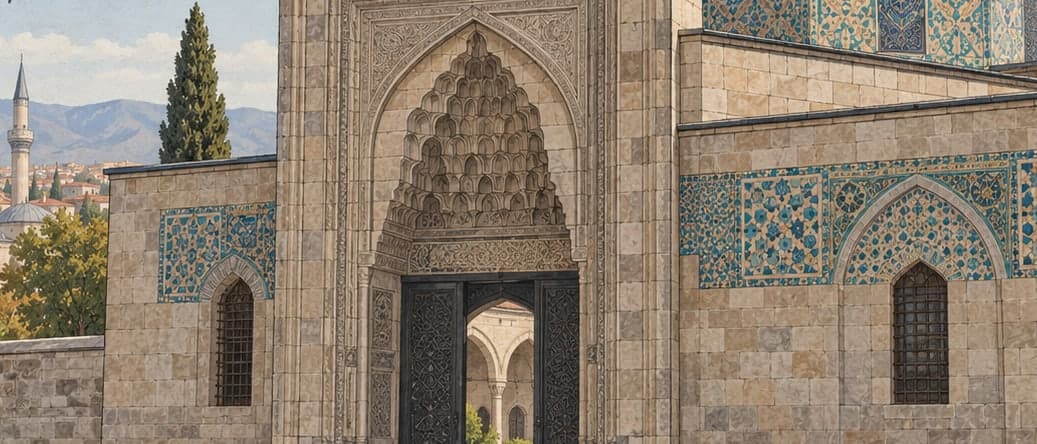
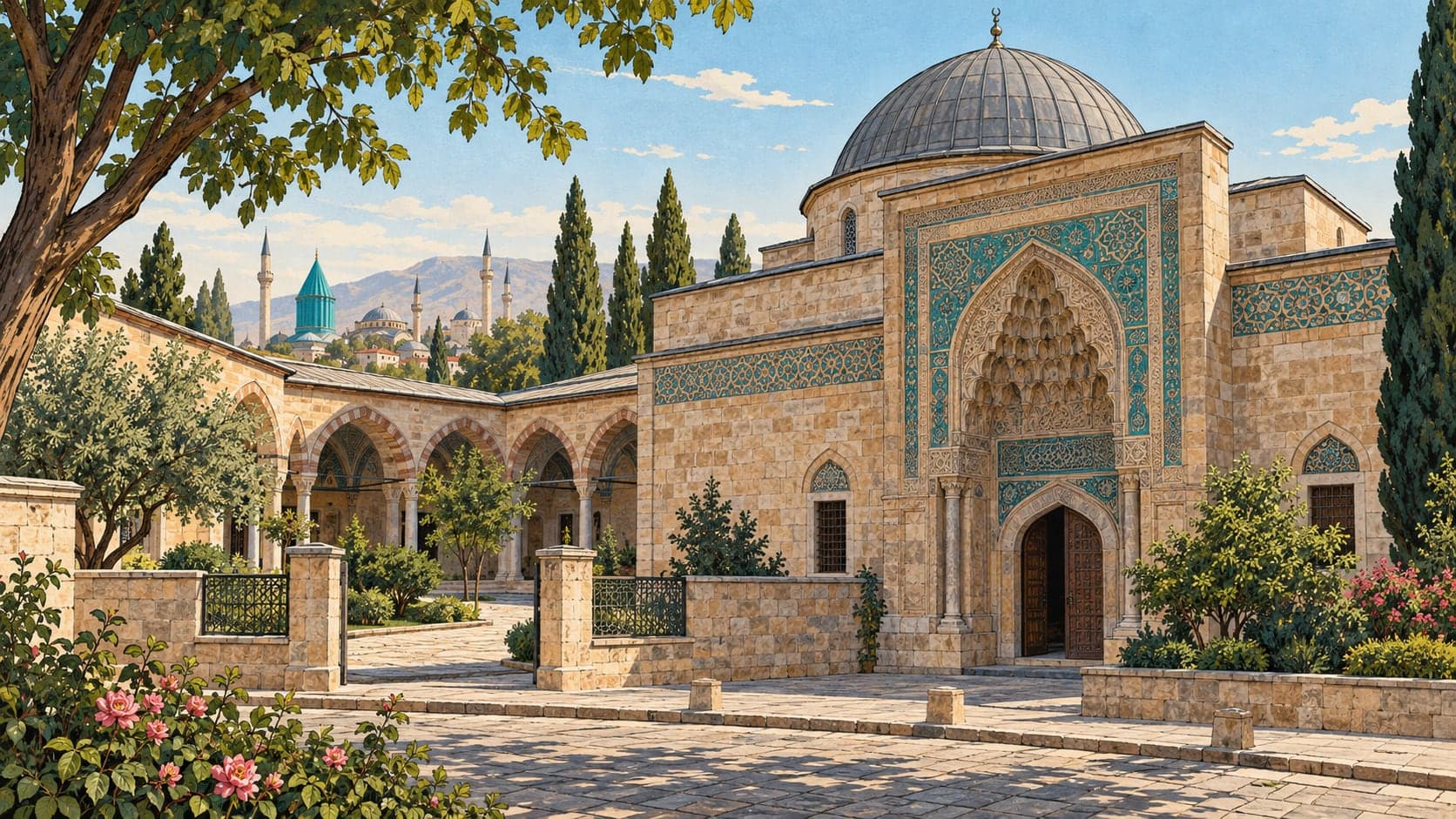
It was built as a closed-courtyard medrese for teaching hadith and Qur'anic commentary: single-storey, with one iwan. The entrance on the east is a doorway of blue and white marble, and it is an outstanding piece of Seljuk stone carving; the building inscription is above it and selected verses and hadith on its other faces. Through the door is a courtyard, once domed and now open to the sky, and from there a second door leads into the medrese itself.
The main courtyard is roofed by a dome faced in mosaic tile with a lantern at its centre. Verses are written around the drum of the dome, in the borders at the top of the walls, and on the panels above the cell doors; the arch of the barrel-vaulted main iwan on the west carries the basmala and the Throne Verse. On the triangles that carry the dome are the names of the prophets Muhammad, Jesus, Moses and David and of the four caliphs. The domed cell south of the iwan is Celaleddin Karatay's own tomb; the domed cell to its north had collapsed and was rebuilt after rescue excavation and restoration in 2006.
Much of the mosaic tile on the walls has fallen away, so expect gaps. What survives is worked in turquoise, dark blue and black. The 2006 excavation also uncovered a channel running east-west inside the main iwan, covered with wooden beams, and a pipe drain in the north cell built to carry water off the central courtyard; part of it has been glazed over and left on show.
Restoration and redisplay ran from 2006 to 2008. The cases hold wall tiles from the excavations at the Kubad-Abad Palace on Lake Beyşehir, tile and glass dishes, and tile and ceramic dishes, lamps and plaster finds of the Seljuk and Ottoman periods from Konya and its region.