Guide
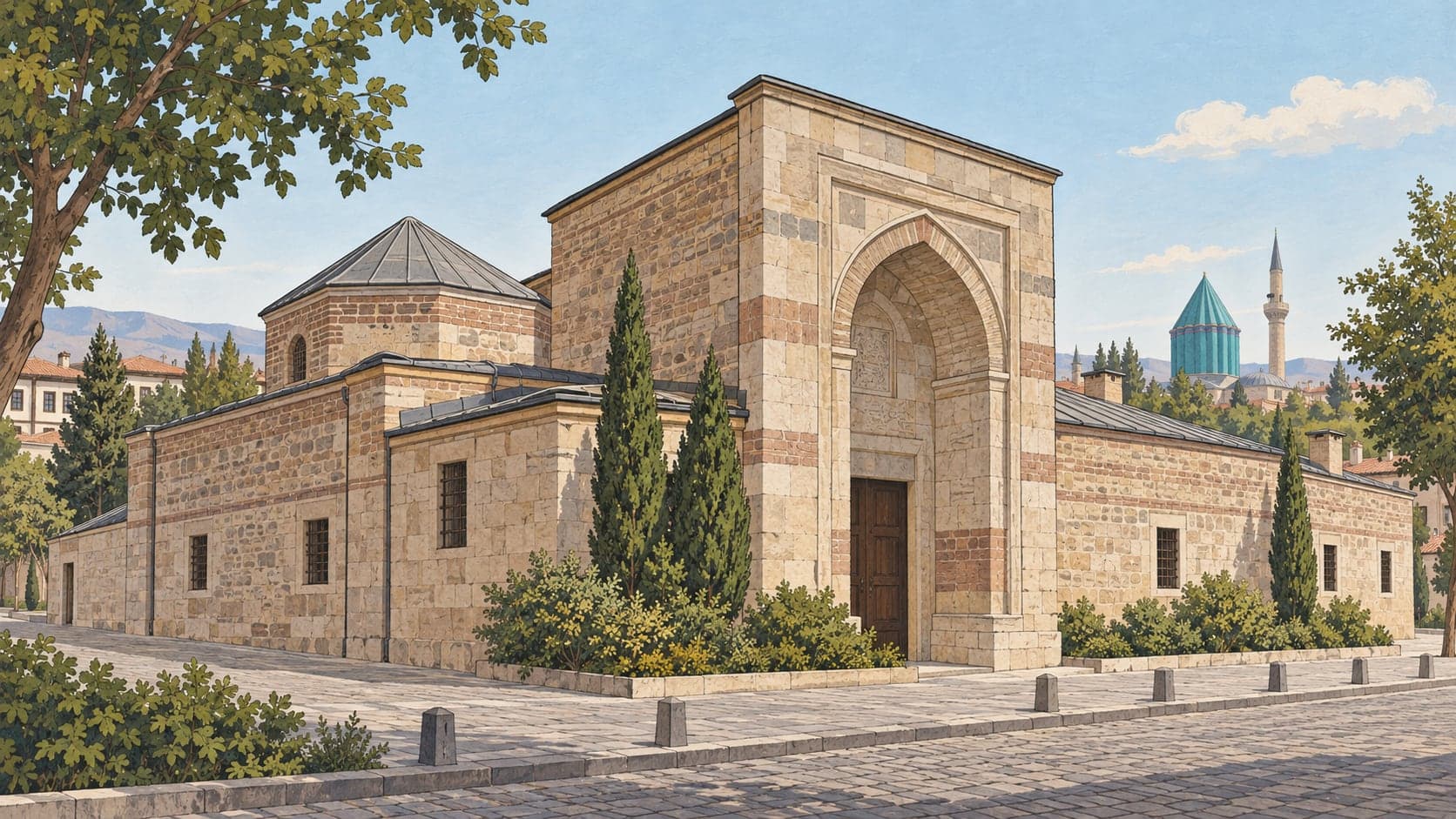
The museum occupies one part of a Seljuk complex on Sahip Ata Caddesi in Karatay, near the Atatürk monument in the centre of Konya and next door to the archaeological museum. Sahib Ata Fahreddin Ali, a vizier of the Anatolian Seljuk state, had the complex built in 1277; its architect was Keluk b. Abdullah.
The layout is worth knowing before you go in, because the museum is only a piece of it. The mosque stands to the north; against its mihrab wall is the tomb holding the graves of Fahreddin Ali, his wife and his children; against the south wall of the tomb is the hankah, the dervish lodge; and a double bath stands just across the road.
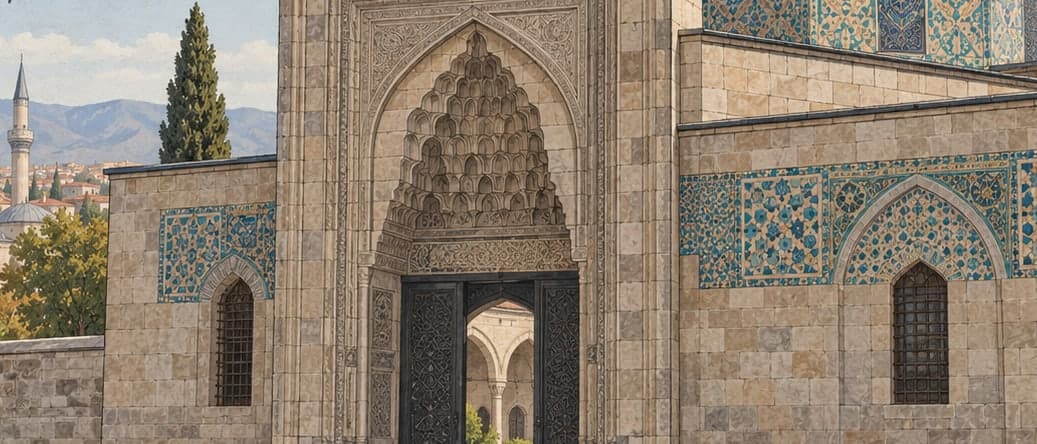
The mosque is entered from the north through a portal, with two cells above and two below on either side of it, the lower pair serving as fountains for passers-by. The frame around the doorway carries the Besmele and the Fatiha.
It is the hankah — the dergah — that the regional directorate of foundations arranged as the Sahib Ata Waqf Museum and opened to visitors.