Guide
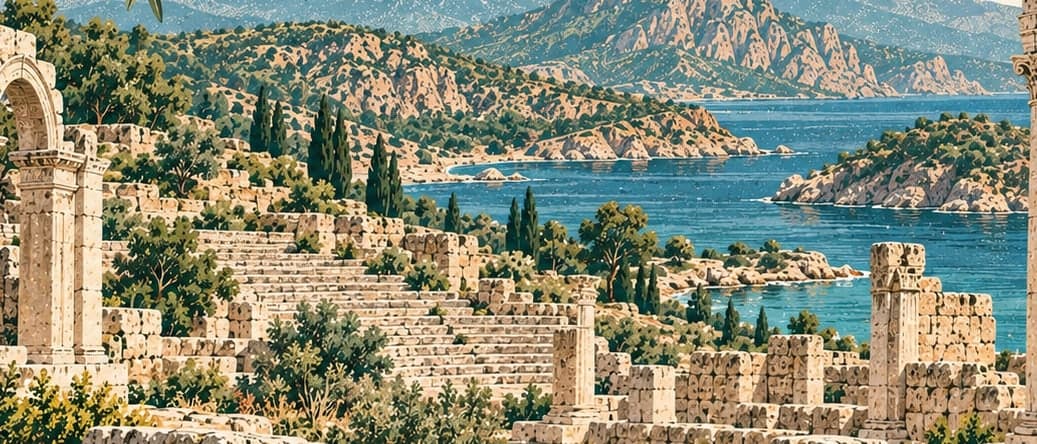
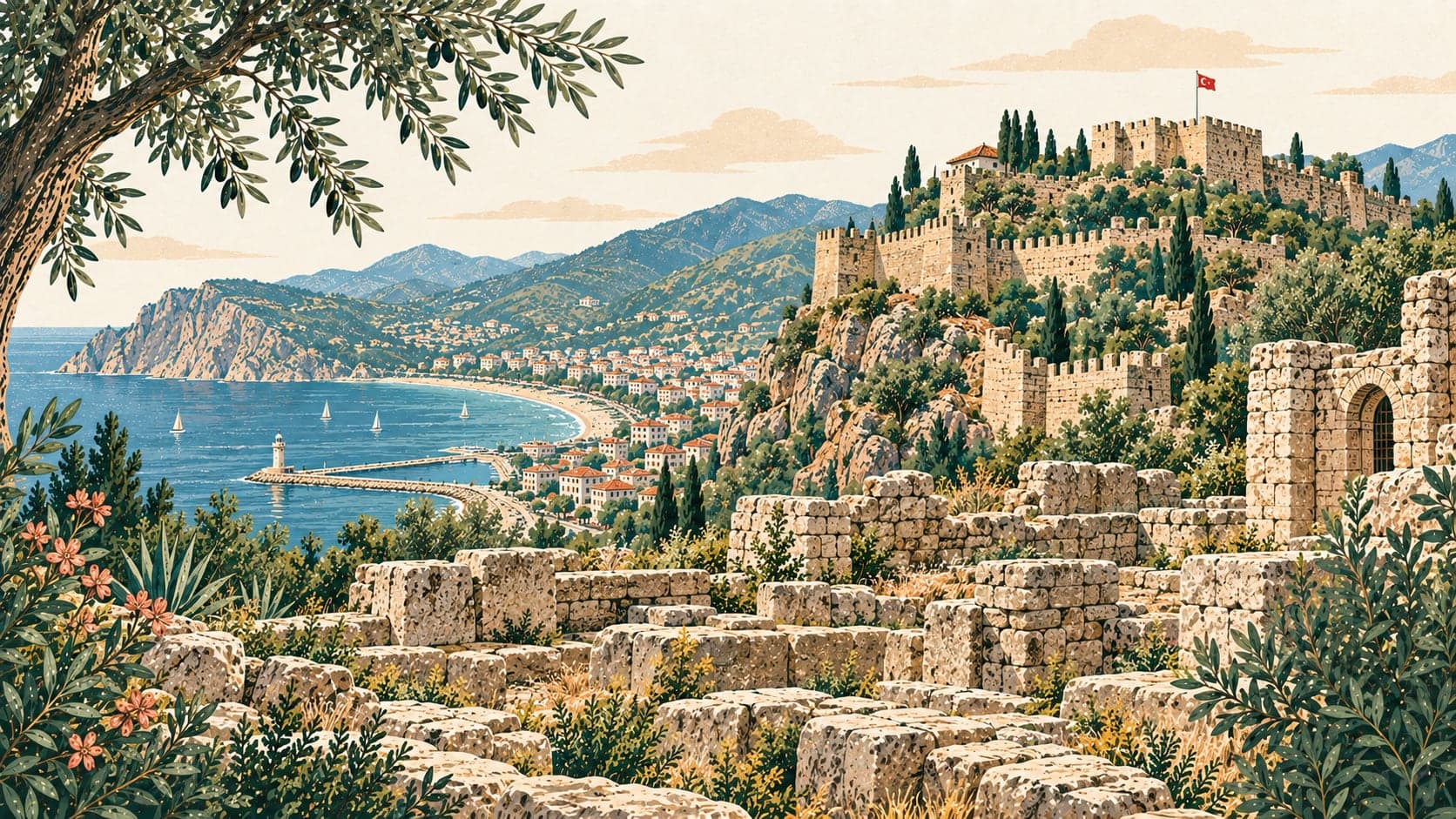
Alanya Castle is one of the emblems of the Alanya district of Antalya. It stands on a peninsula rising some 250 metres above the sea, and its walls run 6.5 kilometres in all.
A castle was built here in the Hellenistic period, at the settlement then known by another name, and the history of the place reaches back to that time. What stands today, though, is largely thirteenth-century Seljuk work, built by Sultan Alaeddin Keykubad I, who took the town in 1220 and 1221 and had it rebuilt.
The castle holds eighty-three towers and 140 bastions. Some twelve hundred cisterns were made in the Middle Ages to supply water to the town within the walls, and a number of them are still in use. The walls were laid out to run in a planned line through Ehmedek, the inner castle, Adam Atacağı, the point of Cilvarda, Arap Evliyası and the Esat bastion, past the arsenal and the dockyard, and to end at the Red Tower.
The place was founded as Korakesion in the second century BC. Rome, troubled by the pirates operating in the eastern Mediterranean, took the castle in 64 and 65 BC. After passing to the Seljuks under Alaeddin Keykubad I, the castle and the settlement around it came in turn under the Karamanids and the Mamluks, and were finally taken by Süleyman I.
At the summit of the peninsula is the inner castle, laid out today as a museum; this is where Alaeddin Keykubad had his palace built. People still live within the castle. It is open to motor traffic, and on foot the inner castle is reached in about an hour; there is also a cable car.