Guide
Dim Cave lies east of Alanya, on the western slope of Cebireis mountain at 1,691 metres. Just below the cave's car park, 232 metres down, run the Dim stream and the Dim valley, used as picnic ground, its floor covered with plane trees and its slopes with pine forest. The people living in the area are called Dimli, and the cave takes its name from that.
The cave can be reached by surfaced road either from the Dim valley or from the town of Kestel. Group walks are held from time to time along the road between the business faculty at Kestel and the cave. That road runs for three hundred metres along the irrigation channel of Yaylalı village cut into the foot of Cebireis, and walking it takes about fifty minutes, with the Mediterranean, Alanya, the pine forests and at times the Taurus mountains in view.
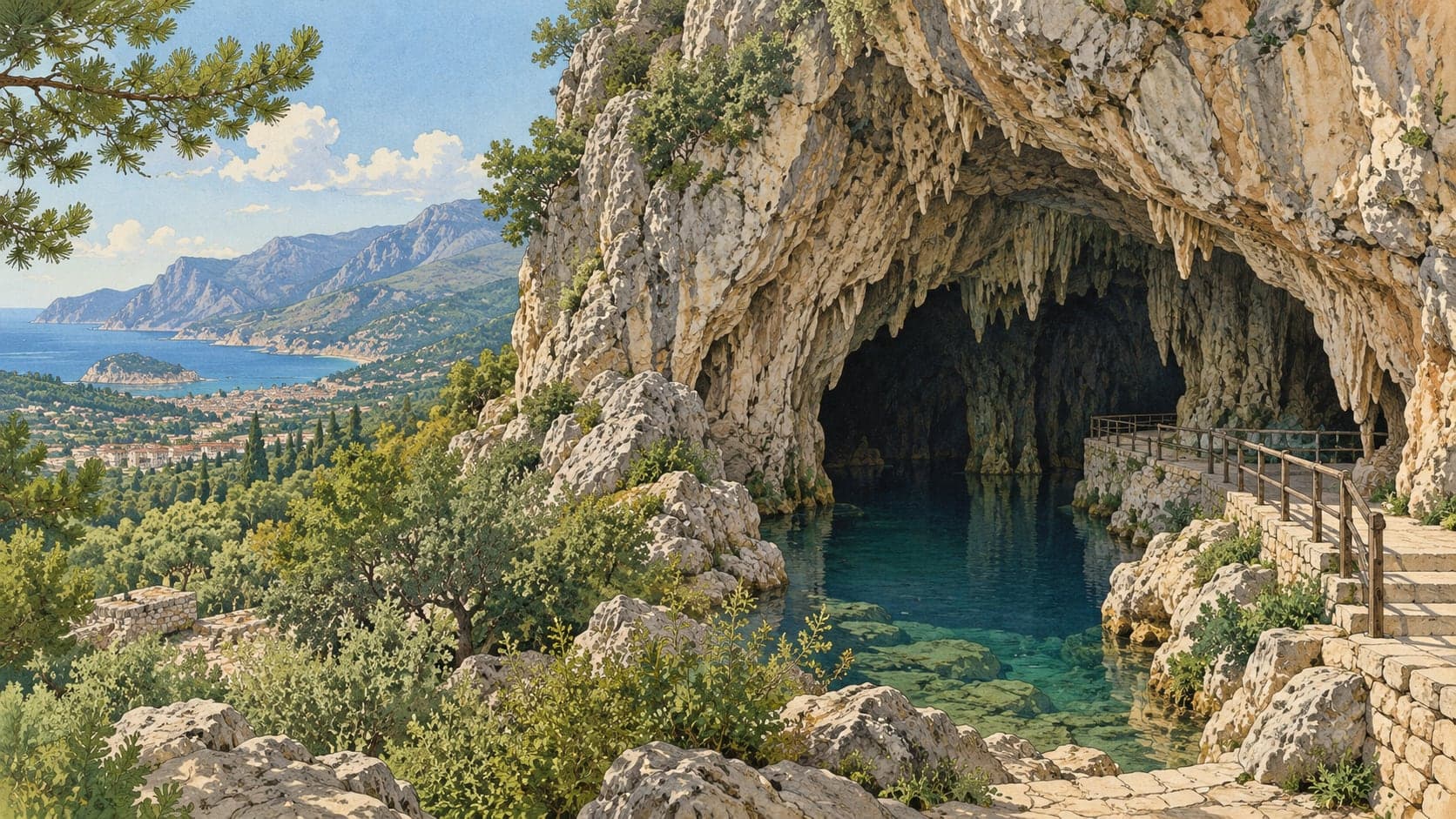
The cave runs 410 metres in all and is classed as horizontal and semi-dry; 360 metres of it are open to visitors. Along the paths through its four main chambers the width and height vary between ten and fifteen metres. Water drips from the ceiling in places, so that soda-straw stalactites are forming. The cave is lit electrically, with a generator against a failure of the town supply, and the temperature inside holds at eighteen degrees through the year. There are small pools within it and, in the last section, a lake two metres deep covering two hundred square metres.
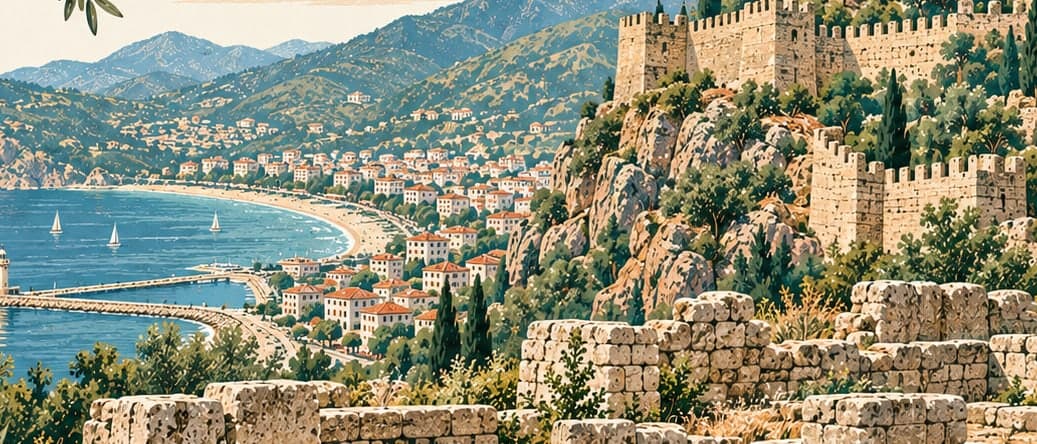
The source calls this one of the finest caves in Türkiye, rich in stalactites, stalagmites, columns, curtain and soda-straw formations and wall growths. Being eleven kilometres from Alanya, in country covered with picnic grounds and forest, it draws a great many visitors, and it is open all year. The facilities include a restaurant seating 150, and there is a viewing terrace with a telescope for looking out over the Mediterranean, Alanya and its castle, and a stretch of the Taurus range.
The operation was admitted to membership of the International Show Caves Association on 24 October 2002. Dim is, according to Turkish Wikipedia, the first cave in Türkiye opened to tourism and run by a private enterprise.
Part of the cave was used as a place to live in prehistoric and historic times, and until it was opened to visitors it served at times as a shelter for goats. It draws most of its visitors in summer, and it is both a source of income for the area and an important example of geotourism in Türkiye.
Visit status for this record: open to visitors.