Guide
Iotape — Aytap — stands at the thirty-third kilometre of the Alanya–Gazipaşa road and is a coastal city of Cilicia. It takes its name from Iotape, wife of Antiochos IV of Commagene (AD 38–72), and struck coins in its own name from the reign of Trajan to that of Valerian.
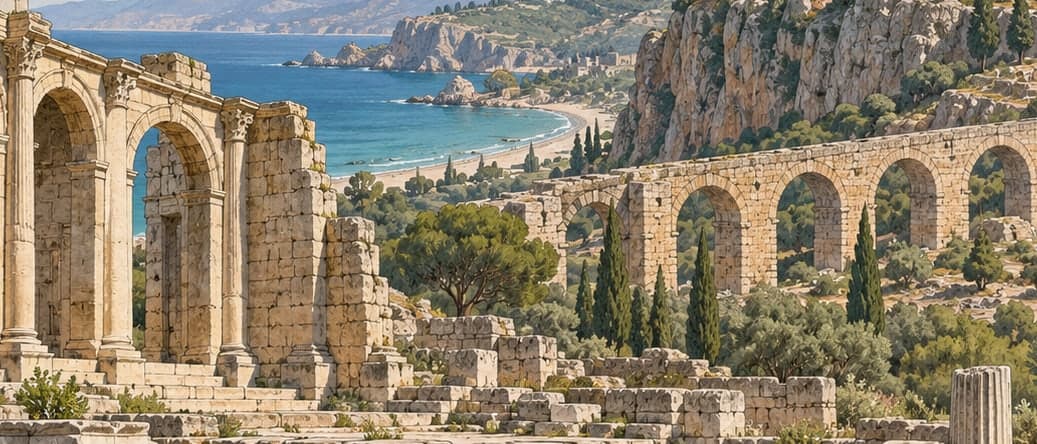
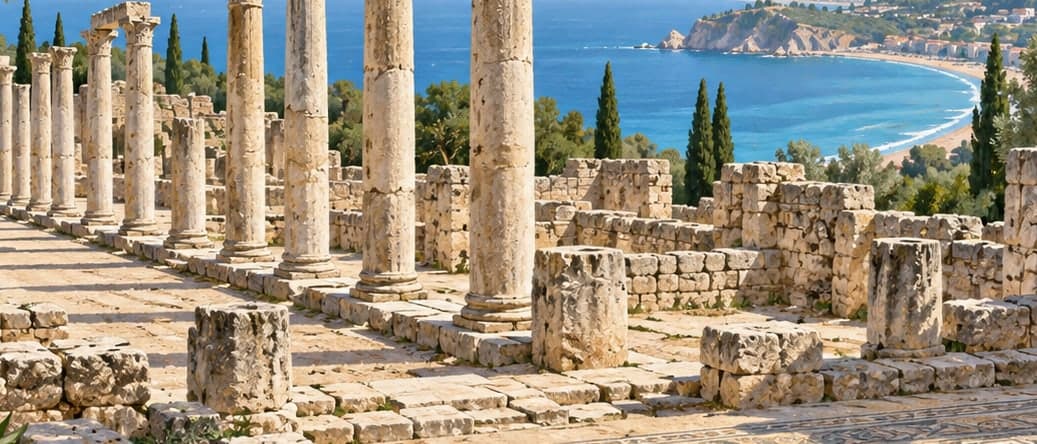
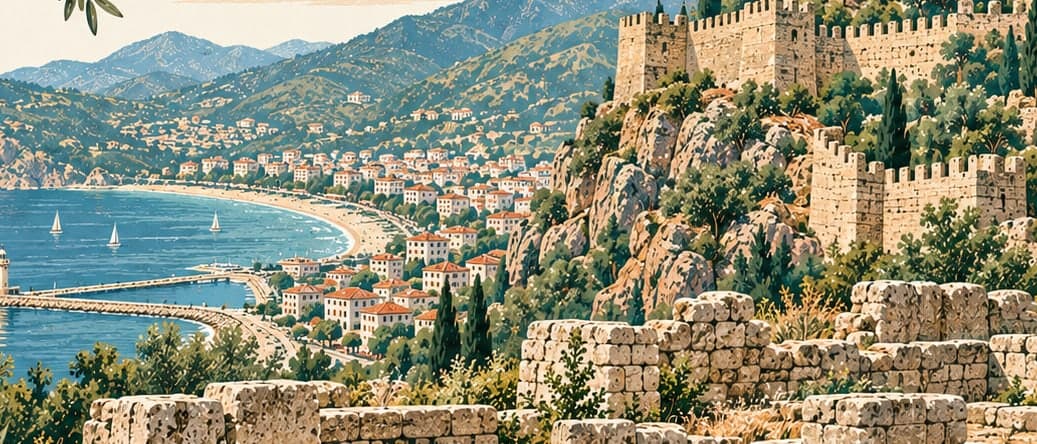
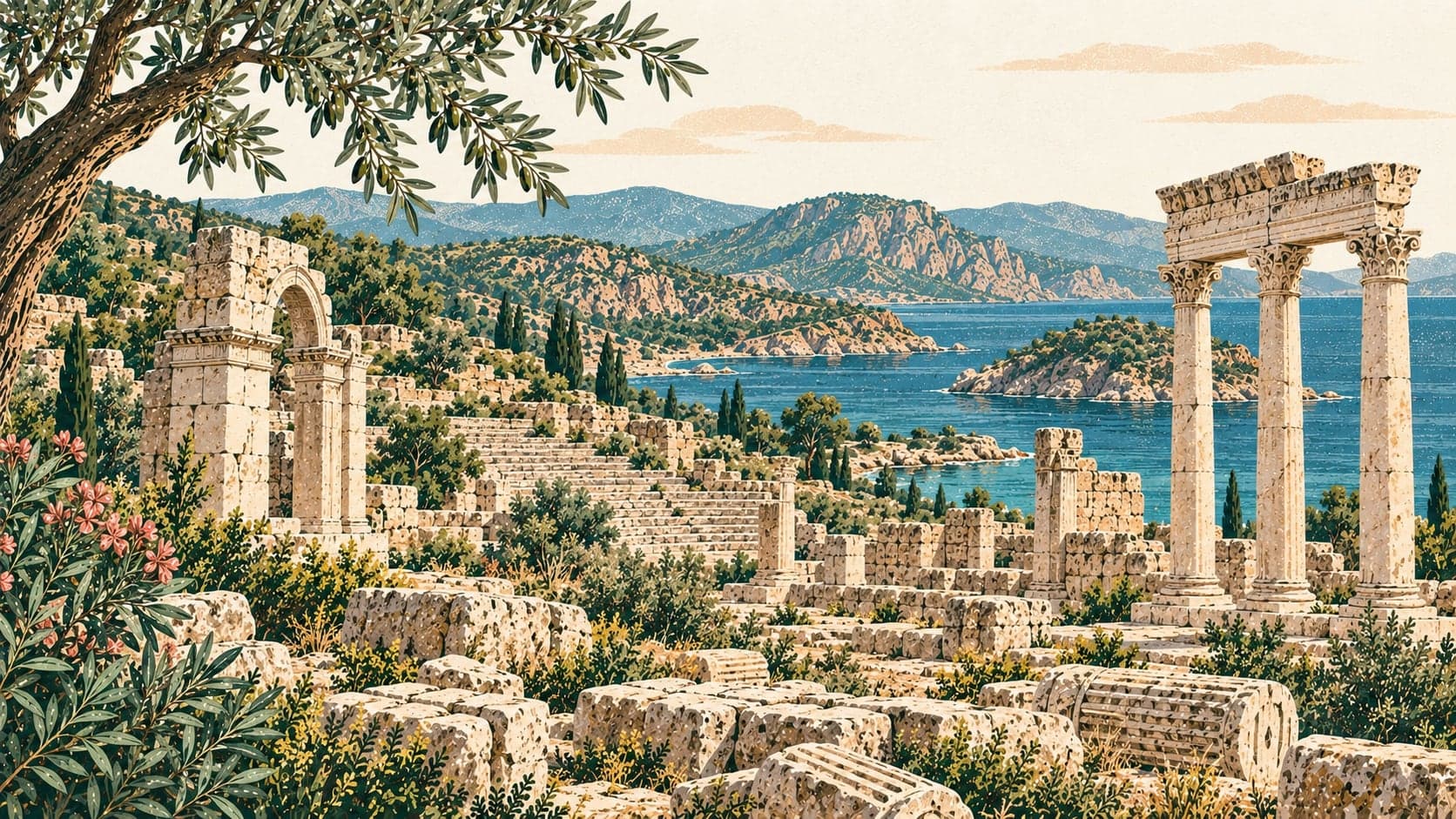
What survives carries Roman and Byzantine features. A high promontory reaching toward the sea forms the acropolis; enclosed by walls, it has the appearance of a fortress, though the buildings are badly damaged. In the small valley where the acropolis joins the mainland runs the harbour street, east to west, most of it now under the modern road. Three-stepped krepis ran along both sides of that ancient street, with statue bases standing here and there between them; the inscribed bases carry information about the successful and generous citizens of the city.
In the bay east of the acropolis are a rectangular basilica and a small single-aisled church attributed to Hagios Georgios Stratelates because of an inscribed fresco inside it. In the same area are the remains of a bath whose plan resembles the others in the region, and the water system serving the bath and the city can still be seen.
Among the remains on the seaward side there is a temple dedicated to Trajan — the attribution comes from an inscription found nearby — of which only the stylobate survives. North of the modern road the remains are mostly tombs in the necropolis, houses and stretches of the wall. Besides monumental tombs the necropolis holds simple graves, and these are the clearest examples of the funerary architecture and burial customs of the region.