Guide
Known in Lycian as Habesos or Habesa, Antiphellos is one of the older settlements of Lycia. The Greek name means the place opposite the rocky country — opposite Phellos, the stony land — and that is what it was: the harbour of Phellos, which lies inland to the north. It has been lived in since the sixth century BC and was a member of the Lycian League.
Trade reversed the relationship between the two. As commercial ventures gained weight in the Hellenistic period, Antiphellos grew quickly while Phellos, the mother city, declined, and under Rome it remained an important port. From the middle of the second century BC it is known as a trading city through its coins, struck both in its own name and on behalf of the league, even though its vote in the league was limited to one.
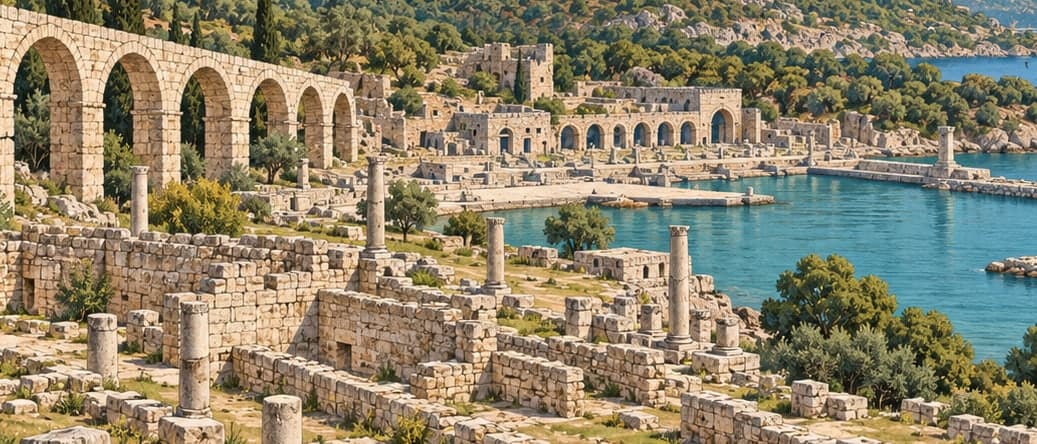
The remains lie in and around the town of Kaş and continue along the peninsula that runs east to west. Hellenistic wall foundations in rectangular masonry appear where the peninsula begins and on the face looking toward Meis. Where the walls overlook the harbour, south-east of the church that is now a mosque, stands the ruin of a temple marked out by its temenos; which god it served is unknown. The original building dates to the first century BC and the later additions to the third century AD.
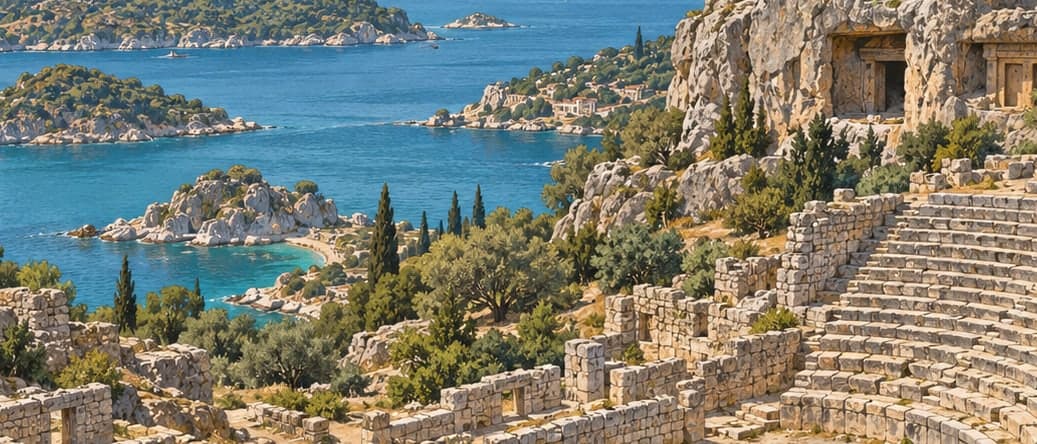
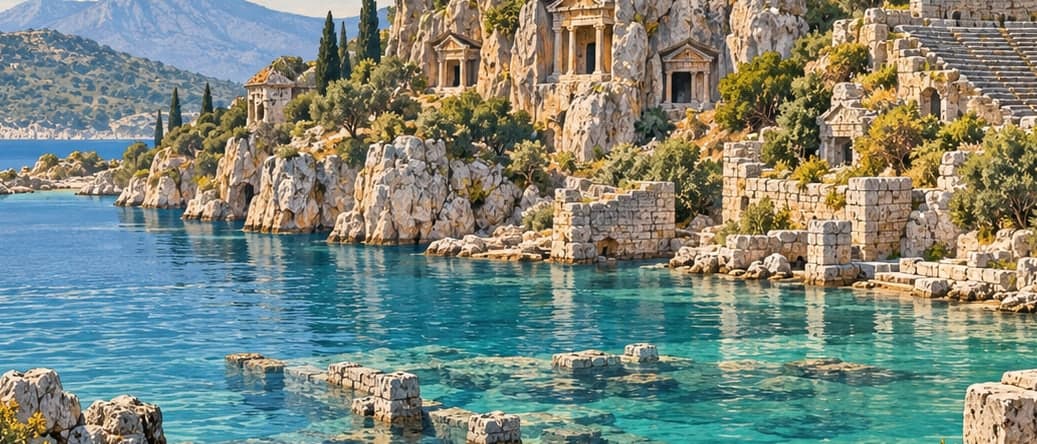
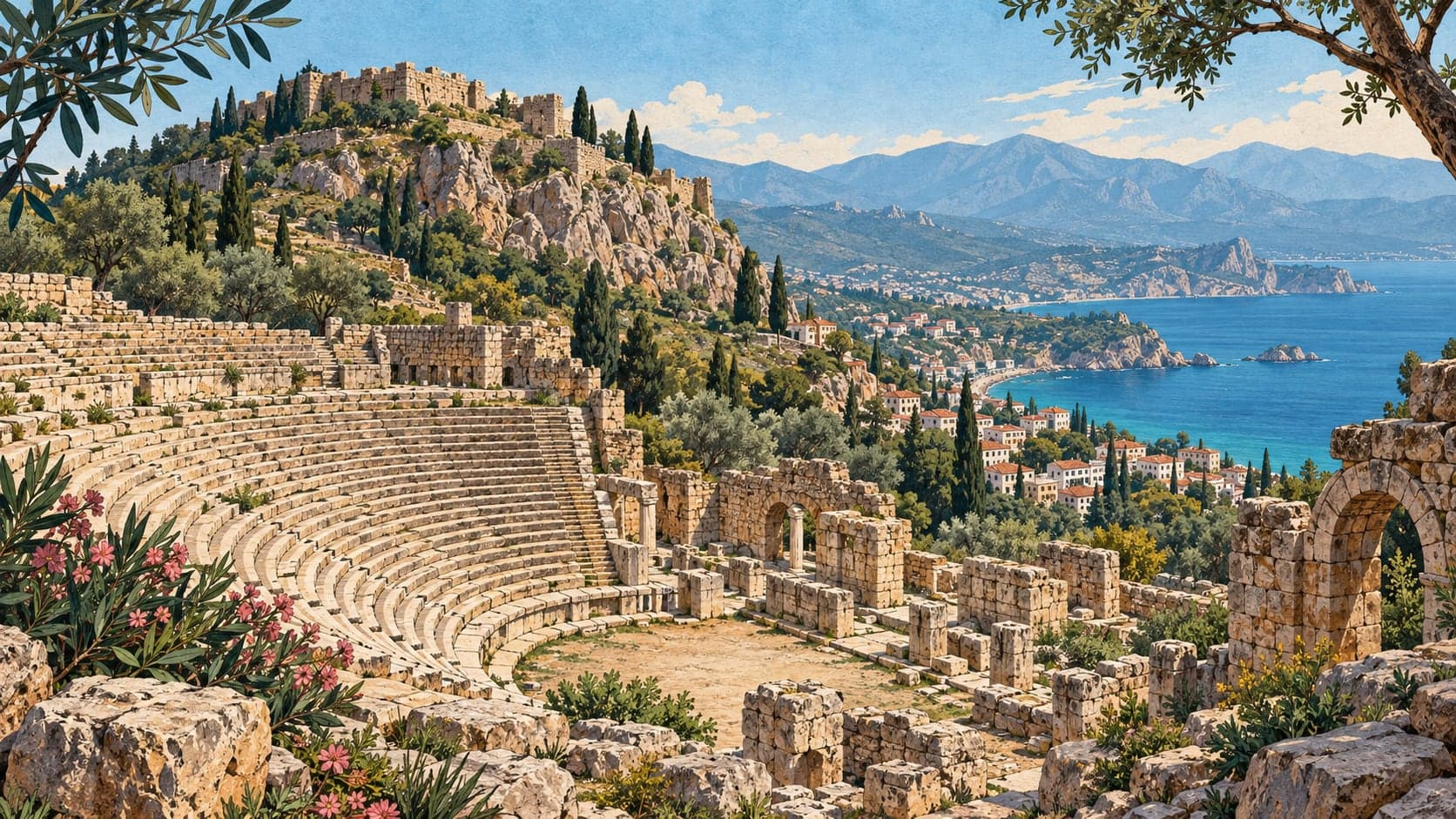
The theatre is better preserved. It sits against the south foot of the acropolis hill with twenty-six rows of seats facing the sea, divided into three blocks by four stairways, with no diazoma and no permanent stone stage building; it is thought to be Hellenistic. North-east of it a tomb chamber cut into the bedrock carries twenty-four reliefs of women and dates to the fourth century BC. The monument that has become the symbol of Kaş stands on Uzun Çarşı Caddesi: a very well preserved sarcophagus with a Lycian inscription, remarkable for its architecture and its proportions, with lions' heads at the corners of the lid.