Guide
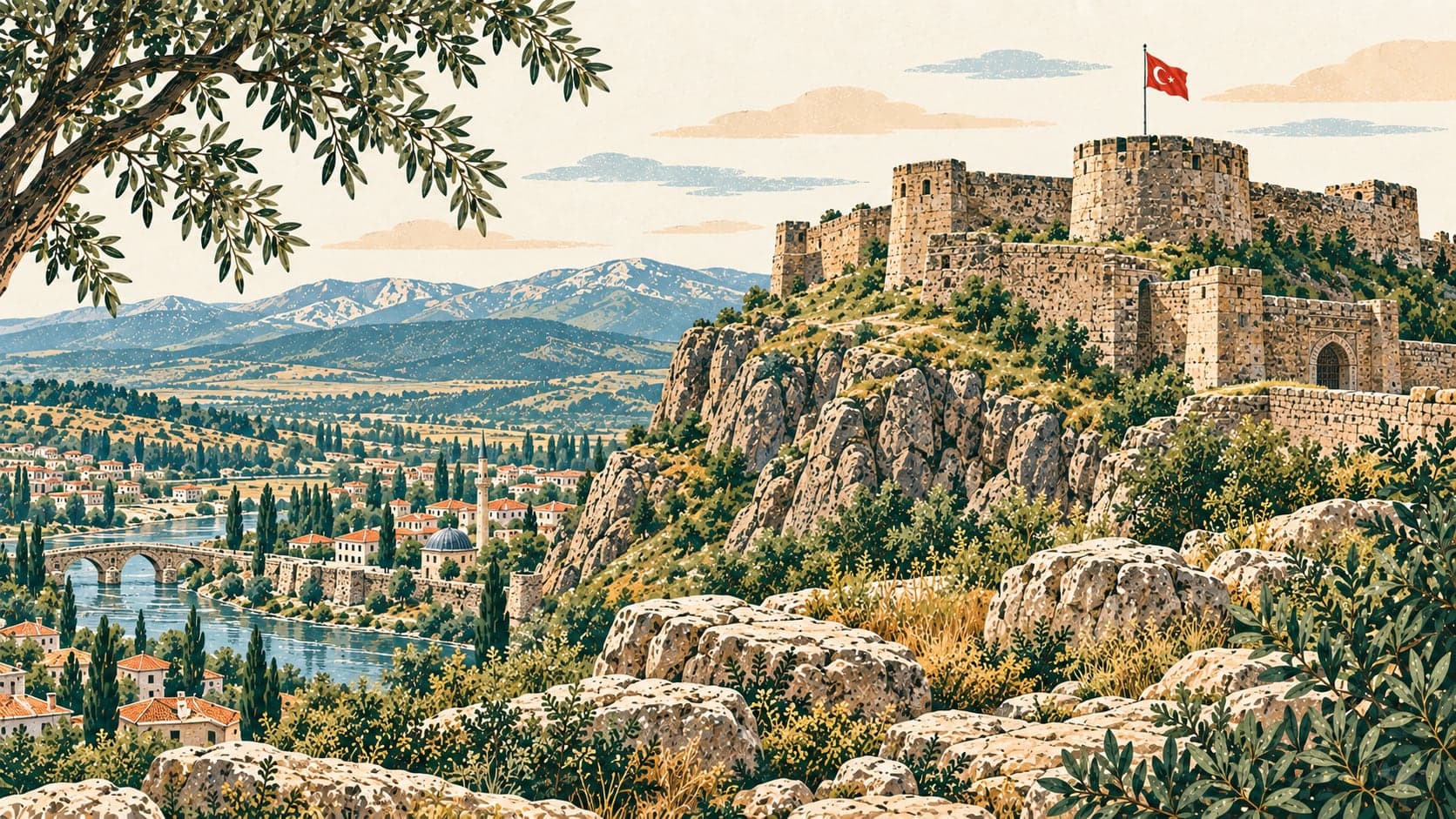
Ardahan Castle stands in the middle of the town of Ardahan, in the historical region of Artani. It is a medieval castle left by the Georgians, and from the old name of the town it is also known as Parakani Castle.
When exactly it was built is not known. When the Ottomans took it in the middle of the sixteenth century, both the castle and the settlement bore the name Parakani, and in the detailed Ottoman register of the province of Georgia dated 1595 the castle and the settlement around it appear as the Rabat of the fortress of Parakan. At that period the name Ardahan was used only for the region, while the settlement itself was called Parakan, which is why the sources call this the castle of Parakan.
The Ottomans took the region of Artanuji and then that of Artani from the Georgians in 1551. An Ottoman inscription in the castle shows that they repaired the building in 1556. During that work the Georgian church inside the castle was pulled down and its stones were used in the walls, and stones with Georgian writing on them can still be seen in the walls today.
The castle lies on the left bank of the Kura, the river that separates the Halil Efendi quarter north of the town from the town centre. The walls are built of roughly dressed stones of middling and small size set in horasan mortar, with larger, neatly cut stones at the corners of the towers. Measured along the inner walls, the castle runs a maximum of 268 metres from east to west and between 119 and 170 metres from north to south.
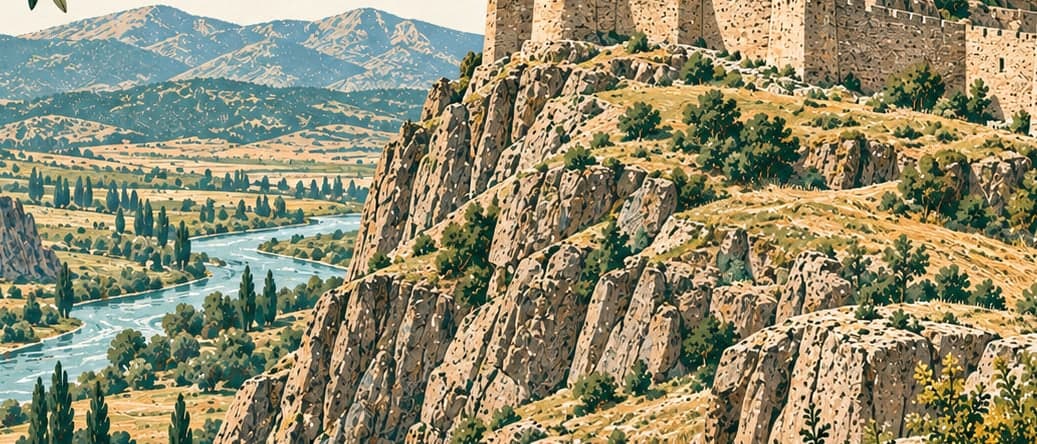
Because the ground slopes, there is a difference in level between the northern and southern halves of the castle. The southern part, closer to the Kura, lies lower, and the difference between the two grows from west to east; between the lowest ground in the south and the highest in the north there is a drop of some thirty-five to thirty-seven metres. The southern wall stands at roughly half the height of the northern one.
The Georgian researcher and journalist Konstantine Martvileli wrote the name of the castle as Artaani Castle in 1917. He recorded it as the second largest castle in the sancak of Ardahan and observed that, ruined though it was by neglect, not even the First World War had been able to damage its battlemented walls, which rose like a giant hill. At that date the houses leaning against the walls were also still sound.