Guide
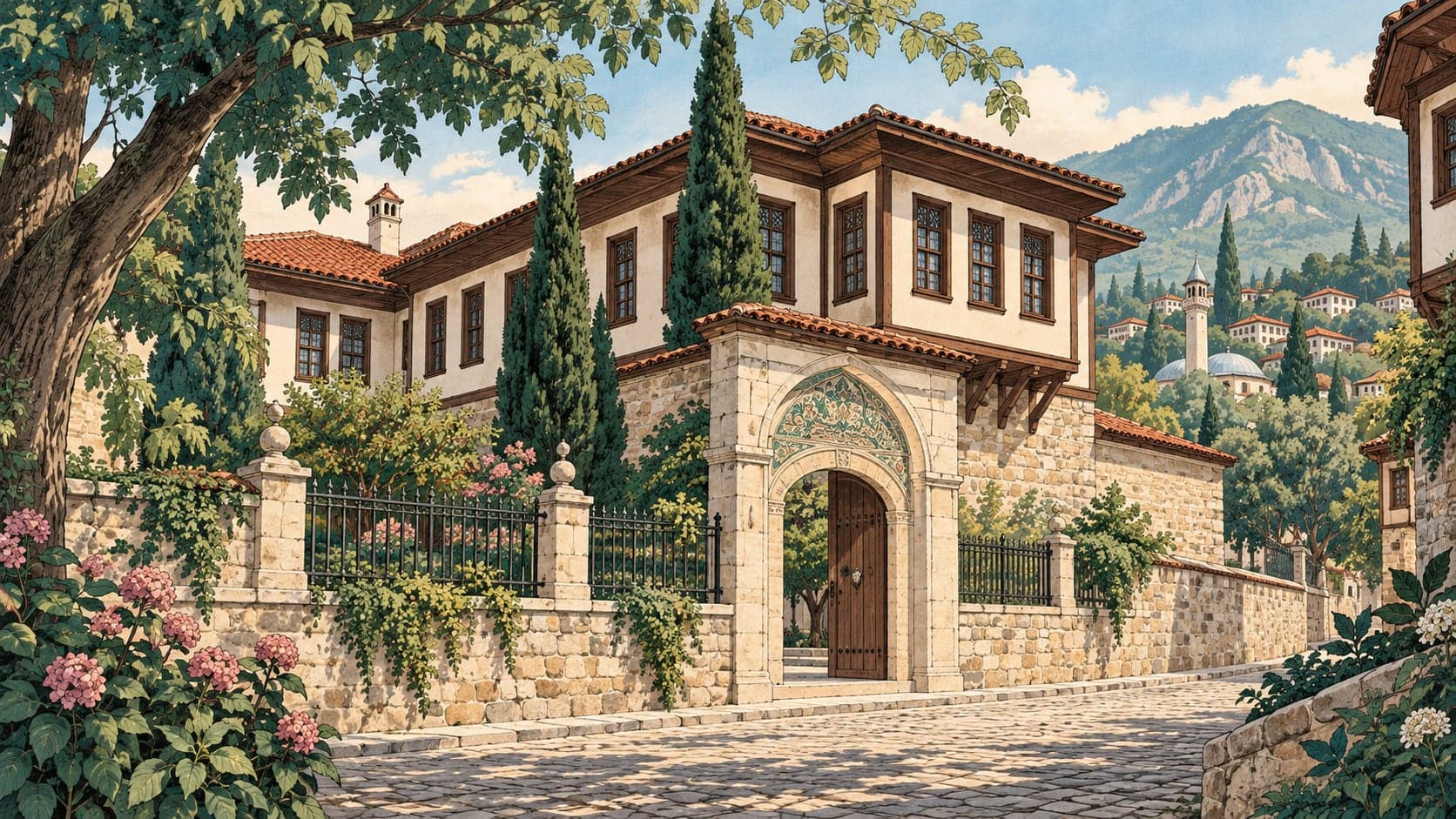
The museum is a konak of the eighteenth century, a good example of traditional Turkish domestic architecture, built by Hasan Eşref Efendi for his family; he owned tanneries in Bursa and brought the city its first knitting machines. The house later passed to Bursa Metropolitan Municipality, was restored to its original form, and opened on 21 February 2018 as the Bursa Museum of Living Culture.
Its subject is custom rather than object — the traditions of Bursa that are being forgotten, shown through reconstructed scenes, with the things used in daily life displayed alongside them.
The first floor holds the hall, the kitchen and the principal room, along with a circumcision room and bed prepared with embroidery particular to Bursa, and a room hung with embroidered towels. Two pieces here are worth finding: a paşa brazier of about 150 years, and a hand-made wall carpet built from 408 separate parts.
Upstairs, the hall holds a gaming set of about 170 years inlaid with mother-of-pearl and ivory. The rooms beyond cover the bridal chamber and the tradition of the trousseau, the receiving of guests, the congratulations paid to returning pilgrims, and the gezek, the rotating gathering that structured social life here.
The museum works as a living museum: events that show the past in use are held in the hall and the rooms themselves rather than in a separate space.