Guide
The museum in the Mihalıççık district of Eskişehir was opened by the ministry in 1974. Yunus Emre lived in the thirteenth century, and his grave at Eskişehir was destroyed during the Greek occupation; a new one was built in 1949 behind a fountain put up at that time.
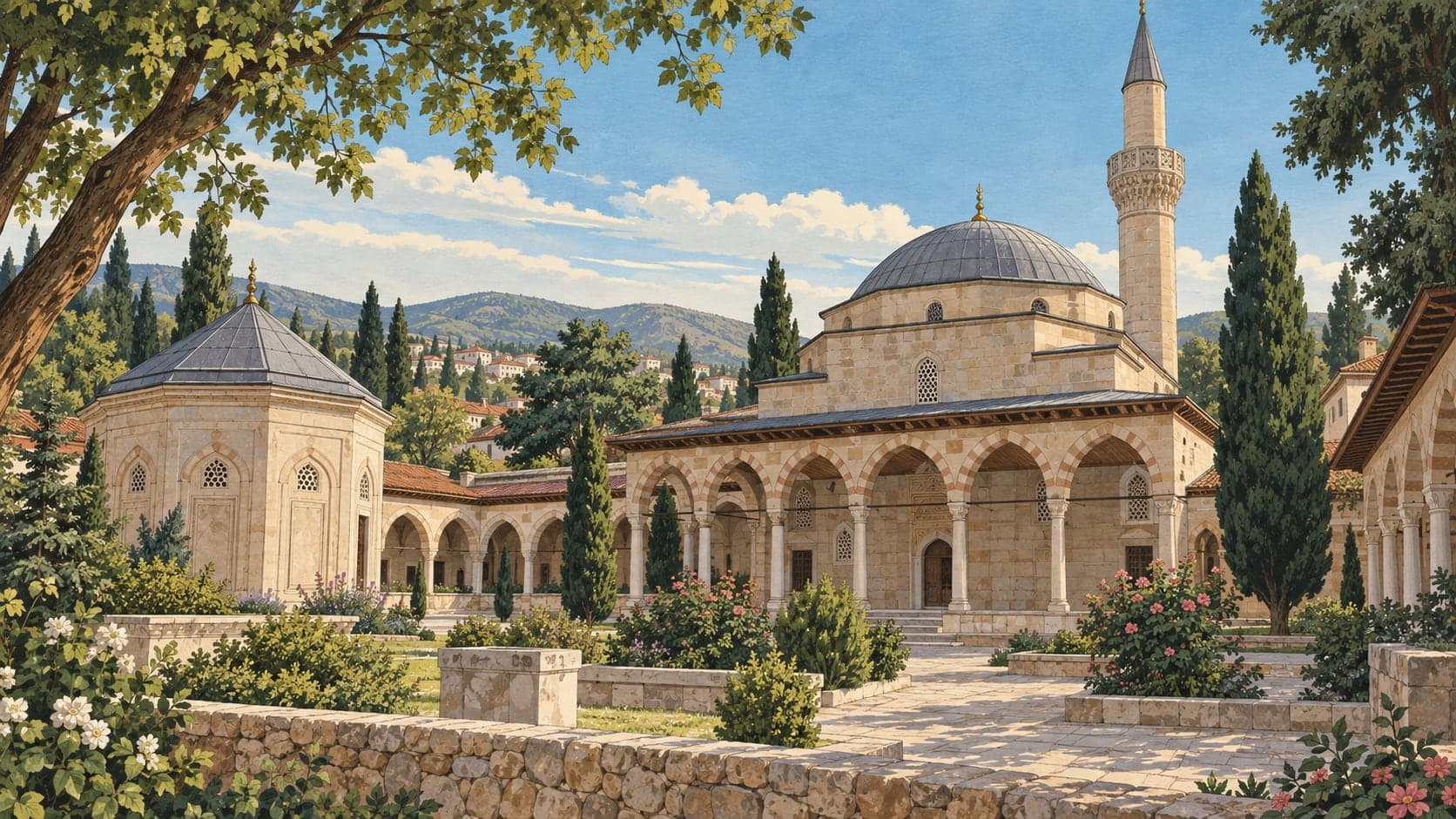
That grave was made in the manner of thirteenth-century Seljuk architecture. The sarcophagus, decorated with rumi and palmette motifs, was set at the centre of an open monument of eight columns joined to one another by arches.
In 1982 a culture house, a mosque and an ablution fountain were added to the site, along with a statue of Yunus Emre. The museum set up in the culture house displays books introducing him and panels carrying his verses, together with architectural pieces left from his first grave and some ethnographic material.