Guide
Kale Bolu Hazel Nature Conservation Area is used for educational purposes only and has no buildings or facilities inside it; the area record nevertheless gives opening hours of 09:00 to 18:00. It covers 472.77 hectares and was declared on 10 October 1988. The page names it both Kale Bolu Fındığı and Bolu Kale Fındığı.
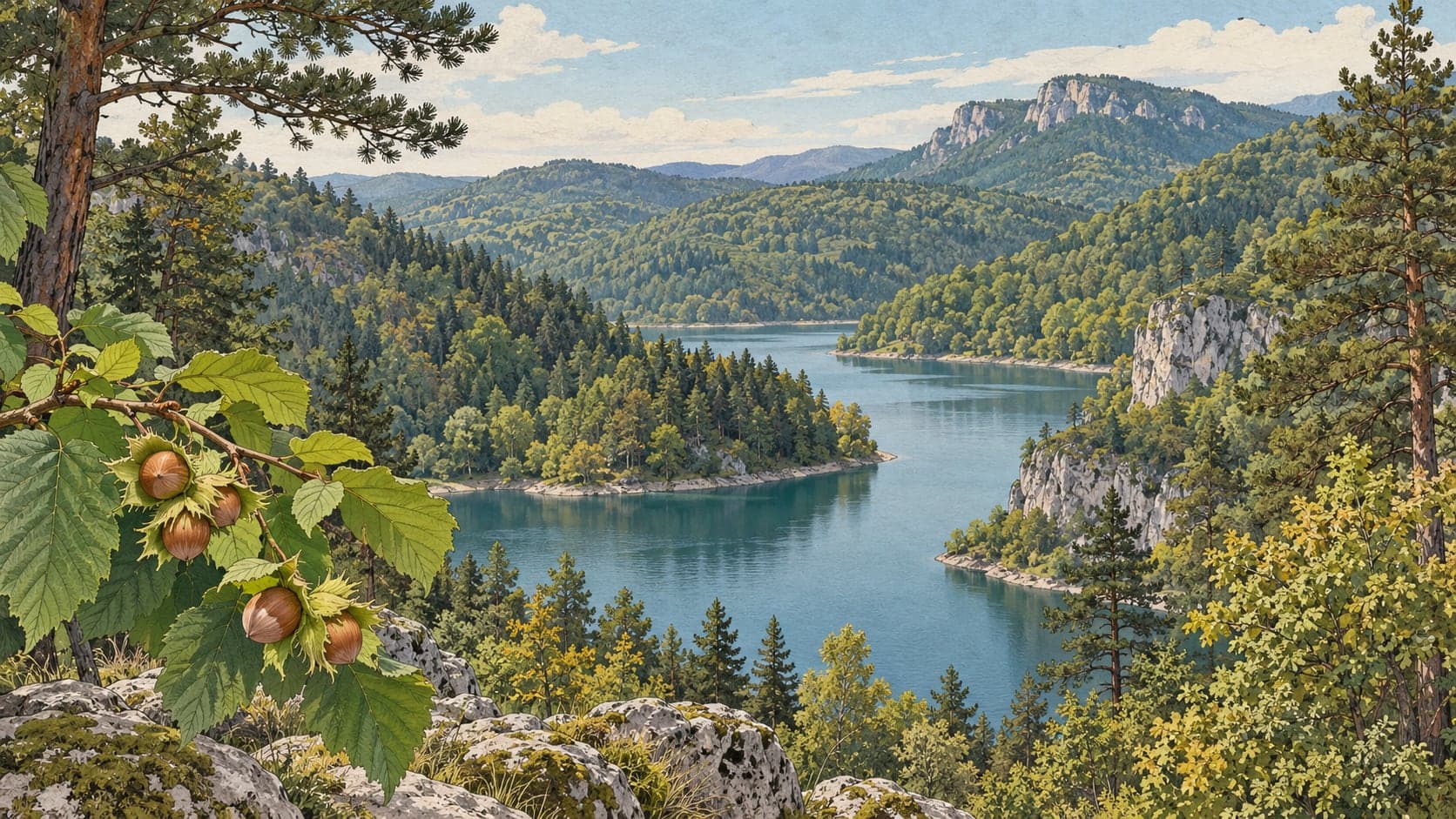
The tree it is named for is the Turkish hazel, Corylus colurna, which grows as a straight-trunked tree sometimes reaching 20 metres and 0.75 metres in diameter. The bark is grey and splits with age; young shoots are hairy and grey with smooth bark, and older branch bark corks and cracks. The leaves are broadly egg-shaped, 8 to 12 centimetres long, heart-shaped at the base and stalked, tapering to the tip rather than narrowing abruptly.
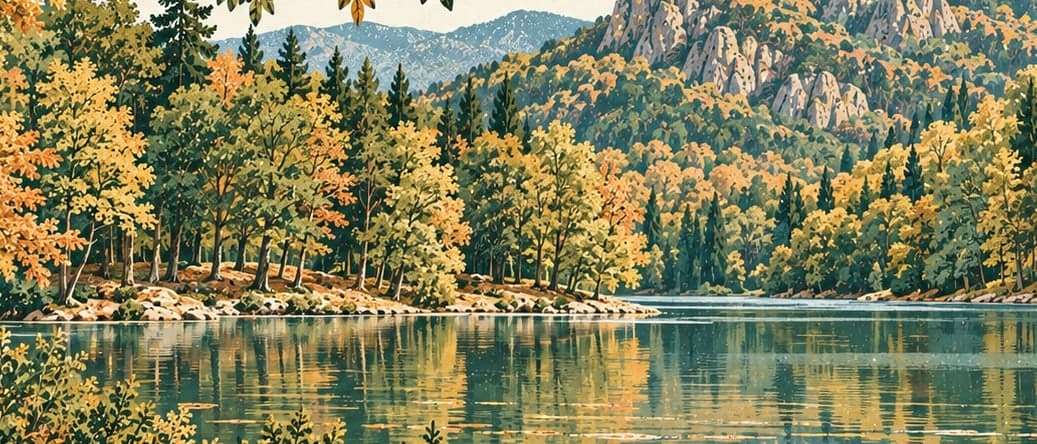
The directorate gives two different answers about what dominates the forest. It first describes the Turkish hazel forming mixed stands with fir and, in places, oriental beech and hornbeam in the eastern parts, then states that the dominant tree of the area is Uludağ fir. Aspen, Scots and black pine, elm, plane and lime also grow there, with alder and willow along the reservoir shore, under a Black Sea climate.
Because the area is surrounded by the Yedigöller Wildlife Development Area, the wildlife is rich: red deer, roe deer, wild boar, brown bear, brown hare, wolf, jackal and fox are recorded. There are no settlements immediately around it. The nearest are Kozlu and Çukurören 8.5 kilometres to the south as the crow flies, Yeşilçele and Mesciçele to the southeast, Çiftlikköy and Hocaköy 15 kilometres north, and Merkeşler 15 kilometres east. The site is about 16 kilometres from Bolu city in a straight line and 35 by road, on the main Bolu-Yedigöller route.
- Designated
- 5.10.1988