Guide
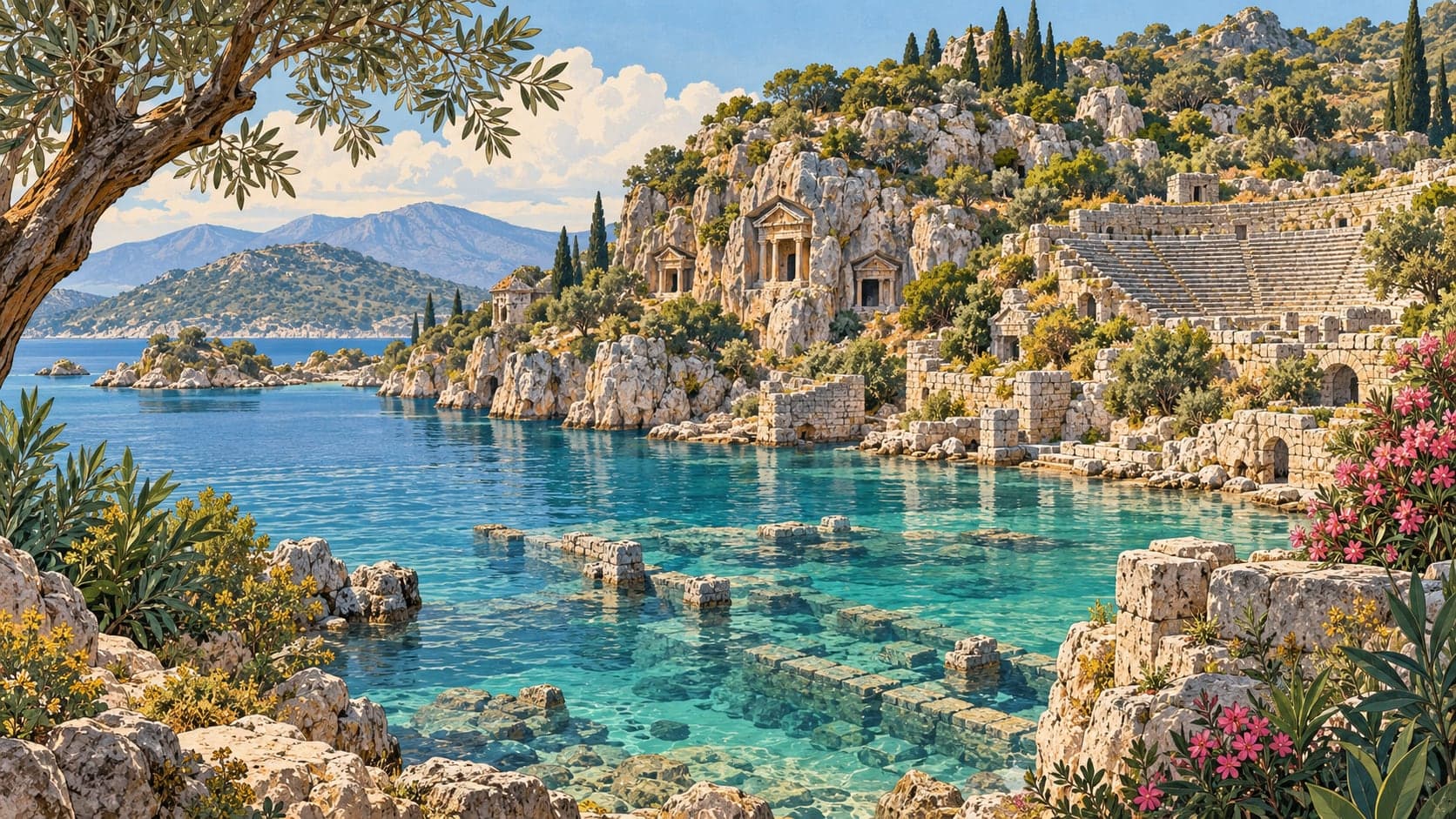
Kekova is the name of an area rather than a town or an ancient city. The island that gives the area its name is the largest in it, and it stretches alongside the shore to form a channel. The area lies about 200 kilometres west of Antalya and 250 east of Fethiye, and is made up of picturesque islands and a great many bays. The whole of it is full of remains from the Lycian period.
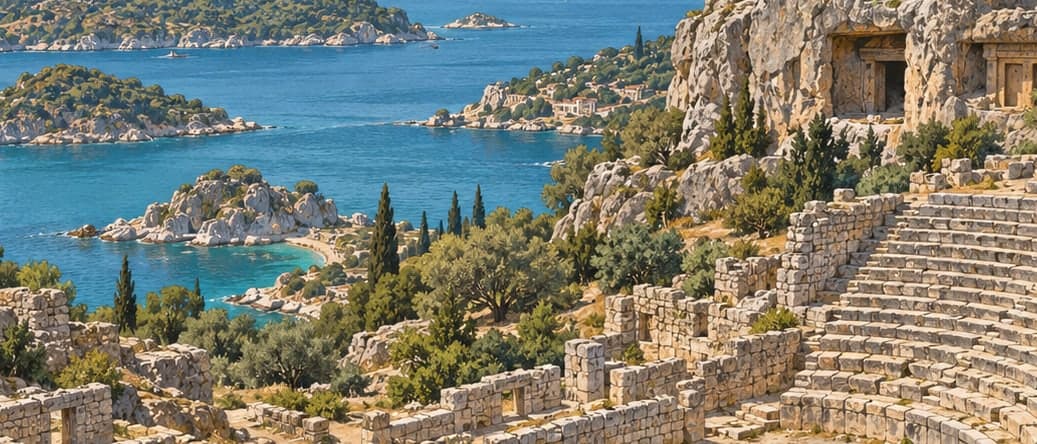
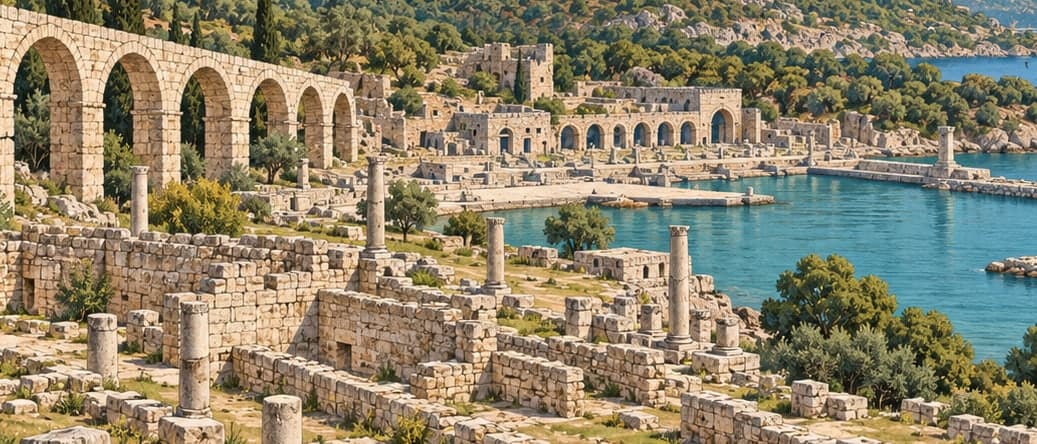
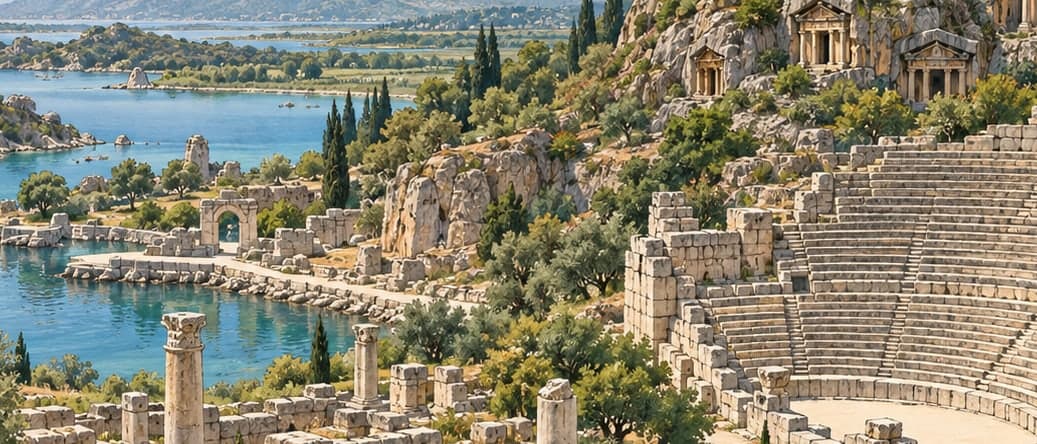
Sunken settlements ring the island. The area holds tombs inscribed in Lycian, Lycian-type sarcophagi standing in the water along the shore, remains of a breakwater and of buildings, a theatre cut into the rock inside a medieval castle, rock tombs, water cisterns, and a necropolis to the north made up of sarcophagi and a few rock tombs — with the archaeological settlements of Üçağız, ancient Theimiussa, and Kaleköy, ancient Simena, immediately beside it.
Beyond what people built, the place is distinctive for its geology, its grooved coastline, its marine biology and its plant cover. Kekova has been proposed as a world heritage site and has been on the UNESCO tentative list since 2000 — a candidacy, not an inscription.
Besides Kekova island the area holds İç Ada, Toprak Ada, Aşırlı Ada and Kişnali Ada. It has been protected as the Kaş-Kekova special environmental protection area. Access by land is limited, and the shores are reached by boat.