Guide
Andriake lies at Çayağzı in Demre — ancient Myra — and was the harbour of Myra and the settlement that grew around it. It also existed as a city in its own right: a place called Andriake stood at the mouth of the Andriakos, today the Kokarçay, around 200 BC, and in 197 BC Antiochos III came here with his fleet while taking Ptolemaic territory. Livy counts Andriake among the cities of southern Lycia.
Trajan, planning the Parthian war and staying at Myra, said a good harbour was needed in southern Lycia — but the design and the building belong to Hadrian and his time. The visit of Germanicus and his wife Agrippina to Myra in AD 18 was honoured with statues here. Among what the ministry calls the more colourful pages of the site's history is that Saint Paul, travelling to Rome to answer for unrest in Jerusalem in AD 60, stopped here to change ship.
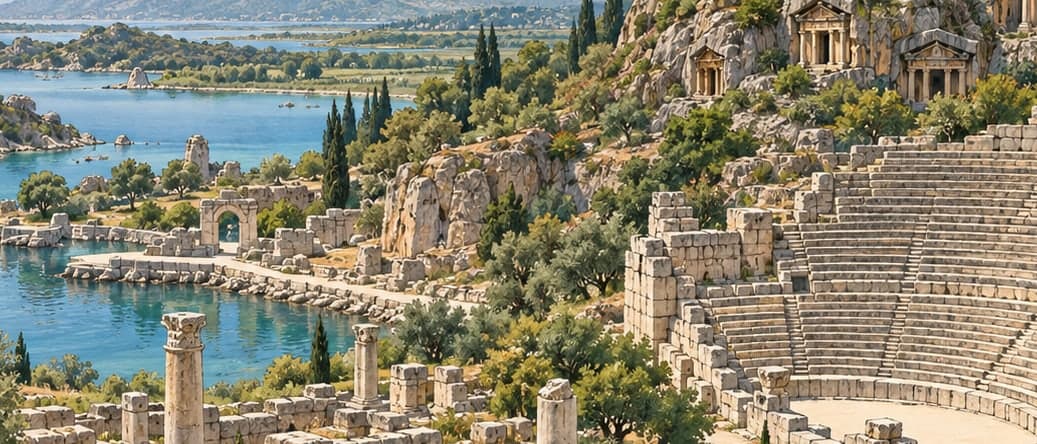
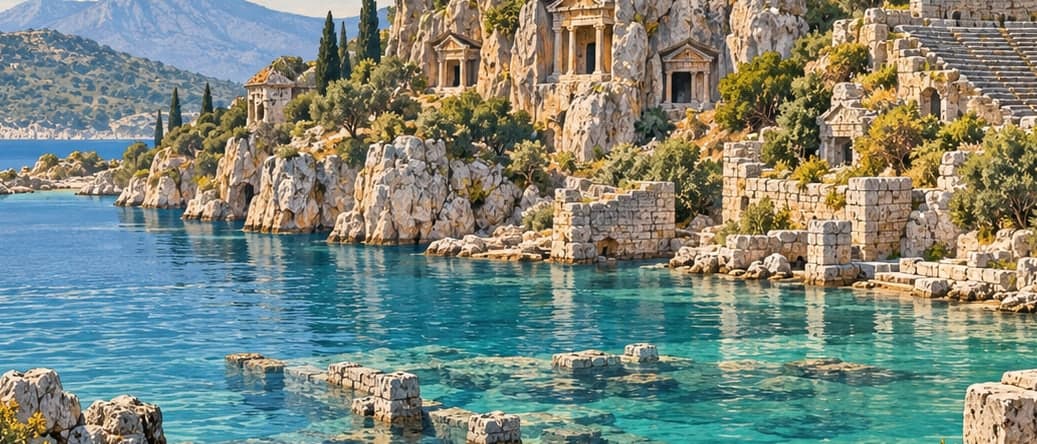
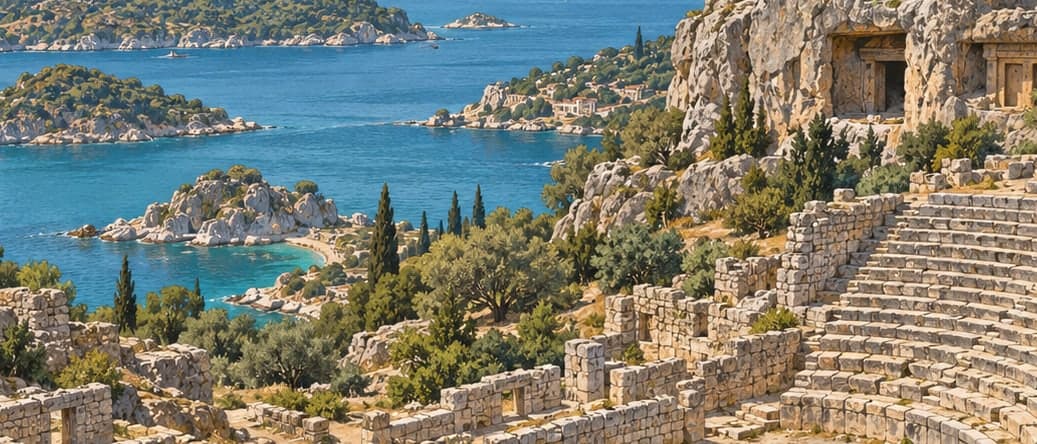
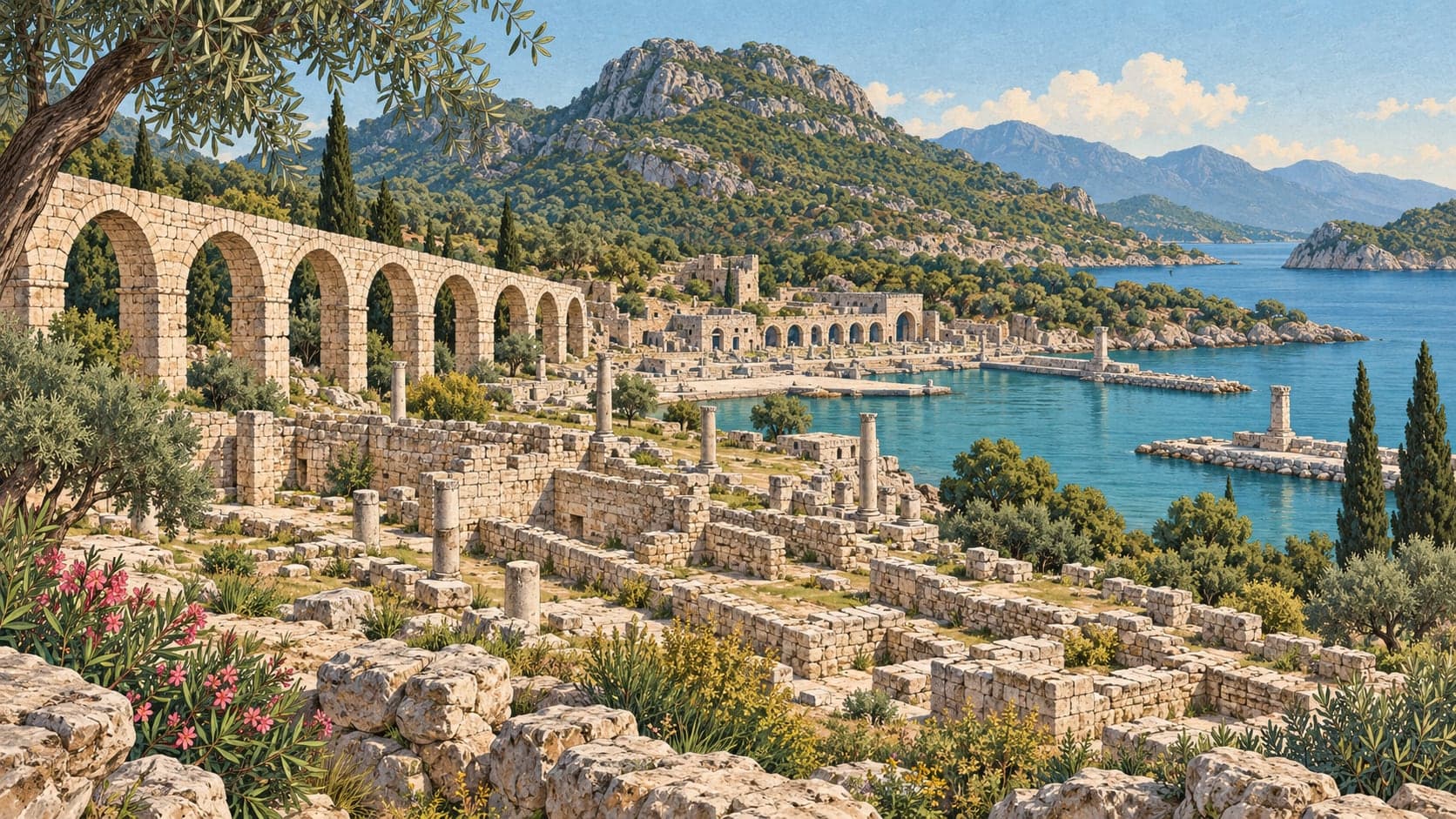
The remains spread along the foot of the hill south of the harbour. Coming from Demre the first structure is the aqueduct that brought fresh water; the nymphaeum, a typical Roman building with an arched entrance and niched walls inside, lies to the east. Between the granary and the harbour runs the harbour street, with ship sheds in front of it, their roofs open halfway. The largest building is the market or agora, called the Plakoma, enclosed by shops on three sides with a cistern in the middle.
The most important structure is the granary, 65 by 32 metres, rectangular, of eight rooms, built under Hadrian between AD 117 and 138 and also known as the imperial silo. Eight doors in its front each open into one room, with windows above them to light the interior, and rooms for the officials who ran the store stand at either side of the terrace. Beside the great central door are two busts of equal size, of Hadrian and his wife Sabina; a relief of Serapis and Pluto with a griffin between them was placed on the front, according to its inscription, after a dream of the granary's officer. The building survives complete to its roof and now serves as the Museum of Lycian Civilisations, which our inventory holds as a separate record.