Guide
Myra lies between Kaş and Finike and takes its name from the Myros, the river now called the Demre. It was one of the six leading cities of the Lycian League, each holding three votes, and its bishopric — held by Saint Nicholas — carried its name through the Middle Ages.
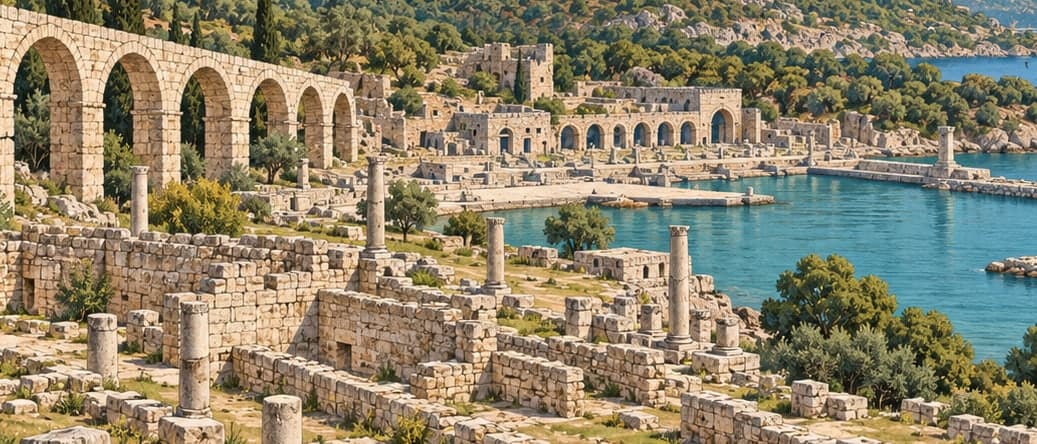
Water reached the city through a channel cut into the rock at the edge of the Demre. The same stream that made the city eventually ended it: as in many ancient cities, the alluvium it carried silted the place up. Myra's brightest period was under Theodosius II, between 408 and 450, when it became the metropolis of Lycia and reached the sea through the harbour city of Andriake at Çayağzı, trading heavily. Arab raids ran from the seventh century to the ninth, and after the city was taken in 809 it lost its importance.
Coins struck in the name of Myra survive among those of the Lycian League. The name has also been read as the place of the great mother goddess, and its people worshipped Artemis as that mother; on the coins she is represented in the form of Cybele, the oldest goddess of Anatolia. This, the ministry writes, is the place where Cybele became Artemis.
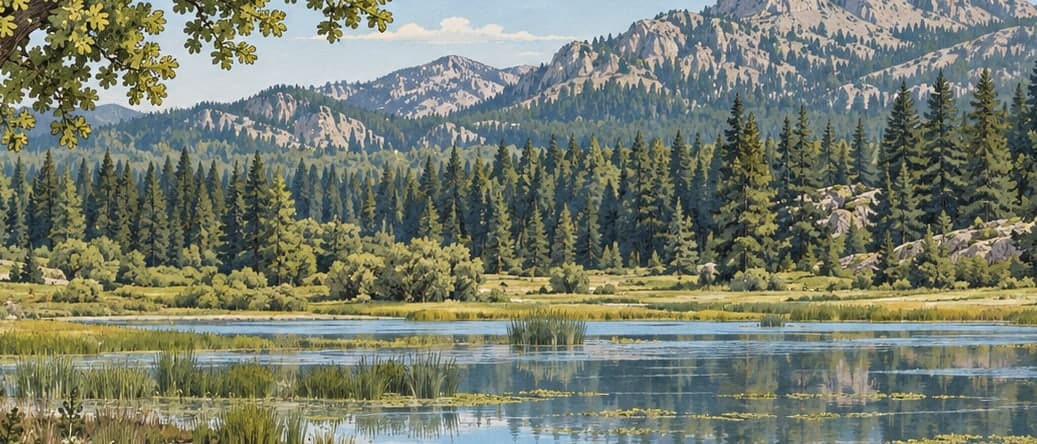
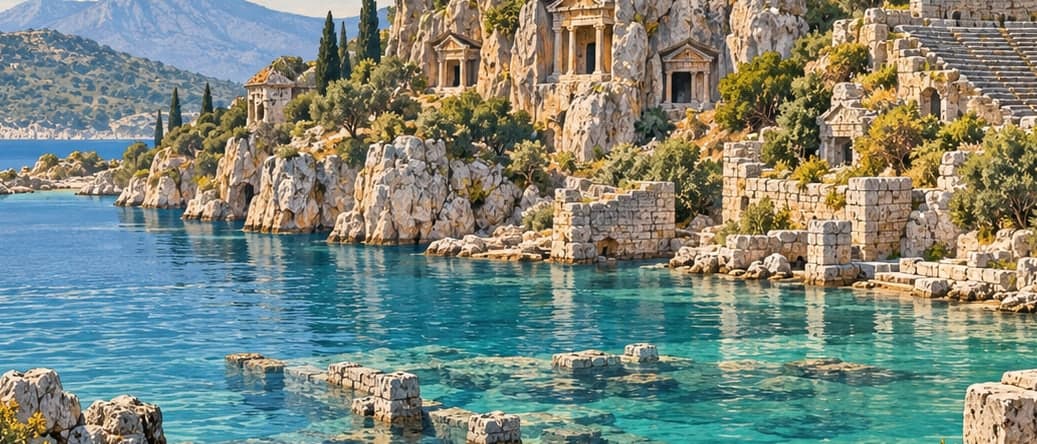
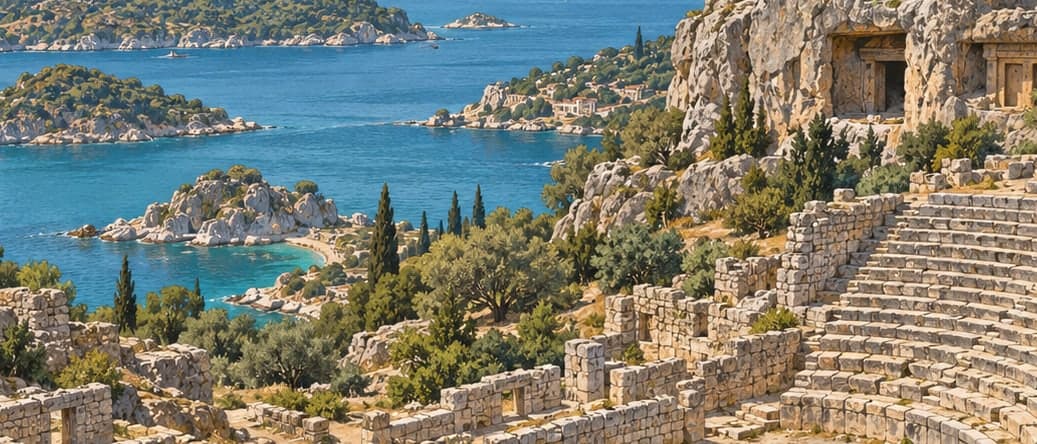
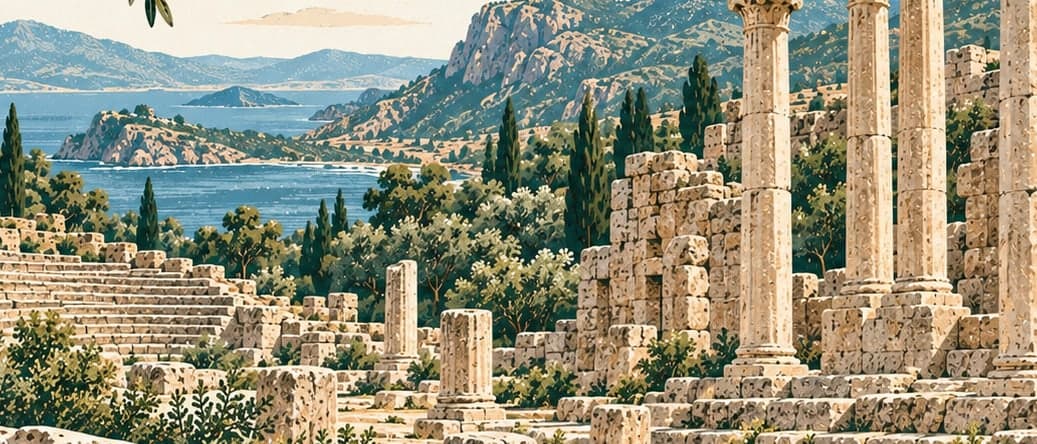
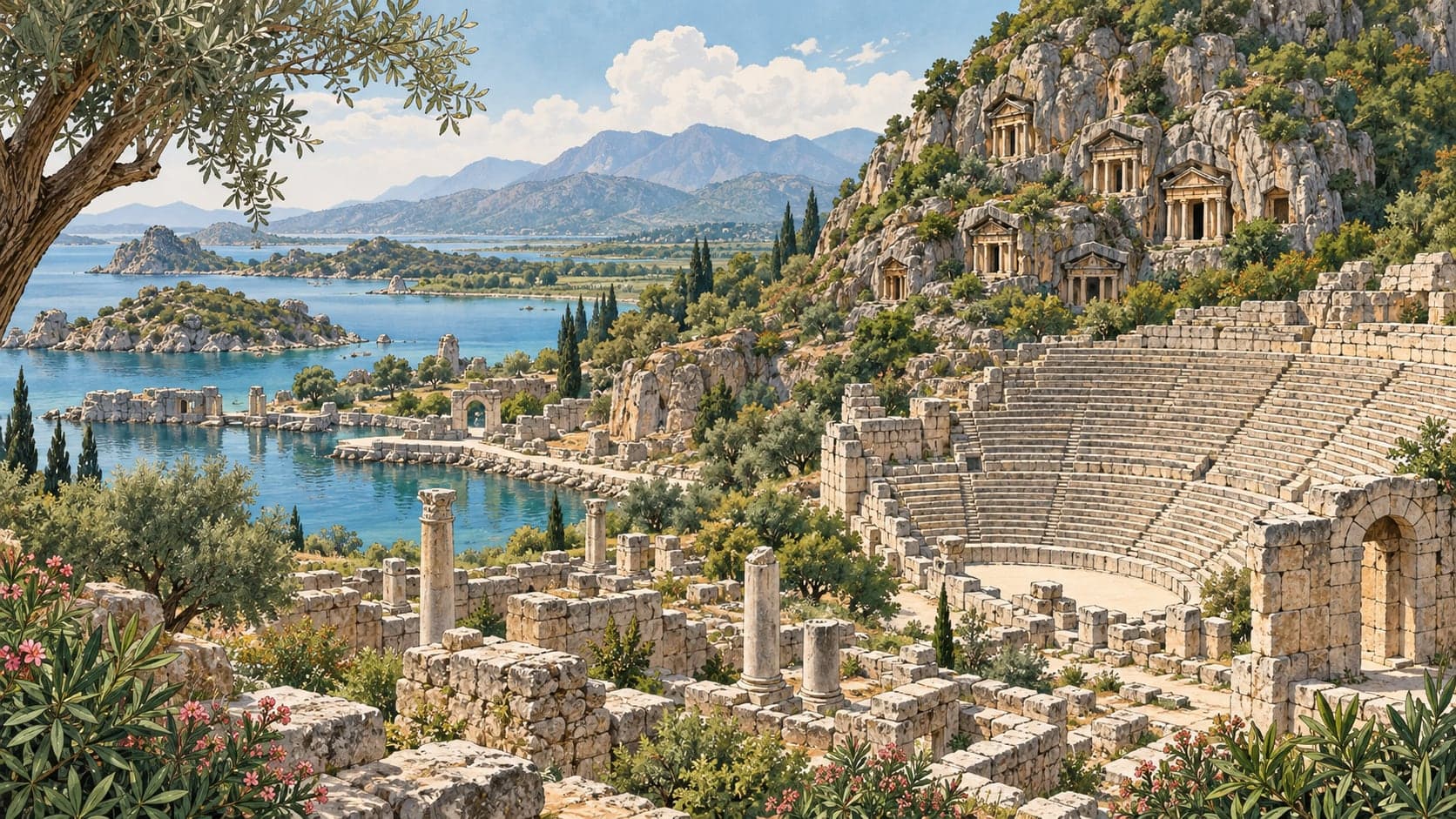
The city was built above rock tombs and its ancient theatre widens as it descends. The reliefs above the tombs on either side of it, and those in the river necropolis, are the thing to look at; the theatre itself is Roman and one of the few to have reached us largely intact. Between Çayağzı harbour and the ancient city of Andriake lies a bird sanctuary formed by the meanders of the river, with 149 species recorded.